Resources
"Seek not the life of the immortals, but enjoy to the full the resources that are within reach."
- Pindar
The world is filled with various "resources" that can aid in a civilization's growth and development. These include cattle, wheat, coal, iron, whales, and oil. During a game, you will want to build your cities near to resources so that they can take advantage of the resources' bonuses. Some resources - gold and fish, for example - are visible at the start of a game, while others - like aluminum, oil, and uranium - are hidden until your Civilization has mastered the appropriate technology.

Antiquity Site
Game Info:
When improved with an Archaeological Dig, an Antiquity Site can then yield an Artifact that can be placed in a Great Work of Art slot, or be transformed into a Landmark improvement.
Base Yield:
No Yield
When improved:
Revealed by:
Historical Info:
Francis Bacon wrote in 1605 AD that "antiquities are history defaced, or some remnants of history which have casually escaped the shipwreck of time." By definition, antiquities are objects from the past, ranging from simple arrowheads to artistic treasures. The sense that a lost civilization could be recovered by a systematic study of its relics and artifacts has driven amateur collectors and eminent scholars for generations to seek these out, dig these up, and preserve these in homes, universities and museums. This passion for collecting the leavings of the human past eventually gave rise to a new scholarly discipline - the field of archeology.

Bananas
Base Yield:
No Yield
When improved:
Plantation:
+3 🌾 Food, +1 💰 Gold
Revealed by:
Historical Info:
A banana is a popular tropical fruit. It, and its cousins the plantains, are an important part of many tropical peoples' diets. Originating in Southeast Asia, the banana is now cultivated around the world.

Bison
Base Yield:
+1 🌾 Food
When improved:
Camp:
+1 🌾 Food, +1 💰 Gold
Revealed by:
Historical Info:
The North American bison, which once covered the Great Plains in massive herds, was the primary source for the meat, sinew, hide and bone necessary for survival by many native tribes. Hunted to near extinction by Americans in the late 1800s, in recent decades the buffalo has made a comeback due to federal and state wildlife programs.

Cattle
Base Yield:
+1 🔨 Production
When improved:
Pasture:
+1 🌾 Food, +1 🔨 Production
Resources Found On:
Revealed by:
Historical Info:
Some of the earliest domesticated animals in history, cows, oxen and other bovines have been used for livestock, dairy, and as draft animals. In addition, cattle skin has been used for leather, and its dung as a fuel source. Many tribal civilizations count a person's wealth by how many cattle he or she possesses.

Deer
Base Yield:
+1 🌾 Food
When improved:
Camp:
+1 🌾 Food
Revealed by:
Historical Info:
Deer and their relatives - reindeer, moose, roe, etc. - can be found in herds across the planet. They have provided food, leather, bones, gut, and other materials for pre-industrial people for uncounted thousands of years.

Figs
Base Yield:
+1 🌾 Food
When improved:
Plantation:
+1 🌾 Food, +1 🔨 Production
Historical Info:
Native to the Middle East and western Asia, Figs have been cultivated since ancient times, being one of the oldest plants cultivated by humans. Figs were common in Ancient Greece and spread to Rome where they formed a staple fruit for the lower classes. Figs are easy to preserve and are well-suited to forming condiments due to their high sugar content. It is perhaps this very association with the simplicity and poverty of common folk which saw figs fall from fashion in later periods.

Fish
Base Yield:
+2 🌾 Food
When improved:
Fishing Boats:
+1 🔨 Production, +1 💰 Gold
Resources Found On:
Revealed by:
Historical Info:
Fish have been an important source of protein for coastal dwellers for all of history. Fish remain an important foodstuff in the 21st century - so much so that there is increasing danger of depopulating the world's oceans of edible fish entirely.

Hidden Antiquity Site
Game Info:
When improved with an Archaeological Dig, a Hidden Antiquity Site can then yield an Artifact that can be placed in a Great Work of Art slot, or be transformed into a Landmark improvement. Hidden Antiquity Sites are only visible to civs that have all the policies in the Artistry policy tree.
Base Yield:
No Yield
When improved:
Historical Info:
Francis Bacon wrote in 1605 AD that "antiquities are history defaced, or some remnants of history which have casually escaped the shipwreck of time." By definition, antiquities are objects from the past, ranging from simple arrowheads to artistic treasures. The sense that a lost civilization could be recovered by a systematic study of its relics and artifacts has driven amateur collectors and eminent scholars for generations to seek these out, dig these up, and preserve these in homes, universities and museums. This passion for collecting the leavings of the human past eventually gave rise to a new scholarly discipline - the field of archeology.

Maize
Base Yield:
+1 🌾 Food
When improved:
Farm:
-1 🌾 Food, +1 💰 Gold
Resources Found On:
Revealed by:
Historical Info:
Maize, known in many English-speaking countries as corn, is a grain domesticated by indigenous peoples in Mesoamerica in prehistoric times. Maize is the most widely grown grain crop in the Americas, with 332 million metric tons grown annually in the United States alone. Approximately 40% of the crop - 130 million tons - is used for corn ethanol.

Rice
Base Yield:
+1 🌾 Food
When improved:
Farm:
-1 🌾 Food, +1 🔨 Production
Revealed by:
Historical Info:
Rice is the seed of the monocot plants Oryza sativa (Asian rice) or Oryza glaberrima (African rice). As a cereal grain, it is the most widely consumed staple food for a large part of the world's human population, especially in Asia and the West Indies. It is the grain with the second-highest worldwide production, after maize (corn), according to data for 2010.
Since a large portion of maize crops are grown for purposes other than human consumption, rice is the most important grain with regard to human nutrition and caloric intake, providing more than one fifth of the calories consumed worldwide by the human species.
Since a large portion of maize crops are grown for purposes other than human consumption, rice is the most important grain with regard to human nutrition and caloric intake, providing more than one fifth of the calories consumed worldwide by the human species.

Sheep
Base Yield:
+1 🌾 Food
When improved:
Pasture:
+1 🌾 Food, +2 💰 Gold
Revealed by:
Historical Info:
Sheep are extremely tasty creatures that also produce milk, wool and leather. One of the earliest animals to be domesticated, sheep were first tamed in Mesopotamia some ten thousand years ago. Since that period the practice of shepherding has spread widely, and today sheep can be found across the planet. There are over 200 breeds of sheep in existence, each bred for a specific quality: hardiness, size, quantity and quality of wool, milk production, and of course tastiness!

Stone
Base Yield:
+1 🔨 Production
When improved:
Quarry:
+2 🔨 Production
Revealed by:
Historical Info:
Found in the Earth's crust and upper mantle, stone is perhaps the most crucial element in human construction efforts throughout history. There are three major classifications of stone - Sedimentary, Igneous, and Metamorphic - each differing in their origin.
When improved, provides +10% 🔨 Production when building pre-Medieval Wonders in the City where it belongs.
When improved, provides +10% 🔨 Production when building pre-Medieval Wonders in the City where it belongs.

Wheat
Base Yield:
+1 🌾 Food
When improved:
Farm:
Resources Found On:
Revealed by:
Historical Info:
Originally cultivated in the Fertile Crescent of the Middle East, wheat is one of the most important grains in the human diet. A remarkably versatile grain, wheat can be turned into flour and made into bread, pasta, cereal or cake, and it can be fermented and made into a variety of tasty alcoholic beverages.

Aluminum
Game Info:
Used by powerful late-game Units and Buildings.
Strategic Monopoly Bonus (25%): Units gain +5 HP when Healing.
Global Monopoly Bonus (50%): +2 🔨 Production from Resource tiles.
Strategic Monopoly Bonus (25%): Units gain +5 HP when Healing.
Global Monopoly Bonus (50%): +2 🔨 Production from Resource tiles.
Base Yield:
+1 🔨 Production
When improved:
Mine:
+1 🔨 Production
Revealed by:
Historical Info:
Aluminum is one of the most abundant elements on Earth. A remarkably useful metal, aluminum is flexible, durable, and highly resistant to corrosion. Although plentiful, in its natural state aluminum is almost always found combined with other materials. It wasn't until the mid-19th century that scientists discovered how to extract and process aluminum in quantity. In the 20th-21st centuries it is widely used in the construction of military, aerospace, and consumer goods. Remember that aluminum is a strategic resource, and thus it is consumed as you construct the associated units and buildings.

Coal
Game Info:
Used by powerful mid-game Units and Buildings.
Strategic Monopoly Bonus (25%): Naval Units gain +1 👣 Movement.
Global Monopoly Bonus (50%): +3 💰 Gold from Resource tiles.
Strategic Monopoly Bonus (25%): Naval Units gain +1 👣 Movement.
Global Monopoly Bonus (50%): +3 💰 Gold from Resource tiles.
Base Yield:
+1 🔨 Production
When improved:
Mine:
+1 🔨 Production
Revealed by:
Historical Info:
Coal is ancient plant matter that has decomposed and compressed over the millennia into a highly combustible black compound. Found in substantial quantities across virtually the entire planet, coal has been one of the most important sources of energy to mankind throughout history. Coal is not a clean fuel and its extraction and burning is a major source of pollution around the world. Scientists are frantically looking for the elusive "clean coal" technology, but that remains as of yet undiscovered. Remember that coal is a strategic resource, and thus it is consumed as you construct the associated units and buildings.

Horses
Game Info:
Used by powerful Units.
Strategic Monopoly Bonus (25%): Units gain +10% ⚔️ Strength when attacking.
Global Monopoly Bonus (50%): +2 ⚗️ Science from Resource tiles.
Strategic Monopoly Bonus (25%): Units gain +10% ⚔️ Strength when attacking.
Global Monopoly Bonus (50%): +2 ⚗️ Science from Resource tiles.
Base Yield:
+1 🔨 Production
When improved:
Pasture:
+2 🔨 Production
Revealed by:
Historical Info:
As transport, implement of war, companion and (occasionally) foodstuff, horses are among the most important domesticated animals in human history. Horses were originally domesticated in Central Asia around 4000 BC, and over the next several thousand years the practice spread across Europe, Asia, the Middle East and Africa. Horses were transported to the New World by the Spanish in the 16th century, where their use was quickly and enthusiastically picked up by the native population in the following centuries. Remember that horses are strategic resources, and thus they are consumed as you construct the associated units.

Iron
Game Info:
Used by powerful Units throughout the game.
Strategic Monopoly Bonus (25%): Units gain +10% ⚔️ Strength when defending.
Global Monopoly Bonus (50%): +2 🔨 Production from Resource tiles.
Strategic Monopoly Bonus (25%): Units gain +10% ⚔️ Strength when defending.
Global Monopoly Bonus (50%): +2 🔨 Production from Resource tiles.
Base Yield:
+1 🔨 Production
When improved:
Mine:
+1 ⚗️ Science
Revealed by:
Historical Info:
Iron is one of the most important metals in human history. It is used for construction, for military weapons, and for tools. The first iron used came from pure deposits found in meteorites, and by the 2nd millennium BC some cultures had learned how to extract it from ores found in mines. Iron continues to be an extremely important material in the modern era, though it is most often used in its steel alloy form. Remember that iron is a strategic resource, and thus it is consumed as you construct the associated units and buildings.

Oil
Game Info:
Used by powerful late-game Units and Buildings.
Strategic Monopoly Bonus (25%): Units gain +2 XP after combat.
Global Monopoly Bonus (50%): +2 ⚗️ Science from Resource tiles.
Strategic Monopoly Bonus (25%): Units gain +2 XP after combat.
Global Monopoly Bonus (50%): +2 ⚗️ Science from Resource tiles.
Base Yield:
+1 🔨 Production
When improved:
Oil Well:
+5 🔨 Production
Offshore Platform:
+3 🔨 Production
Revealed by:
Historical Info:
Oil is a liquid fuel found in large and small deposits across the world. Although occasionally used by some civilizations as far as four thousand years ago to create asphalt or naptha or burned as a light source, modern use can be traced back to 1857 when the first modern refinery was constructed in Alsace, France. At about the same time wells were being drilled across Europe and in North America. By the early 20th century oil was in great demand, largely due to its use in internal combustion engines as used by ships, planes, and automobiles. Today much of international politics is driven by growing tension between those who have abundant sources of oil, and those who do not. Remember that oil is a strategic resource, and thus it is consumed as you construct the associated units and buildings.

Paper
Game Info:
Required to produce Diplomatic Units.
Base Yield:
No Yield
Revealed by:
Historical Info:
Paper is a thin material produced by pressing together moist fibers, typically cellulose pulp derived from wood, rags or grasses, and drying them into flexible sheets. Paper is a versatile material with many uses. Whilst the most common is for writing and printing upon, it is also widely used as a packaging material, in many cleaning products, in a number of industrial and construction processes, and even as a food ingredient, particularly in Asian cultures. Paper, and the pulp papermaking process, was said to be developed in China during the early 2nd century AD, possibly as early as the year 105 A.D.,[1] by the Han court eunuch Cai Lun, although the earliest archaeological fragments of paper derive from the 2nd century BC in China.
In Civ V, 'Paper' is used for diplomatic purposes. As such, it is a metaphor for governance, political documentation, and legal authority.
In Civ V, 'Paper' is used for diplomatic purposes. As such, it is a metaphor for governance, political documentation, and legal authority.

Uranium
Game Info:
Used to build terrifying weapons of mass destruction.
Strategic Monopoly Bonus (25%): Units gain +10% ⚔️ Strength when attacking.
Global Monopoly Bonus (50%): +10% ⚗️ Science in all owned Cities.
Strategic Monopoly Bonus (25%): Units gain +10% ⚔️ Strength when attacking.
Global Monopoly Bonus (50%): +10% ⚗️ Science in all owned Cities.
Base Yield:
+1 🔨 Production, +1 ⚗️ Science
When improved:
Quarry:
+1 ⚗️ Science
Revealed by:
Historical Info:
Uranium is a radioactive natural mineral that, once processed and enriched, can be used to generate enormous energy or blow things up. Discovered in the 18th century, it wasn't until the 20th, during the terrible crucible of World War II, that American scientists learned how to craft the mildly dangerous material into the most deadly explosive that history has ever seen. When used to power nuclear generators, uranium is seen as a "clean" energy, since it doesn't release the huge amounts of air pollution created by coal or petroleum. On the other hand, used nuclear fuel is incredibly toxic and poisons land, air, water, and/or any living organisms that encounter it for hundreds of years, so this is a problem too. Remember that uranium is a strategic resource, and thus it is consumed as you construct the associated units and buildings.

Amber
Game Info:
Monopoly Bonus: +6 Empire-Wide 😊 Happiness.
Base Yield:
+1 🔨 Production, +1 💰 Gold
When improved:
Quarry:
+1 🔨 Production, +2 💰 Gold
Historical Info:
Amber is fossilized tree resin, which has been appreciated for its color and natural beauty since Neolithic times. Much valued from antiquity to the present as a gemstone, amber is made into a variety of decorative objects. Amber is used as an ingredient in perfumes, as a healing agent in folk medicine, and as jewelry. Because it originates as a soft, sticky tree resin, amber sometimes contains animal and plant material as inclusions.

Brazilwood
Game Info:
Monopoly Bonus: +2 🎵 Culture from Resource tiles.
Base Yield:
+1 💰 Gold
When improved:
Resources Found On:
Historical Info:
Brazilwood is a dense, compact dyewood from any of various tropical trees whose extracts yield bright crimson and deep purple colours. Brazilwood is also used in cabinetwork and the creation of musical instruments. In ancient and medieval times, the brazilwood imported to Europe from the Middle East was Caesalpinia braziliensis and other species of Caesalpinia. Caesalpinia echinata (called pau-brasil in Portuguese) is indigenous to the Brazilian coast and played a role in the naming of that country.

Cinnamon
Game Info:
Monopoly Bonus: +2 🎵 Culture from Resource tiles.
Base Yield:
+1 💰 Gold
When improved:
Plantation:
+1 🌾 Food, +1 💰 Gold
Resources Found On:
Historical Info:
Cinnamon is obtained from the inner bark of Cinnamonum trees and is commonly used as an aromatic spice for savory foods. Spices are plant-derived substances used to preserve and enhance the flavor, color, or texture of food. In addition to merely enhancing food, some spices have medicinal benefits, religious significance, or are useful in food preservation. Generally, spices must be dried and ground before being applied to food; this distinguishes them from herbs like sage or oregano, which are green and leafy and may be used fresh or dried.

Citrus
Game Info:
Monopoly Bonus: +2 ⚗️ Science from Resource tiles.
Base Yield:
+1 🌾 Food, +1 💰 Gold
When improved:
Plantation:
+1 🌾 Food, +1 💰 Gold
Historical Info:
Citrus fruits - particularly Oranges, Limes, and Grapefruit - have been a common part of the human diet since ancient times. First cultivated in the regions surrounding Southeast Asia, the various flowering plants of the Citrus genus have since flourished in countries throughout the world. Scurvy, a Vitamin C deficiency rampant among sailors, began to become a serious problem in the 15th century. It continued to plague ships throughout the Age of Discovery, until the introduction of lime juice and sauerkraut treatments in the 18th century. Although most sailors believed it was the acid in citrus that prevented the disease, it was actually the Vitamin C, but the end result was a healthy crew in either case.

Cloves
Game Info:
Monopoly Bonus: +6 Empire-Wide 😊 Happiness.
Base Yield:
+2 💰 Gold
When improved:
Plantation:
+1 🕊️ Faith, +1 💰 Gold
Historical Info:
Cloves are the dried flower bud from a tree native to the Maluku Islands in Indonesia; an aromatic spice, it is used in cuisines worldwide. Now harvested primarily in Indonesia, India, Zanzibar and Madagascar, cloves have a numbing effect on mouth tissues and have been used in the past as a medicine and a drug as well as a spice. Until planted outside the islands, the Dutch East India Company had a virtual monopoly on the spice; in Europe in the 17th and 18th centuries, cloves were quite literally worth their weight in gold due to the demand.

Cocoa
Game Info:
Monopoly Bonus: +2 🎵 Culture from Resource tiles.
Base Yield:
+1 🌾 Food, +1 💰 Gold
When improved:
Plantation:
+2 💰 Gold
Resources Found On:
Historical Info:
Cocoa beans, the product of the cacao tree native to South America, was an important commodity in pre-Columbian Mesoamerica, and figured prominently in tribal cultures. Introduced by the Spanish to Europe, by the mid-1700s it was immensely popular there as a beverage, cooking ingredient, and even as a medicine.

Coffee
Game Info:
Monopoly Bonus: +10% 🔨 Production in all owned Cities.
Base Yield:
+1 🌾 Food, +1 💰 Gold
When improved:
Plantation:
+2 ⚗️ Science
Historical Info:
Coffee is a brewed beverage prepared from the roasted seeds of several species of evergreen shrub belonging to the genus Coffea. The earliest credible evidence of either coffee drinking or knowledge of the coffee tree appears in the middle of the 15th century, in the monasteries of Arabia. It was there that coffee seeds were first roasted and brewed, in a similar way to how it is prepared today. Eventually, through trade, coffee spread to Venetian ports in Italy, and from there, it was introduced to the rest of Europe.

Copper
Game Info:
Monopoly Bonus: +10% 🔨 Production in all owned Cities.
Base Yield:
+1 🔨 Production
When improved:
Mine:
+1 💰 Gold
Historical Info:
The soft, orange-hued metal known as copper has been used for thousands of years for everything from weapons, to currency, to circuits and electrical wiring in the modern day. Copper has a number of unique qualities, not the least of which are its antimicrobial abilities. Copper is naturally resistant to many forms of bacteria, leading to its use in plumbing and other applications where human contact is frequent, for example in doorknobs. Copper is also valuable for the alloys produced when it is combined with other metals. When mixed with tin, copper forms the alloy known as bronze. When combined with zinc, brass is produced.

Coral
Game Info:
Monopoly Bonus: +2 ⚗️ Science from Resource tiles.
Base Yield:
+1 🔨 Production, +2 💰 Gold
When improved:
Fishing Boats:
+1 🔨 Production, +1 🌾 Food
Resources Found On:
Historical Info:
Coral is a branching skeleton-like structure built by small marine animals known as polyps. Red coral, also known as precious coral, is one of the most ancient of gems and has been harvested since antiquity for decorative use. It belongs to a small class of organic gemstones, which are not really stones at all, that include materials such as pearl, amber, ivory, and jet. Historically, precious coral was not only a highly prized form of ornamentation, but it was also a substance believed to be endowed with mysterious sacred properties. Along with being used as a charm, it also had many medicinal virtues attributed to it. Today, laws and organizations help protect coral reefs since their populations are threatened by overharvesting, overfishing, and climate change.

Cotton
Game Info:
Monopoly Bonus: +3 💰 Gold from Resource tiles.
Base Yield:
+2 💰 Gold
When improved:
Plantation:
+2 💰 Gold, +1 🎵 Culture
Historical Info:
Cotton is a plant that has been cultivated for centuries. It produces a fibrous "boll" around the seed which can be spun into yarn or thread and used to make cloth for clothing, ship sails, and other valuable material. First cultivated in India some seven thousand years ago, cotton is still the most widely used natural material for clothing manufacture today.
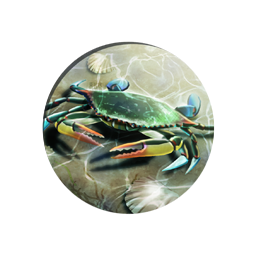
Crab
Game Info:
Monopoly Bonus: +3 🌾 Food from Resource tiles.
Base Yield:
+1 🌾 Food, +1 💰 Gold
When improved:
Fishing Boats:
+2 🔨 Production, +1 🌾 Food
Resources Found On:
Historical Info:
Dwelling at the bottom of the sea, the claw-bearing crustaceans known as Crabs are omnivores that will most often consume whatever comes their way. With over 800 species of crabs known to exist throughout the world, they are a staple food in some areas and one of the largest sea commodities in the present day. Among the most popular varieties, the blue crab, for which the Chesapeake Bay of Maryland is famous for producing, is consumed at a rate of over one hundred million pounds per year.

Dyes
Game Info:
Monopoly Bonus: +3 💰 Gold from Resource tiles.
Base Yield:
+1 💰 Gold
When improved:
Plantation:
+1 💰 Gold, +2 🎵 Culture
Historical Info:
A dye is a substance which can (temporarily or permanently) alter the color of some other substance, typically fabric or human skin. Throughout history dyes have been made from a variety of different materials, including plants, minerals, and animal bits. Humanity has been using dyes for at least 37,000 years, and possibly longer.

Furs
Game Info:
Monopoly Bonus: +6 Empire-Wide 😊 Happiness.
Base Yield:
+2 🌾 Food
When improved:
Camp:
+1 💰 Gold, +1 🎵 Culture
Resources Found On:
Historical Info:
As a resource, "fur" refers to the pelt or coat of certain mammals prized for their warmth and beauty. Unlike animals such as sheep, whose hair can be shaved off without destroying the animal, fur animals are killed when their skins are harvested. Humans have hunted animals for their furs for uncounted millennia. In the early years the hunters and their families probably ate the animals they caught, but in modern times the animal's body has been often discarded. Animals hunted for their fur include foxes, bears, beavers, seals, and rabbits.

Gems
Game Info:
Monopoly Bonus: +10% 💰 Gold in all owned Cities.
Base Yield:
+1 💰 Gold
When improved:
Mine:
+1 💰 Gold, +1 🔨 Production
Historical Info:
A gem is a beautiful but rare mineral. Once cut and polished, gems possess vibrant colors and/or are extremely shiny. There are two major classifications of gems: precious, like diamonds, rubies and emeralds, and semi-precious, such as amethyst, turquoise, and so forth. Gems have been highly prized throughout history; they are commonly used to adorn jewelry and the household items of the rich and powerful.

Glass
Game Info:
Monopoly Bonus: +6 Empire-Wide 😊 Happiness.
Base Yield:
+2 💰 Gold
Historical Info:
Glass has been used for centuries in windows and drinking vessels. Archaeological evidence suggests the first man made glass was in Eastern Mesopotamia and Egypt around 3500 BC and the first glass vessels were made there around 1500 BC. Syrian craftsmen invented the blow pipe in the 1st century BC, which made glass production easier, faster, and cheaper. Glass production flourished in the Roman Empire and spread from Italy to all countries under its rule. Venice was famous for its ornate glass-work, known as Venetian glass, and was the glassmaking center of the western world. Toward the end of the 13th century, the center of the Venetian glass industry moved to Murano. Some of the most important brands of glass in the world today are still produced in the historical glass factories within Murano.

Gold
Game Info:
Monopoly Bonus: +25% 🌟 Golden Age Length, +2 🌟 Golden Age Points from Resource tiles.
Base Yield:
+2 💰 Gold
When improved:
Mine:
+1 🎵 Culture
Historical Info:
Gold is a soft, shiny and malleable metal, and it has been prized by men and women throughout history. It is a rare metal, and its rarity greatly adds to its value. Although it has some industrial and medicinal purposes, gold is used primarily as coinage or for decorative purposes, adorning jewelry, cups, utensils and the commodes of the super-rich and powerful.

Incense
Game Info:
Monopoly Bonus: +2 🕊️ Faith from Resource tiles.
Base Yield:
+2 💰 Gold
When improved:
Plantation:
+1 🕊️ Faith, +1 🎵 Culture
Historical Info:
Incense is a material created to slowly burn while releasing fragrant smoke. Incense is often employed in religious ceremonies, and some believe that certain incenses have healing powers. The use of incense dates back thousands of years. It probably originated in the Middle East, possibly in Egypt. The Pharaohs used it not only to cover the smell of grubby commoners but also to drive away demons and to please the gods. A wide variety of materials have been used to make incense: camphor, frankincense, myrrh, sandalwood, cloves, lavender, musk, and other exotic materials. Long used in traditional Eastern medicine, in the West incense is enjoying something of a boom in the pseudo-scientific "aroma therapy" which, while perhaps of dubious efficacy, at least makes the practitioner smell nice.

Ivory
Game Info:
Monopoly Bonus: +25% 🌟 Golden Age Length, +2 🌟 Golden Age Points from Resource tiles.
Base Yield:
+1 🔨 Production
When improved:
Camp:
+1 🔨 Production, +1 💰 Gold
Resources Found On:
Historical Info:
Ivory is a material harvested from the teeth and tusks of animals, including elephants, whales, hippopotamuses, narwhals, and so forth. Ivory is highly valued for its durability and its attractiveness. Historically it has been used for billiard balls, piano keys, clothing structural support, utensil handles, etc. In the modern era plastics have been invented that are perfectly adequate substitutes for the precious material, but nothing yet made can match its beauty and allure - which is unfortunate for the many endangered animals illegally slaughtered each year for their ivory.

Jade
Game Info:
Monopoly Bonus: +25% 🌟 Golden Age Length, +2 🌟 Golden Age Points from Resource tiles.
Base Yield:
+2 💰 Gold
When improved:
Quarry:
+1 🔨 Production, +1 🎵 Culture
Historical Info:
Jade is an ornamental stone and is the name given to two types of metamorphic rock, nephrite and jadeite. Among the earliest known jade artifacts excavated from prehistoric sites are simple ornaments with bead, button, and tubular shapes. Additionally, jade was used for adze heads, knives, and other weapons, which can be delicately shaped. As metal-working technologies became available, the beauty of jade made it valuable for ornaments and decorative objects. In Chinese history, Jade was considered the "imperial gem" and had a status-value exceeding that of gold or silver.

Jewelry
Game Info:
Monopoly Bonus: +6 Empire-Wide 😊 Happiness.
Base Yield:
+2 💰 Gold
Historical Info:
Jewelry is a term used to refer to articles of gold, silver, gems, and other precious materials, worn with no other purpose in mind aside from personal adornment. Ancient forms of jewelry discovered in Africa indicate that these adornments were used more than 50,000 years ago, when beads, shells, and bone were worn in a decorative fashion. In the past 5,000 years, gold has been the primary material used in jewelry, as its malleable nature and distinctive styling allowed for increasingly complex designs that spoke to the wealth of its owner.

Lapis Lazuli
Game Info:
Monopoly Bonus: +25% 🌟 Golden Age Length, +2 🌟 Golden Age Points from Resource tiles.
Base Yield:
+1 🔨 Production
When improved:
Quarry:
+1 🔨 Production, +2 ⚗️ Science
Historical Info:
Lapis lazuli is a deep blue semi-precious stone that has been prized since antiquity for its intense color. It has been mined for over 6,000 years in Afghanistan and was the source of lapis for ancient Egyptian and Mesopotamian civilizations, as well as the later Greeks and Romans. In addition to the Afghan deposits, lapis lazuli can be found in other parts of the world, such as Russia, Chile, Canada, India, Italy, and the USA. Lapis lazuli takes an excellent polish and was valued for making into jewelry, carvings, vases, and other ornaments; especially in ancient Egypt. It was also ground and processed to make the most highly sought after pigment, ultramarine, which was worth more than gold. During the Renaissance, this valuable pigment was used sparingly and often reserved to color the robes of Mary and other important religious figures.

Marble
Game Info:
Monopoly Bonus: +10% 🎵 Culture in all owned Cities.
Base Yield:
+1 🔨 Production
When improved:
Quarry:
+2 🔨 Production
Historical Info:
Marble is a beautiful rock highly prized as a building material and by artists for sculpting. Marble comes in a variety of colors and shades, sometimes mono-colored and sometimes with veins and pockets of many different colors within. Many of the most beautiful structures in the world - including the Taj Mahal, for one - are constructed of marble, as are the greatest sculptures of antiquity.
When improved, provides +15% 🔨 Production when building pre-Industrial Wonders in the City where it belongs.
When improved, provides +15% 🔨 Production when building pre-Industrial Wonders in the City where it belongs.

Nutmeg
Game Info:
Monopoly Bonus: +10% 🔨 Production in all owned Cities.
Base Yield:
+1 🔨 Production, +1 💰 Gold
When improved:
Plantation:
+1 🎵 Culture, +1 💰 Gold
Historical Info:
Nutmeg trees are evergreens indigenous to the Banda Islands in Indonesia. Nutmeg has been used in the culinary culture of several civilizations for centuries. In Penang cuisine it is often boiled or blended as a drink; in India it used as a sweet; and in Middle Eastern cooking it is used to spice savory dishes. But it was the discovery of the source of nutmeg in Indonesia in 1511 AD by the Portuguese explorer Albuquerque that set off the rush to import the spice to the tables of Europe.

Olives
Game Info:
Monopoly Bonus: +10% 🌾 Food in all owned Cities.
Base Yield:
+1 🌾 Food, +1 💰 Gold
When improved:
Plantation:
+1 💰 Gold, +1 🎵 Culture
Historical Info:
The olive is a species of small tree in the family Oleaceae, native to the coastal areas of the eastern Mediterranean Basin as well as northern Iraq, and northern Iran at the south of the Caspian Sea. Its fruit, also called the olive, is of major agricultural importance in the Mediterranean region as the source of olive oil. The olive has been the symbol of peace, wisdom, glory, fertility, power and purity. Olive oil has long been considered sacred, and even today, it is still used in many religious ceremonies.

Pearls
Game Info:
Monopoly Bonus: +2 🕊️ Faith from Resource tiles.
Base Yield:
+2 💰 Gold
When improved:
Fishing Boats:
+1 🔨 Production, +1 🎵 Culture
Resources Found On:
Historical Info:
Pearls are shiny, white, translucent balls formed inside the shells of mollusks. They are highly prized and often used in jewelry and other ornate decorations. Although many mollusks produce pearls, certain species of saltwater oysters and freshwater clams - those whose shells are lined with "mother of pearl" (or nacre) - produce the most sought-after varieties. The color of the pearl varies depending upon the mollusk and the local environment. Colors range from black to white, with cream, blue, yellow and green also occurring. The rose-colored Indian pearls are generally the most valued.

Pepper
Game Info:
Monopoly Bonus: +3 🌾 Food from Resource tiles.
Base Yield:
+1 🌾 Food, +1 💰 Gold
When improved:
Plantation:
+1 💰 Gold, +1 🕊️ Faith
Historical Info:
Pepper, in many forms, has been grown virtually everywhere in the world and used for millennia to season our food. Black peppercorns were found in the nostrils of Ramesses II, part of the mummification process. It has been used in Southeast Asian cuisine since the 2nd Century BC. Archeological finds indicate that various hot peppers were used by the Aztecs and Mayans in cooking. In Rome, so valuable was pepper that it was used as collateral for loans, and Attila demanded a ton of pepper to spare the city in the 5th Century AD. Pepper has justifiably been called the "king of spice."

Perfume
Game Info:
Monopoly Bonus: +3 💰 Gold from Resource tiles.
Base Yield:
+2 💰 Gold
When improved:
Plantation:
+2 💰 Gold, +1 🎵 Culture
Historical Info:
Perfumes have been known to exist in some of the earliest human civilizations. Perfumery, or the art of making perfumes, began in ancient Mesopotamia and Egypt and was further refined by the Romans and Persians. The production technique of rose perfumes originated in Persia then spread through Arabia and India, and more recently into Eastern Europe. Rose oil is the essential oil extracted from the petals of various types of roses. Due to the labor-intensive production process and the low content of oil in the rose blooms, rose oil commands a very high price. Even so, it is still perhaps the most widely used essential oil in perfumery.

Porcelain
Game Info:
Monopoly Bonus: +30% 🌟 Golden Age Length.
Base Yield:
+2 💰 Gold
Historical Info:
First created in China nearly 3,000 years ago, porcelain is a type of ceramic material formed by heating clay to create semi-translucent vessels of varying shapes and sizes. Artists and craftsmen spent centuries developing the techniques that allowed for control of both the aesthetic qualities as well as the physical strength and usability of porcelain objects. Having originated in China, porcelain dinnerware was often referred to simply as "China" during the height of its popularity in Europe.

Salt
Game Info:
Monopoly Bonus: +10% 🌾 Food in all owned Cities.
Base Yield:
+1 🌾 Food, +1 🔨 Production
When improved:
Mine:
+1 🌾 Food
Historical Info:
One of the necessities of human life, salt, is found throughout the world in both natural and man-made environments. Used for thousands of years as a means of preserving meat, salt was crucial in efforts to store food prior to the invention of artificial refrigeration. A common method of producing and harvesting salt for consumption is through the use of evaporation. By creating large ponds or pools of saltwater, over time the natural evaporation process will remove the water and leave behind the salt residue for collection.

Silk
Game Info:
Monopoly Bonus: +10% 💰 Gold in all owned Cities.
Base Yield:
+2 💰 Gold
When improved:
Plantation:
+3 💰 Gold
Resources Found On:
Historical Info:
Silk is a fiber which is made from the cocoons of silkworms. Silk fabric was first developed in ancient China, according to legend by the empress Lei Zu. Originally reserved for the Chinese nobility, over time it spread throughout China, and via the famous Silk Road of antiquity, into Europe and across the planet. (The earliest record of silk in Europe dates to Egypt in approximately 1000 BC.)

Silver
Game Info:
Monopoly Bonus: +2 🎵 Culture from Resource tiles.
Base Yield:
+1 💰 Gold
When improved:
Mine:
+2 💰 Gold
Historical Info:
Silver is a shiny, soft, malleable, precious metal. It is highly valued for its beauty and for centuries it has been used in ornaments, jewelry, utensils, and coinage in cultures around the world. Silver has excellent thermal and electrical conductivity properties as well, which make it quite useful in many electronic applications. Silver has been mined for at least 6,000 years, and perhaps much longer. In 1859 the "Comstock Lode" was discovered in Nevada, United States of America. This was a mighty deposit of silver which led to a huge boom in the local economy. The good times lasted some twenty-three years until the lower levels of the mine became flooded and silver extraction petered out, at which point most of the so-called "boom towns" simply dried up and died.

Sugar
Game Info:
Monopoly Bonus: +10% 🌾 Food in all owned Cities.
Base Yield:
+1 🔨 Production, +1 💰 Gold
When improved:
Plantation:
+2 🌾 Food
Resources Found On:
Historical Info:
Sugar is an incredibly sweet substance derived from sugar cane (or beets) and used to sweeten food and beverages. It is believed that sugar was first used by Polynesians, and then the practice spread to India and from there eventually into Asia and Europe. Eventually sugar cane was transported to the Caribbean and to North and South America, where it was found to grow incredibly well. Plentiful and cheap, sugar and its sweet cousins, glucose, fructose, etc., can be found in almost all processed foods across the world, much to the unhappiness of dentists and dieticians everywhere.

Tea
Game Info:
Monopoly Bonus: +10% 🎵 Culture in all owned Cities.
Base Yield:
+2 🔨 Production
When improved:
Plantation:
+2 🔨 Production
Historical Info:
Tea is an aromatic beverage commonly prepared by pouring hot water over cured leaves of the tea plant. Tea drinking likely began in China, during the Shang Dynasty, when it was initially used for medicinal purposes and combined with other herbs. It was first introduced to Portuguese priests and merchants in China during the 16th century, and later became popular in Britain during the 17th century, which eventually led to Britain competing with China's monopoly over it.

Tobacco
Game Info:
Monopoly Bonus: +2 🕊️ Faith from Resource tiles.
Base Yield:
+2 💰 Gold
When improved:
Plantation:
+3 💰 Gold
Historical Info:
Tobacco is a product processed from the dried leaves of plants in the genus Nicotiana. It is used recreationally in cigars and cigarettes, snuff, pipe tobacco, chewing tobacco and flavored shisha. Many Native American tribes have traditionally grown and used tobacco, with some cultivation sites in Mexico dating back to 1400-1000 B.C. Eastern North American tribes carried large amounts of tobacco in pouches as a readily accepted trade item, and often smoked it in peace pipes, either in defined sacred ceremonies or to seal a bargain. Following the arrival of the Europeans, tobacco became increasingly popular as a trade item and grew into its own industry.

Truffles
Game Info:
Monopoly Bonus: +3 🌾 Food from Resource tiles.
Base Yield:
+2 💰 Gold
When improved:
Camp:
+1 🌾 Food, +1 💰 Gold
Historical Info:
A rare and expensive delicacy, truffles are the fruit of a family of mushrooms that grow underground. With a pungent aroma and powerful taste, truffles are used primarily for seasoning dishes in a variety of international cuisines. One of the more unusual aspects of truffles are the means by which they are acquired, that is via "truffle hog." These pigs, domesticated and used specially for the purposes of finding underground truffles, are naturally gifted in the hunt. With an uncanny sense of smell, truffle hogs are said to have been in use since the Roman era.

Whales
Game Info:
Monopoly Bonus: +10% ⚗️ Science in all owned Cities.
Base Yield:
+1 🌾 Food, +1 🔨 Production
When improved:
Fishing Boats:
+1 🔨 Production, +1 ⚗️ Science
Resources Found On:
Historical Info:
The largest mammals alive today, for centuries men have hunted whales for their meat, blubber, and bones. In pre-industrial times men challenged these massive animals from sailing vessels, employing harpoons against the massive beasts in an often deadly fight of man against animal. Now the hunters use modern ships, sonar, and exploding weapons against the whales - with such success that their survival remains in doubt.

Wine
Game Info:
Monopoly Bonus: +2 🕊️ Faith from Resource tiles.
Base Yield:
+1 🌾 Food, +1 💰 Gold
When improved:
Plantation:
+1 🎵 Culture, +1 💰 Gold
Historical Info:
Wine is a tasty alcoholic beverage made of fermented grapes. Humans have been happily creating wine for some 8,000 years. The practice is believed to have originated in the area near the modern Iranian-Georgian border. In many cultures, wine is believed to have mystical powers and is used in countless religious ceremonies. France is the (self-proclaimed) center of wine production on the planet, but she is facing stiff competition from other countries in Europe, as well as the USA, South Africa, South America, and Australia.