Wonders
"Numberless are the world's wonders, but none more wonderful than man."
- Sophocles
Wonders are the remarkable, one-of-a-kind buildings that ensure that a civilization will be remembered throughout all of history. Wonders engage the mind and lift the spirits.
The Pyramids, Notre Dame Cathedral, and Stonehenge are examples of wonders. Wonders require much time and energy from your cities to construct, but once completed, they provide your civilization with many benefits.
There are three basic types of wonders: World Wonders, National Wonders and Project Wonders. Only one copy of a World Wonder may be constructed anywhere in the world in a given game. National Wonders are less exclusive: each nation may construct one (but only one) copy of a National Wonder.
World Wonder Production Modifiers: In addition to certain Traits and Policies, Marble and Stone increase the production modifier of cities with these resources nearby. Marble increases Wonder production by 15% for all pre-Industrial Wonders, whereas Stone increases Wonder production by 10% for all pre-Medieval Wonders.
World Wonder Production Costs: For every Wonder you control, the cost of future Wonders goes up. This cost varies based on the Era of the Wonder.
• For every owned Wonder of the same Era: 25%.
• For every owned Wonder from the previous Era: 15%.
• For every owned Wonder from two Eras prior: 10% (Wonders earlier than two eras do not count).
If you build too many Wonders during an Era, your ability to gain future Wonders will be compromised, so don't be too greedy!
The Pyramids, Notre Dame Cathedral, and Stonehenge are examples of wonders. Wonders require much time and energy from your cities to construct, but once completed, they provide your civilization with many benefits.
There are three basic types of wonders: World Wonders, National Wonders and Project Wonders. Only one copy of a World Wonder may be constructed anywhere in the world in a given game. National Wonders are less exclusive: each nation may construct one (but only one) copy of a National Wonder.
World Wonder Production Modifiers: In addition to certain Traits and Policies, Marble and Stone increase the production modifier of cities with these resources nearby. Marble increases Wonder production by 15% for all pre-Industrial Wonders, whereas Stone increases Wonder production by 10% for all pre-Medieval Wonders.
World Wonder Production Costs: For every Wonder you control, the cost of future Wonders goes up. This cost varies based on the Era of the Wonder.
• For every owned Wonder of the same Era: 25%.
• For every owned Wonder from the previous Era: 15%.
• For every owned Wonder from two Eras prior: 10% (Wonders earlier than two eras do not count).
If you build too many Wonders during an Era, your ability to gain future Wonders will be compromised, so don't be too greedy!

Alhambra
Game Info:
Cost: 400 🔨
Always Retained on Conquest
----------------
🎵 Culture: +1
Local Effects:
• +10% 🎵 Culture
• On Completion: Gain Free Castle
Empire-Wide Effects:
• Free Jinete Promotion for all existing and future eligible Units
----------------
Prerequisite Technologies: Chivalry
Require Completion of Authority
Max 1 in the World
Always Retained on Conquest
----------------
🎵 Culture: +1
Local Effects:
• +10% 🎵 Culture
• On Completion: Gain Free Castle
Empire-Wide Effects:
• Free Jinete Promotion for all existing and future eligible Units
----------------
Prerequisite Technologies: Chivalry
Require Completion of Authority
Max 1 in the World
Required Technology:
Historical Info:
Found in southern Spain, the Alhambra is a large palace complex of the Nasrid Dynasty, who controlled the region in the mid 14th century. Construction first began sometime around 1238 AD under the rule of Ibn al-Ahmar, and continued under his successors. Taking its name from the red hue of its walls, the name Alhambra is translated as the "Red Fortress." Noted for its Moorish Islamic architectural style, the Alhambra features elaborate engravings and numerous examples of the interlacing patterns known as "Arabesques" found predominately in Islamic art. Although many examples of the original Islamic style remain today, much of the palace and its interior was reconstructed and modified after the rise of Catholicism in Spain.

Angkor Wat
Game Info:
Cost: 250 🔨
Always Retained on Conquest
----------------
🎵 Culture: +1
🕊️ Faith: +1
⭐ Great Engineer Points: 1
Local Effects:
• On Completion: Gain Free Mandir
Empire-Wide Effects:
• +40% Border Growth Points in all Cities
• -25% Tile Purchase Cost in all Cities
----------------
Prerequisite Technologies: Currency
Number of Policies Required: 5
Max 1 in the World
Always Retained on Conquest
----------------
🎵 Culture: +1
🕊️ Faith: +1
⭐ Great Engineer Points: 1
Local Effects:
• On Completion: Gain Free Mandir
Empire-Wide Effects:
• +40% Border Growth Points in all Cities
• -25% Tile Purchase Cost in all Cities
----------------
Prerequisite Technologies: Currency
Number of Policies Required: 5
Max 1 in the World
Required Technology:
Historical Info:
Angkor Wat is a temple in Angkor, Cambodia. Angkor Wat was constructed in the 12th century by King Suryavaman II to serve as the royal palace and state temple, Hinduism being the state religion. Two or three centuries later Angkor Wat was converted to Buddhist use. Angkor Wat is a complex of buildings surrounded by a wall and then moat. The enclosed area measures 3000 feet by 2600 feet.
Angkor Wat is constructed primarily of sandstone blocks. The complex is laid out in a rectangular pattern somewhat resembling that of an ancient fortress; the inner buildings are separated from the outer walls by a courtyard similar to a bailey one might find in a castle.
At one time the courtyard was filled with wooden buildings, but these have all since perished. The surviving stone inner structure is split into three galleries built on raised platforms. The outer galleys once contained libraries, while the inner was a shrine to Vishnu (and has since been converted to a shrine to Buddha). The galleries are topped with towers that resemble stylized beehives, the tallest reaching about 140 feet in height. The buildings' walls are covered with ornate and beautiful bas relief sculptures depicting scenes from Hindu mythology.
Though largely neglected in the latter half of the 20th century, serious efforts are now being made to preserve and restore this wonderful and unique place of worship, and pilgrims and tourists are visiting it in ever-greater numbers each year.
Angkor Wat is constructed primarily of sandstone blocks. The complex is laid out in a rectangular pattern somewhat resembling that of an ancient fortress; the inner buildings are separated from the outer walls by a courtyard similar to a bailey one might find in a castle.
At one time the courtyard was filled with wooden buildings, but these have all since perished. The surviving stone inner structure is split into three galleries built on raised platforms. The outer galleys once contained libraries, while the inner was a shrine to Vishnu (and has since been converted to a shrine to Buddha). The galleries are topped with towers that resemble stylized beehives, the tallest reaching about 140 feet in height. The buildings' walls are covered with ornate and beautiful bas relief sculptures depicting scenes from Hindu mythology.
Though largely neglected in the latter half of the 20th century, serious efforts are now being made to preserve and restore this wonderful and unique place of worship, and pilgrims and tourists are visiting it in ever-greater numbers each year.

Bletchley Park
Game Info:
Cost: 2,150 🔨
Always Retained on Conquest
----------------
⚗️ Science: +5
🎵 Culture: +1
Local Effects:
• On Completion: Gain Free Research Lab
Empire-Wide Effects:
• +20 City Security in all Cities
• +1 ⚗️ to Scientists in all Cities
• On Completion: Gain 200 🕵️ Spy Points
----------------
Prerequisite Technologies: Computers
Require Completion of Rationalism
Max 1 in the World
Always Retained on Conquest
----------------
⚗️ Science: +5
🎵 Culture: +1
Local Effects:
• On Completion: Gain Free Research Lab
Empire-Wide Effects:
• +20 City Security in all Cities
• +1 ⚗️ to Scientists in all Cities
• On Completion: Gain 200 🕵️ Spy Points
----------------
Prerequisite Technologies: Computers
Require Completion of Rationalism
Max 1 in the World
Required Technology:
Historical Info:
Bletchley Park, in Milton Keynes, Buckinghamshire, was the central site of the United Kingdom's Government Code and Cypher School, which during the Second World War regularly penetrated the secret communications of the Axis Powers, most importantly the German Enigma and Lorenz ciphers. The official historian of World War II British Intelligence has written that the "Ultra" intelligence produced at Bletchley shortened the war by two to four years, and that without it the outcome of the war would have been uncertain. The site is now an educational and historical attraction memorialising and celebrating those accomplishments.
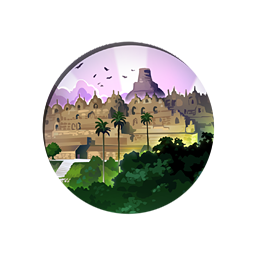
Borobudur
Game Info:
Cost: 400 🔨
Always Retained on Conquest
----------------
🎵 Culture: +1
🕊️ Faith: +5
Local Effects:
• On Completion: Spawn 2 Missionary in or near City
• On Completion: Gain Free Stupa
Empire-Wide Effects:
• +1 Spread Action for Missionaries
----------------
Holy City Only
Prerequisite Technologies: Theology
Number of Policies Required: 7
Max 1 in the World
Always Retained on Conquest
----------------
🎵 Culture: +1
🕊️ Faith: +5
Local Effects:
• On Completion: Spawn 2 Missionary in or near City
• On Completion: Gain Free Stupa
Empire-Wide Effects:
• +1 Spread Action for Missionaries
----------------
Holy City Only
Prerequisite Technologies: Theology
Number of Policies Required: 7
Max 1 in the World
Required Technology:
Historical Info:
Borobudur is a Buddhist candi in Magelang, Java, consisting of six square platforms surmounted by three circular platforms, atop which are 72 small stupas surrounding a large central stupa. The structure is decorated with 2672 bas-relief carvings and 504 Buddhist statues. The temple's three levels represent the three realms of Buddhist cosmology: the world of desires, the world of forms, and the formless world. Construction of Borobudur was completed at some point between 778 and 850 AD, during the Sailendra dynasty. Around 1006 the nearby capital of the successor Medang Kingdom was abandoned due to a series of volcanic eruptions; pilgrimages to Borobudur ceased shortly thereafter. The temple was lost for centuries under layers of ash and jungle until discovered by the British lieutenant governor of Java, Sir Stamford Raffles, in 1814.

Brandenburg Gate
Game Info:
Cost: 1,250 🔨
Always Retained on Conquest
----------------
🎵 Culture: +1
⭐ Great Scientist Points: 2
Local Effects:
• +10 Military Supply
• On Completion: Spawn 1 Great General in or near City
Empire-Wide Effects:
• +15 XP for Land Units in all Cities
• +15 XP for Water Units in all Cities
• +15 XP for Air Units in all Cities
----------------
Prerequisite Technologies: Military Science
Number of Policies Required: 16
Max 1 in the World
Always Retained on Conquest
----------------
🎵 Culture: +1
⭐ Great Scientist Points: 2
Local Effects:
• +10 Military Supply
• On Completion: Spawn 1 Great General in or near City
Empire-Wide Effects:
• +15 XP for Land Units in all Cities
• +15 XP for Water Units in all Cities
• +15 XP for Air Units in all Cities
----------------
Prerequisite Technologies: Military Science
Number of Policies Required: 16
Max 1 in the World
Required Technology:
Historical Info:
The Brandenburg Gate is the only surviving town gate of the city of Berlin. A beautiful "triumphal arch" constructed in the Greek style in 1788-91, it features many columns and is surmounted by the "Quadriga of Victory," a statue of a chariot drawn by four horses. It stands at the end of the avenue Unter den Linden.
After World War II, Berlin was partitioned between sections controlled by the Soviet Union and its allies and the United States and its allies, and the Berlin Wall was constructed by the Soviets to keep the two parts of the city separated. The Brandenburg Gate was in a sort of a "no-man's land" between the two factions, and from 1961-1989 neither side had access. The Gate was reopened in 1989 as part of the reunification of Berlin and Germany.
Today it stands as a proud symbol of the reunified city and country, and it is visited by tens of thousands of tourists from both east and west.
After World War II, Berlin was partitioned between sections controlled by the Soviet Union and its allies and the United States and its allies, and the Berlin Wall was constructed by the Soviets to keep the two parts of the city separated. The Brandenburg Gate was in a sort of a "no-man's land" between the two factions, and from 1961-1989 neither side had access. The Gate was reopened in 1989 as part of the reunification of Berlin and Germany.
Today it stands as a proud symbol of the reunified city and country, and it is visited by tens of thousands of tourists from both east and west.

Broadway
Game Info:
Cost: 1,700 🔨
Always Retained on Conquest
----------------
🎵 Culture: +2
Great Work of Music slots: 3
Local Effects:
• Up to +20 💰 +25 🎵 +25 🗿 when Themed
• On Completion: Spawn 1 Great Musician in or near City
• When completing a Building in this City: +250 🎵, scaling with Era
----------------
Prerequisite Technologies: Radio
Require Completion of Industry
Max 1 in the World
----------------
Possible Theming Bonuses:
• +25 🎵 and 🗿 for three from the same Civilization and the same Era.
Always Retained on Conquest
----------------
🎵 Culture: +2
Great Work of Music slots: 3
Local Effects:
• Up to +20 💰 +25 🎵 +25 🗿 when Themed
• On Completion: Spawn 1 Great Musician in or near City
• When completing a Building in this City: +250 🎵, scaling with Era
----------------
Prerequisite Technologies: Radio
Require Completion of Industry
Max 1 in the World
----------------
Possible Theming Bonuses:
• +25 🎵 and 🗿 for three from the same Civilization and the same Era.
Required Technology:
Historical Info:
Broadway is a 15-mile long street running through Manhattan and The Bronx in New York City. Although most of the thoroughfare is lined with offices, businesses and apartment complexes, it is best known for the middle section between 42nd and 53rd streets dubbed the "Great White Way" - the theater district. Commencing in the mid-1800s a number of theaters opened on Broadway. In 1880 AD a stretch between Madison and Union squares was illuminated with arc lamps, making it one of the first electrically lit streets in the United States. Spurred by growing American wealth and cultural aspirations, the theaters made it a mecca of popular entertainment. By 1900 some 20 theaters had opened along this stretch, and so bright were their electric billboards that it became the Great White Way. In 1925, at peak there were 80 theaters along Broadway, specializing in lavish productions, primarily revues and musicals.

CERN
Game Info:
Cost: 3,250 🔨
Always Retained on Conquest
----------------
⚗️ Science: +10
🎵 Culture: +1
Empire-Wide Effects:
• On Completion: Gain 2 Free Technologies
On Completion: +100 Influence with all City-States
----------------
Prerequisite Technologies: Particle Physics
Number of Policies Required: 27
Max 1 in the World
Always Retained on Conquest
----------------
⚗️ Science: +10
🎵 Culture: +1
Empire-Wide Effects:
• On Completion: Gain 2 Free Technologies
On Completion: +100 Influence with all City-States
----------------
Prerequisite Technologies: Particle Physics
Number of Policies Required: 27
Max 1 in the World
Required Technology:
Historical Info:
The European Organization for Nuclear Research, known as CERN, is a European research organization whose purpose is to operate the world's largest particle physics laboratory. Established in 1954, the organization is based in the northwest suburbs of Geneva on the Franco-Swiss border, and has 21 European member states. Israel is the first (and currently only) non-European country granted full membership. The term CERN is also used to refer to the laboratory, which in 2013 counted 2513 staff members, and hosted some 12,313 fellows, associates, apprentices as well as visiting scientists and engineers representing 608 universities and research facilities and 113 nationalities. CERN's main function is to provide the particle accelerators and other infrastructure needed for high-energy physics research - as a result, numerous experiments have been constructed at CERN following international collaborations. It is also the birthplace of the World Wide Web. The main site at Meyrin has a large computer centre containing powerful data processing facilities, primarily for experimental-data analysis; because of the need to make these facilities available to researchers elsewhere, it has historically been a major wide area networking hub.

CN Tower
Game Info:
Cost: 2,300 🔨
Always Retained on Conquest
----------------
🎵 Culture: +1
⭐ Great Merchant Points: 1
Local Effects:
• 25% of 🎵 Culture from Terrain and World Wonders is added to 🗿 Tourism output
• +25% 🗿 Tourism from Great Works
• On Completion: Gain Free Broadcast Tower
Empire-Wide Effects:
• +1 😊 Happiness in all Cities
• 25% of 🎵 Culture from Terrain and World Wonders is added to 🗿 Tourism output in all Cities
• +25% 🗿 Tourism from Great Works in all Cities
• +2 💰 +2 🗿 to Great Works in all Cities
----------------
Prerequisite Technologies: Telecommunications
Number of Policies Required: 25
Max 1 in the World
Always Retained on Conquest
----------------
🎵 Culture: +1
⭐ Great Merchant Points: 1
Local Effects:
• 25% of 🎵 Culture from Terrain and World Wonders is added to 🗿 Tourism output
• +25% 🗿 Tourism from Great Works
• On Completion: Gain Free Broadcast Tower
Empire-Wide Effects:
• +1 😊 Happiness in all Cities
• 25% of 🎵 Culture from Terrain and World Wonders is added to 🗿 Tourism output in all Cities
• +25% 🗿 Tourism from Great Works in all Cities
• +2 💰 +2 🗿 to Great Works in all Cities
----------------
Prerequisite Technologies: Telecommunications
Number of Policies Required: 25
Max 1 in the World
Required Technology:
Historical Info:
At one time the tallest free-standing structure in the world, the CN Tower of Toronto, Canada still remains among the tallest structures in the world today. Constructed in 1976 as a communications tower by the Canadian National Railway Company (hence the CN moniker), the tower has become a hallmark of Toronto and a major tourist attraction for the city. The tower is still primarily used for television and radio broadcasting, and is now considered one of the "Seven Wonders of the Modern World," joined by several notable constructions of the 20th century.
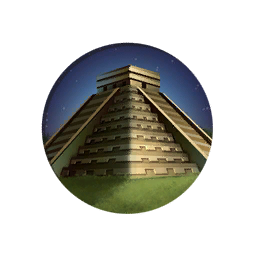
Chichen Itza
Game Info:
Cost: 800 🔨
Always Retained on Conquest
----------------
🎵 Culture: +1
⭐ Great Engineer Points: 1
Local Effects:
• On Completion: Gain Free Teocalli
Empire-Wide Effects:
• +50% 🌟 Golden Age duration
• -10% Empire Size Modifier in all Cities
----------------
Prerequisite Technologies: Astronomy
Number of Policies Required: 10
Max 1 in the World
Always Retained on Conquest
----------------
🎵 Culture: +1
⭐ Great Engineer Points: 1
Local Effects:
• On Completion: Gain Free Teocalli
Empire-Wide Effects:
• +50% 🌟 Golden Age duration
• -10% Empire Size Modifier in all Cities
----------------
Prerequisite Technologies: Astronomy
Number of Policies Required: 10
Max 1 in the World
Required Technology:
Historical Info:
Chichen Itza is an extraordinary city of stone built in the Yucatan, Mexico. Some of the oldest buildings and pyramids date back to 1500 years ago and are of Toltec and Mayan origin.
Chichen Itza consists of buildings, temples and courtyards of stone. A large "pok tap ok" or ceremonial ball court stands off to one side. (Ceremonial ball is that most interesting of games in which two sides sought to pass the ball through hoops at each end of the court. The captain of the winning team was then beheaded as a sacrifice to the gods.) Though the city is much ravaged by time (and looters), there still remain many beautiful stone carvings and statues.
At the center of the city stands the mighty stepped pyramid of Kukulcan, also known as "El Castillo." Constructed around the 13th century, El Castillo is approximately 180 feet square at the base and 78 feet in height. As was the Mayan practice, Kukulcan was constructed atop an older and smaller pyramid.
Chichen Itza was a thriving city until the 13th century, when revolt and civil war broke out among the Mayans, at which point the city went into a steep decline from which it never recovered. The center of the city was largely abandoned and in ruins by the time of the Spanish Conquest of the Yucatan in the 16th century.
Chichen Itza consists of buildings, temples and courtyards of stone. A large "pok tap ok" or ceremonial ball court stands off to one side. (Ceremonial ball is that most interesting of games in which two sides sought to pass the ball through hoops at each end of the court. The captain of the winning team was then beheaded as a sacrifice to the gods.) Though the city is much ravaged by time (and looters), there still remain many beautiful stone carvings and statues.
At the center of the city stands the mighty stepped pyramid of Kukulcan, also known as "El Castillo." Constructed around the 13th century, El Castillo is approximately 180 feet square at the base and 78 feet in height. As was the Mayan practice, Kukulcan was constructed atop an older and smaller pyramid.
Chichen Itza was a thriving city until the 13th century, when revolt and civil war broke out among the Mayans, at which point the city went into a steep decline from which it never recovered. The center of the city was largely abandoned and in ruins by the time of the Spanish Conquest of the Yucatan in the 16th century.

Colossus
Game Info:
Cost: 200 🔨
Always Retained on Conquest
----------------
💰 Gold: +5
🎵 Culture: +1
⭐ Great Merchant Points: 1
Local Effects:
• On Completion: Spawn 1 Cargo Ship in or near City
• +2 💰 Gold to International Trade Routes targeting this City
• +1 💰 Gold to Origin City of International Trade Routes targeting this City
Empire-Wide Effects:
• +1 Trade Route
----------------
City must be Coastal
Prerequisite Technologies: Iron Working
Number of Policies Required: 4
Max 1 in the World
Always Retained on Conquest
----------------
💰 Gold: +5
🎵 Culture: +1
⭐ Great Merchant Points: 1
Local Effects:
• On Completion: Spawn 1 Cargo Ship in or near City
• +2 💰 Gold to International Trade Routes targeting this City
• +1 💰 Gold to Origin City of International Trade Routes targeting this City
Empire-Wide Effects:
• +1 Trade Route
----------------
City must be Coastal
Prerequisite Technologies: Iron Working
Number of Policies Required: 4
Max 1 in the World
Required Technology:
Historical Info:
The Colossus of Rhodes was a bronze statue of Helios, the Greek God of the Sun, erected near the mouth of the city harbor. It stood over 100 feet high (about two-thirds the height of the Statue of Liberty). Unfortunately, an earthquake toppled it only 56 years after its construction. Taking the counsel of an oracle, the city elected to leave the statue in ruins where it lay. For over 900 years, people from all over the ancient world came to Rhodes to see the remains of the Colossus. It was destroyed in 650 AD when the city was captured by Muslim raiders, who promptly sold the statue for scrap.

Cristo Redentor
Game Info:
Cost: 1,700 🔨
Always Retained on Conquest
----------------
🎵 Culture: +5
🗿 Tourism: +25
Empire-Wide Effects:
• +2 🎵 +2 🗿 +2 🌟 to Hotel in all Cities
----------------
Prerequisite Technologies: Plastics
Number of Policies Required: 20
Max 1 in the World
Always Retained on Conquest
----------------
🎵 Culture: +5
🗿 Tourism: +25
Empire-Wide Effects:
• +2 🎵 +2 🗿 +2 🌟 to Hotel in all Cities
----------------
Prerequisite Technologies: Plastics
Number of Policies Required: 20
Max 1 in the World
Required Technology:
Historical Info:
Cristo Redentor, "Christ the Redeemer" in English, is a 125-foot tall statue of Jesus Christ situated on Corcovado Mountain, watching over the Brazilian city of Rio de Janeiro. First proposed in 1921 during celebrations of the centennial of Brazilian independence, by 1931 the statue had been completed, making it the largest art deco monument in the world. Since that time, the statue, seated 2330 feet above sea level, has become a beloved symbol of Rio de Janeiro and of Brazil.

Crystal Palace
Game Info:
🥇 Reward of World's Fair
----------------
Cost: 3,750 🔨 per Civilization at the start of the game
Always Retained on Conquest
----------------
🎵 Culture: +1
Great Work of Art or Artifact slots: 1
Local Effects:
• On Completion: Start a 🌟 Golden Age
Empire-Wide Effects:
• +2 🔨 +2 ⚗️ to Factory in all Cities
----------------
Max 1 in the World
----------------
Cost: 3,750 🔨 per Civilization at the start of the game
Always Retained on Conquest
----------------
🎵 Culture: +1
Great Work of Art or Artifact slots: 1
Local Effects:
• On Completion: Start a 🌟 Golden Age
Empire-Wide Effects:
• +2 🔨 +2 ⚗️ to Factory in all Cities
----------------
Max 1 in the World
Strategy:
Like its real-world counterpart, the Crystal Palace dabbles in a wide varitey of bonuses. Players with a large number of cities, and Factories, will benefit most from the Crystal Palace, however the additional Culture and Great Work slot are useful for any Civilization. May only be built collaboratively through the World Congress.
Historical Info:
The Crystal Palace was a cast-iron and plate-glass building originally erected in Hyde Park, London, England, to house the Great Exhibition of 1851. More than 14,000 exhibitors from around the world gathered in the Palace's 990,000 square feet of exhibition space to display examples of the latest technology developed in the Industrial Revolution. Designed by Sir Joseph Paxton, the Great Exhibition building was 1,851 feet long, with an interior height of 128 feet. Because of the recent invention of the cast plate glass method in 1848, which allowed for large sheets of cheap but strong glass, it was at the time the largest amount of glass ever seen in a building and astonished visitors with its clear walls and ceilings that did not require interior lights, thus a "Crystal Palace."

Eiffel Tower
Game Info:
Cost: 1,250 🔨
Always Retained on Conquest
----------------
🎵 Culture: +1
⭐ Great Merchant Points: 2
Empire-Wide Effects:
• -10% Policy Cost
----------------
Prerequisite Technologies: Dynamite
Number of Policies Required: 15
Max 1 in the World
Always Retained on Conquest
----------------
🎵 Culture: +1
⭐ Great Merchant Points: 2
Empire-Wide Effects:
• -10% Policy Cost
----------------
Prerequisite Technologies: Dynamite
Number of Policies Required: 15
Max 1 in the World
Required Technology:
Historical Info:
The Eiffel Tower is one of the world's most famous landmarks. Built for the Universal Exposition of 1889, the tower rises 984 feet above Paris' Champ de Mars, near the Seine River. Structural engineer Alexandre Gustave Eiffel built the tower at a cost of more than $1 million to demonstrate how steel and iron could be utilized in the construction of extremely tall buildings. The tallest building in the world when it was originally completed, the Eiffel Tower drew crowds of awestruck observers from around the world. Today, it remains one of Paris' leading tourist attractions.

Empire State Building
Game Info:
Cost: 1,600 🔨
Always Retained on Conquest
----------------
🎵 Culture: +1
Local Effects:
• On Completion: Gain Free Stock Exchange
Empire-Wide Effects:
• +1 💰 to Writers in all Cities
• +1 💰 to Artists in all Cities
• +1 💰 to Musicians in all Cities
• +1 💰 to Scientists in all Cities
• +1 💰 to Merchants in all Cities
• +1 💰 to Engineers in all Cities
• +1 💰 to Civil Servants in all Cities
• On Completion: Spawn 1 Free ⭐ Great Person of your choice in 🏛️ Capital
----------------
Prerequisite Technologies: Electricity
Number of Policies Required: 19
Max 1 in the World
Always Retained on Conquest
----------------
🎵 Culture: +1
Local Effects:
• On Completion: Gain Free Stock Exchange
Empire-Wide Effects:
• +1 💰 to Writers in all Cities
• +1 💰 to Artists in all Cities
• +1 💰 to Musicians in all Cities
• +1 💰 to Scientists in all Cities
• +1 💰 to Merchants in all Cities
• +1 💰 to Engineers in all Cities
• +1 💰 to Civil Servants in all Cities
• On Completion: Spawn 1 Free ⭐ Great Person of your choice in 🏛️ Capital
----------------
Prerequisite Technologies: Electricity
Number of Policies Required: 19
Max 1 in the World
Required Technology:
Historical Info:
The Empire State Building is a 103-story skyscraper located in Midtown Manhattan, New York City, at the intersection of Fifth Avenue and West 34th Street. It has a roof height of 1,250 feet (380 m), and with its antenna spire included, it stands a total of 1,454 feet (443 m) high.[6] Its name is derived from the nickname for New York, the Empire State. It stood as the world's tallest building for nearly 40 years, from its completion in early 1931 until the topping out of the original World Trade Center's North Tower in late 1970. Following the September 11 attacks in 2001, the Empire State Building was again the tallest building in New York (although it was no longer the tallest in the US or the world), until One World Trade Center reached a greater height on April 30, 2012. The Empire State Building is currently the fourth-tallest completed skyscraper in the United States (after the One World Trade Center, the Willis Tower and Trump International Hotel and Tower, both in Chicago), and the 25th-tallest in the world (the tallest now is Burj Khalifa, located in Dubai). It is also the fifth-tallest freestanding structure in the Americas.

Forbidden Palace
Game Info:
Cost: 500 🔨
Always Retained on Conquest
----------------
🎵 Culture: +1
Local Effects:
• -1 Unhappiness from 💰 Poverty
Empire-Wide Effects:
• -15% 💰 Gold cost for Purchase or Investment in all Cities
----------------
Prerequisite Technologies: Civil Service
Require Completion of Progress
Max 1 in the World
Always Retained on Conquest
----------------
🎵 Culture: +1
Local Effects:
• -1 Unhappiness from 💰 Poverty
Empire-Wide Effects:
• -15% 💰 Gold cost for Purchase or Investment in all Cities
----------------
Prerequisite Technologies: Civil Service
Require Completion of Progress
Max 1 in the World
Required Technology:
Historical Info:
A collection of imperial structures in Beijing, the Forbidden Palace stands as a testament to the Chinese architectural ingenuity and aesthetic. Ornamental gardens, terraces and fountains surround the magnificent structure, which became the capital of China in 1421. It was the residence of 24 emperors of the Ming and Qing Dynasties until the last emperor abdicated in 1911.
Although the correct title for the building is the "Imperial Palace," it is more widely known as the "Forbidden" Palace because ordinary people were barred from entering its grounds. With a 160-foot moat and walls 30 feet tall, there was little chance that they would get inside unwanted. The Forbidden Palace is enormous, occupying 170 acres and containing 8,706 rooms. An estimated eight to ten thousand people lived inside the palace to serve the needs of the emperor. Today, the Forbidden Palace is a major tourist attraction, and it is still used as a symbol of Chinese sovereignty.
Although the correct title for the building is the "Imperial Palace," it is more widely known as the "Forbidden" Palace because ordinary people were barred from entering its grounds. With a 160-foot moat and walls 30 feet tall, there was little chance that they would get inside unwanted. The Forbidden Palace is enormous, occupying 170 acres and containing 8,706 rooms. An estimated eight to ten thousand people lived inside the palace to serve the needs of the emperor. Today, the Forbidden Palace is a major tourist attraction, and it is still used as a symbol of Chinese sovereignty.
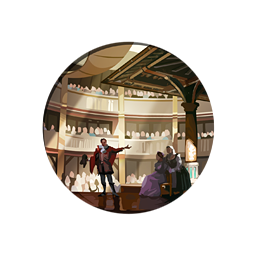
Globe Theatre
Game Info:
Cost: 800 🔨
Always Retained on Conquest
----------------
🎵 Culture: +2
Great Work of Writing slots: 2
Local Effects:
• Up to +10 💰 +10 🎵 +10 🗿 when Themed
• -1 Unhappiness from 🎵 Boredom
• On Completion: Spawn 1 Great Writer in or near City
Empire-Wide Effects:
• +2 🌟 to Writers in all Cities
• +2 🌟 to Artists in all Cities
• +2 🌟 to Musicians in all Cities
• +1 Specialist that does not produce Unhappiness from Urbanization in all Cities
----------------
Prerequisite Technologies: Printing Press
Number of Policies Required: 10
Max 1 in the World
----------------
Possible Theming Bonuses:
• +10 🎵 and 🗿 for three from the same Civilization and the same Era.
Always Retained on Conquest
----------------
🎵 Culture: +2
Great Work of Writing slots: 2
Local Effects:
• Up to +10 💰 +10 🎵 +10 🗿 when Themed
• -1 Unhappiness from 🎵 Boredom
• On Completion: Spawn 1 Great Writer in or near City
Empire-Wide Effects:
• +2 🌟 to Writers in all Cities
• +2 🌟 to Artists in all Cities
• +2 🌟 to Musicians in all Cities
• +1 Specialist that does not produce Unhappiness from Urbanization in all Cities
----------------
Prerequisite Technologies: Printing Press
Number of Policies Required: 10
Max 1 in the World
----------------
Possible Theming Bonuses:
• +10 🎵 and 🗿 for three from the same Civilization and the same Era.
Required Technology:
Historical Info:
Built in 1599 AD on Maiden Lane in London by the Lord Chamberlain's Men, the theatrical company of which William Shakespeare was a shareholder, the Globe Theatre incorporated a number of design innovations. In 1613 the Globe burned to the ground after the thatched roof was set alight by cannonfire during a production of Henry VIII; it was rebuilt on the same site in 1614 and continued in operation until closed by the Puritans in 1642. Although its exact dimensions are unrecorded, it is known that the Globe Theatre was a three-story, circular, open-air amphitheater roughly 100 feet in diameter and able to seat about 300 spectators. The stage was 43 feet wide, 27 feet deep and raised five feet off the ground, allowing for trap doors.
Grand Canal
Game Info:
🥇 Reward of Treasure Fleet
----------------
Cost: 1,500 🔨 per Civilization at the start of the game
Always Retained on Conquest
----------------
🎵 Culture: +1
Empire-Wide Effects:
• Free Treasure Fleet Promotion for all existing and future eligible Units
• +1 Trade Route
----------------
Max 1 in the World
----------------
Cost: 1,500 🔨 per Civilization at the start of the game
Always Retained on Conquest
----------------
🎵 Culture: +1
Empire-Wide Effects:
• Free Treasure Fleet Promotion for all existing and future eligible Units
• +1 Trade Route
----------------
Max 1 in the World
Strategy:
Build this wonder to boost the strength and durability of your navy via the Treasure Fleet promotion, and to receive an additional trade route. May only be built collaboratively through the World Congress.
Historical Info:
The Grand Canal is the largest canal in Venice, Italy, and remains one of the most important trade and traffic corridors in the city. As a city of small islands, Venice was enhanced during the Middle Ages by the dredging of soils to raise the marshy ground above the tides, the results of which were a series of flooded channels. These channels, or canals, encouraged the flourishing of a nautical culture which proved central to the economy of the city from the Middle Ages well into the present day. Today those canals still provide the means for transport of goods and people within the city. The maze of canals threaded through the city requires the use of more than 400 bridges to permit the flow of foot traffic. In 2011, the city opened Ponte della Costituzione, the fourth bridge across the Grand Canal, connecting the Piazzale Roma bus terminal area with the Stazione Ferroviaria (train station), the others being the original Ponte di Rialto, the Ponte dell'Accademia, and the Ponte degli Scalzi.

Great Firewall
Game Info:
Cost: 3,000 🔨
Always Retained on Conquest
----------------
🎵 Culture: +1
Local Effects:
• +50 City Security
Empire-Wide Effects:
• -50% 🗿 Tourism from Civilizatons that have researched The Internet
• +10 ⚗️ to Research Lab in all Cities
----------------
Prerequisite Technologies: The Internet
Number of Policies Required: 24
Max 1 in the World
Always Retained on Conquest
----------------
🎵 Culture: +1
Local Effects:
• +50 City Security
Empire-Wide Effects:
• -50% 🗿 Tourism from Civilizatons that have researched The Internet
• +10 ⚗️ to Research Lab in all Cities
----------------
Prerequisite Technologies: The Internet
Number of Policies Required: 24
Max 1 in the World
Required Technology:
Historical Info:
The Great Firewall is a restrictive internet monitoring and censorship program used to control the flow of information available to a civilization's people through the internet. By limiting the public's access to potentially volatile information available online, government agencies can limit potential backlash and other dissension regarding unpopular policies and government programs.

Great Library
Game Info:
Cost: 200 🔨
Always Retained on Conquest
----------------
⚗️ Science: +3
🎵 Culture: +1
⭐ Great Scientist Points: 1
Great Work of Writing slots: 2
Local Effects:
• Up to +3 ⚗️ +10 🎵 +10 🗿 when Themed
• On Completion: Gain Free Library
Empire-Wide Effects:
• On Completion: Gain 1 Free Technology
----------------
Prerequisite Technologies: Writing
Number of Policies Required: 4
Max 1 in the World
Always Retained on Conquest
----------------
⚗️ Science: +3
🎵 Culture: +1
⭐ Great Scientist Points: 1
Great Work of Writing slots: 2
Local Effects:
• Up to +3 ⚗️ +10 🎵 +10 🗿 when Themed
• On Completion: Gain Free Library
Empire-Wide Effects:
• On Completion: Gain 1 Free Technology
----------------
Prerequisite Technologies: Writing
Number of Policies Required: 4
Max 1 in the World
Required Technology:
Historical Info:
The Great Library of Alexandria was one of the two most important libraries of the ancient world. Ptolemy I founded it around 300 BC, and the Library was enhanced and expanded by his successors. The Library attempted to obtain copies of all scrolls of any consequence, and eventually contained over 700,000 volumes. Religious fanatics destroyed the library in 391 AD, after nearly 700 years of operation. Today, only a portion of the catalog survives, providing us with a mere hint of what treasures the library contained.

Great Lighthouse
Game Info:
Cost: 200 🔨
Always Retained on Conquest
----------------
🔨 Production: +2
🎵 Culture: +1
⭐ Great Merchant Points: 1
Local Effects:
• On Completion: Gain Free Lighthouse
Empire-Wide Effects:
• Free Navigator II Promotion for all existing and future eligible Units
----------------
City must be Coastal
Prerequisite Technologies: Sailing
Number of Policies Required: 4
Max 1 in the World
Always Retained on Conquest
----------------
🔨 Production: +2
🎵 Culture: +1
⭐ Great Merchant Points: 1
Local Effects:
• On Completion: Gain Free Lighthouse
Empire-Wide Effects:
• Free Navigator II Promotion for all existing and future eligible Units
----------------
City must be Coastal
Prerequisite Technologies: Sailing
Number of Policies Required: 4
Max 1 in the World
Required Technology:
Historical Info:
The Great Lighthouse, also known as the Pharos, was a marble watchtower and lighthouse built in 280 BC on an island in the harbor of Alexandria, Egypt. Estimated to have been 300 feet high, the primary function of the lighthouse was to guide approaching ships to the harbor on an otherwise unmarked coast. Exactly how the Pharos functioned is open to debate, with some historians believing that fires were burned on the top of the tower, while others believe that mirrors were used to reflect sunlight. (Since ships rarely sailed along coasts at night, there was probably little need for the lighthouse after dark.) The Pharos was destroyed in the 14th century after having been damaged by earthquakes.
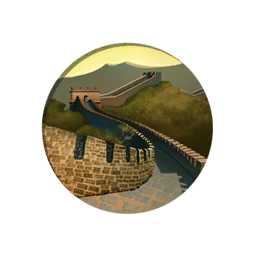
Great Wall
Game Info:
Cost: 250 🔨
Always Retained on Conquest
----------------
🎵 Culture: +1
⭐ Great Engineer Points: 1
Local Effects:
• +3 Military Supply
• On Completion: Spawn 1 Great General in or near City
• On Completion: Gain Free Walls
Team-Wide Effects:
• Non-friendly Land Units expend all 👣 Movement when entering your Team's Land territory from unowned or foreign territory
----------------
Prerequisite Technologies: Engineering
Becomes Obsolete With: Gunpowder
Note: all ongoing Effects of this Building will be removed when the above Technology is researched!
Number of Policies Required: 5
Max 1 in the World
Always Retained on Conquest
----------------
🎵 Culture: +1
⭐ Great Engineer Points: 1
Local Effects:
• +3 Military Supply
• On Completion: Spawn 1 Great General in or near City
• On Completion: Gain Free Walls
Team-Wide Effects:
• Non-friendly Land Units expend all 👣 Movement when entering your Team's Land territory from unowned or foreign territory
----------------
Prerequisite Technologies: Engineering
Becomes Obsolete With: Gunpowder
Note: all ongoing Effects of this Building will be removed when the above Technology is researched!
Number of Policies Required: 5
Max 1 in the World
Required Technology:
Historical Info:
The Great Wall of China is one of the largest and most famous man-made constructions in the entire world. Chinese rulers built the Great Wall to ward off attack from nomadic tribesmen living in modern Manchuria and Mongolia. Interestingly, the Great Wall was not designed to keep the nomads out - the Chinese knew it was all but impossible to defend such a long border - it was designed to make it difficult for the raiders to carry off loot, thus making raids far less profitable and thus less worth the risks involved.
There have actually been five different "Great Walls" built by different Chinese dynasties. The first four were constructed of earth and have since all but disappeared. The current wall was built almost entirely by the Ming Dynasty between 1368 and 1640 AD. This wall was constructed on a grander scale, using more permanent materials (like stone). The Ming wall stretches for 3,948 miles from Shanhai Pass on the Bohai Gulf in the east to Lop Nur in the southeast portion of Xinjiang's Uygur Autonomous Region in the west. This was the region where the Silk Road first entered China, and a series of watchtowers which could communicate via smoke signals were intended to pass messages rapidly along the wall's vast length.
In pure military terms, the Great Wall turned out to be something of a failure. The Manchus were able to bribe a Chinese general to let them pass through the wall, so it turned out to be of little value in stopping a major barbarian attack. After the Manchus conquered China, the borders of the country extended far to the north, rendering the wall irrelevant. The sheer monetary cost of the wall was also staggering, and the cost in human lives is said to have exceeded over one million souls. The Great Wall is sometimes nicknamed "the long graveyard."
Today much of the Great Wall is in a state of disrepair - though the tourist regions are well-preserved, much of the rest of the structure is crumbling, and perhaps only 20% of the wall is in good condition. Despite its decay, the Great Wall remains one of China's most popular tourist attractions and a true wonder of the world.
There have actually been five different "Great Walls" built by different Chinese dynasties. The first four were constructed of earth and have since all but disappeared. The current wall was built almost entirely by the Ming Dynasty between 1368 and 1640 AD. This wall was constructed on a grander scale, using more permanent materials (like stone). The Ming wall stretches for 3,948 miles from Shanhai Pass on the Bohai Gulf in the east to Lop Nur in the southeast portion of Xinjiang's Uygur Autonomous Region in the west. This was the region where the Silk Road first entered China, and a series of watchtowers which could communicate via smoke signals were intended to pass messages rapidly along the wall's vast length.
In pure military terms, the Great Wall turned out to be something of a failure. The Manchus were able to bribe a Chinese general to let them pass through the wall, so it turned out to be of little value in stopping a major barbarian attack. After the Manchus conquered China, the borders of the country extended far to the north, rendering the wall irrelevant. The sheer monetary cost of the wall was also staggering, and the cost in human lives is said to have exceeded over one million souls. The Great Wall is sometimes nicknamed "the long graveyard."
Today much of the Great Wall is in a state of disrepair - though the tourist regions are well-preserved, much of the rest of the structure is crumbling, and perhaps only 20% of the wall is in good condition. Despite its decay, the Great Wall remains one of China's most popular tourist attractions and a true wonder of the world.

Hagia Sophia
Game Info:
Cost: 400 🔨
Always Retained on Conquest
----------------
🎵 Culture: +2
🕊️ Faith: +1
Local Effects:
• On Completion: Spawn 1 Great Prophet in or near City
• On Completion: Gain Free Church
Empire-Wide Effects:
• +25% Starting Religious Strength for Religious Units
----------------
Prerequisite Technologies: Theology
Number of Policies Required: 7
Max 1 in the World
Always Retained on Conquest
----------------
🎵 Culture: +2
🕊️ Faith: +1
Local Effects:
• On Completion: Spawn 1 Great Prophet in or near City
• On Completion: Gain Free Church
Empire-Wide Effects:
• +25% Starting Religious Strength for Religious Units
----------------
Prerequisite Technologies: Theology
Number of Policies Required: 7
Max 1 in the World
Required Technology:
Historical Info:
The Hagia Sophia, or "Church of the Holy Wisdom," was constructed in 530 AD as a Greek Orthodox church. Standing in Istanbul (the city was originally named "Constantinople"), Turkey, it is a beautiful and ornate structure, built of stone and marble, and topped by a golden dome measuring over 100 feet in diameter. An extremely difficult engineering challenge for the time, the dome has collapsed several times during its existence. Four graceful towers stand at the corners of the building.
The interior of the Hagia Sophia is a marvelous space of columns and arches extending up to the dome, which appears almost to float atop the building. The interior was sheathed in colored marble and golden mosaics depicting biblical scenes and images of Christian saints.
In 1453 Constantinople was captured by the Ottoman Turks, and the Hagia Sophia was converted into a mosque. Human images are not welcome in mosques, and many of the mosaics were covered with plaster. In 1934, Turkish President Kemal Ataturk turned the building into a museum. In recent years some restoration work has been done on the Hagia Sophia, and a few of the mosaics have been uncovered. Despite the ravages of time, the Hagia Sophia remains universally acknowledged as one of the most beautiful buildings in the world.
The interior of the Hagia Sophia is a marvelous space of columns and arches extending up to the dome, which appears almost to float atop the building. The interior was sheathed in colored marble and golden mosaics depicting biblical scenes and images of Christian saints.
In 1453 Constantinople was captured by the Ottoman Turks, and the Hagia Sophia was converted into a mosque. Human images are not welcome in mosques, and many of the mosaics were covered with plaster. In 1934, Turkish President Kemal Ataturk turned the building into a museum. In recent years some restoration work has been done on the Hagia Sophia, and a few of the mosaics have been uncovered. Despite the ravages of time, the Hagia Sophia remains universally acknowledged as one of the most beautiful buildings in the world.
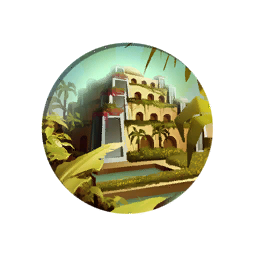
Hanging Gardens
Game Info:
Cost: 200 🔨
Always Retained on Conquest
----------------
🌾 Food: +10
🎵 Culture: +1
Local Effects:
• On Completion: Gain Free Garden
----------------
Prerequisite Technologies: Mathematics
Number of Policies Required: 4
Max 1 in the World
Always Retained on Conquest
----------------
🌾 Food: +10
🎵 Culture: +1
Local Effects:
• On Completion: Gain Free Garden
----------------
Prerequisite Technologies: Mathematics
Number of Policies Required: 4
Max 1 in the World
Required Technology:
Historical Info:
The Hanging Gardens were a distinctive feature of ancient Babylon. They were a great source of pride to the people, and were often described in accounts written by visitors to the city. Possibly built by King Nebuchadnezzar II in 600 BC, the gardens were an ascending series of tiered platforms (not unlike a ziggurat) constructed of mud bricks and containing all manner of trees, shrubs, and vines. From a distance the gardens were said to look like a large green mountain rising from the center of the city.

Himeji Castle
Game Info:
Cost: 800 🔨
Always Retained on Conquest
----------------
🎵 Culture: +1
⭐ Great Engineer Points: 2
Local Effects:
• +5 Military Supply
• On Completion: Gain Free Bastion Fort
Empire-Wide Effects:
• Free Himeji Castle Promotion for all existing and future eligible Units
Team-Wide Effects:
• +10% ⚔️ City Strength from Buildings in all Cities of your Team
----------------
Prerequisite Technologies: Gunpowder
Number of Policies Required: 10
Max 1 in the World
Always Retained on Conquest
----------------
🎵 Culture: +1
⭐ Great Engineer Points: 2
Local Effects:
• +5 Military Supply
• On Completion: Gain Free Bastion Fort
Empire-Wide Effects:
• Free Himeji Castle Promotion for all existing and future eligible Units
Team-Wide Effects:
• +10% ⚔️ City Strength from Buildings in all Cities of your Team
----------------
Prerequisite Technologies: Gunpowder
Number of Policies Required: 10
Max 1 in the World
Required Technology:
Historical Info:
Himeji Castle is an extraordinary Japanese castle and one of the most beautiful structures in the world. First constructed in the 14th century and then massively rebuilt and extended in the late 16th-early 17th by Kuroda Yoshitaka and Ikeda Terumasa, Himeji Castle is a tall, imposing multi-story structure constructed of stone and wood, and featuring a brilliant white exterior and a series of beautifully curved rooftops. It is nicknamed "White Heron Castle."
Himeji Castle is surrounded by a confusing maze of paths leading to the keep. The walls and gates were designed to force an invading army to travel in a series of concentric circles with many dead ends before reaching the main gate. This would string out the attackers and allow the defenders to fire on the vanguard many times during the approach. The ingenious system was not put to the test, as the castle was never attacked during the medieval era.
Although the surrounding area was heavily damaged by Allied bombing during World War II, the castle was almost entirely unscathed. It is currently undergoing major restoration, and it remains one of the most popular tourist sites in Japan.
Himeji Castle is surrounded by a confusing maze of paths leading to the keep. The walls and gates were designed to force an invading army to travel in a series of concentric circles with many dead ends before reaching the main gate. This would string out the attackers and allow the defenders to fire on the vanguard many times during the approach. The ingenious system was not put to the test, as the castle was never attacked during the medieval era.
Although the surrounding area was heavily damaged by Allied bombing during World War II, the castle was almost entirely unscathed. It is currently undergoing major restoration, and it remains one of the most popular tourist sites in Japan.

Hubble Space Telescope
Game Info:
Cost: 3,000 🔨
Always Retained on Conquest
----------------
🎵 Culture: +1
⭐ Great Scientist Points: 1
Local Effects:
• On Completion: Spawn 1 Great Scientist in or near City
• On Completion: Gain Free Spaceship Factory
Empire-Wide Effects:
• +25% 🔨 Production for Spaceship Parts in all Cities
----------------
Prerequisite Technologies: Robotics
Number of Policies Required: 27
Max 1 in the World
Always Retained on Conquest
----------------
🎵 Culture: +1
⭐ Great Scientist Points: 1
Local Effects:
• On Completion: Spawn 1 Great Scientist in or near City
• On Completion: Gain Free Spaceship Factory
Empire-Wide Effects:
• +25% 🔨 Production for Spaceship Parts in all Cities
----------------
Prerequisite Technologies: Robotics
Number of Policies Required: 27
Max 1 in the World
Required Technology:
Historical Info:
Named for renowned American astronomer Edwin Hubble, the Hubble Space Telescope has proven to be among the most crucial astronomical research tools ever developed. Launched in 1990, the telescope has continually provided breathtaking images of far-off constellations and nebulas, attracting widespread attention from both scientists and the general public. As the only space telescope capable of being repaired by astronauts, the service life of the Hubble has been continually extended through a series of space walks. However, despite its notable legacy, the Hubble Space Telescope will be replaced in 2018 by the more advanced James Webb Space Telescope.

International Space Station
Game Info:
🥇 Reward of International Space Station
----------------
Cost: 8,250 🔨 per Civilization at the start of the game
Always Retained on Conquest
----------------
🎵 Culture: +1
Local Effects:
• When researching a Technology: +100 🔨, scaling with Era
Empire-Wide Effects:
• +33% ⚗️ Science from Discover Technology
• +1 🔨 to Scientists in all Cities
• +1 ⚗️ to Engineers in all Cities
----------------
Max 1 in the World
----------------
Cost: 8,250 🔨 per Civilization at the start of the game
Always Retained on Conquest
----------------
🎵 Culture: +1
Local Effects:
• When researching a Technology: +100 🔨, scaling with Era
Empire-Wide Effects:
• +33% ⚗️ Science from Discover Technology
• +1 🔨 to Scientists in all Cities
• +1 ⚗️ to Engineers in all Cities
----------------
Max 1 in the World
Historical Info:
Constructed from prefabricated modules launched individually, the International Space Station is a habitable, low-Earth-orbit satellite. It arose from the 1993 merger into a single multinational program of three national initiatives to establish a permanent orbital platform for research and exploration: the Soviet "Mir-2," the American "Freedom," and the European Union's "Columbus." To date, astronauts from 15 countries have lived and worked on the station. Supplies and crew members have ferried to the platform by American space shuttles and Russian Soyuz rockets; these are scheduled to be replaced by the Russian Progress, European ATV, Japanese H-II Transfer Vehicle, and the American SpaceX corporation's Dragon. The International Space Station is the largest artificial body in orbit, and can be seen with the naked eye from Earth under the appropriate conditions.

Karlstejn
Game Info:
Cost: 500 🔨
Always Retained on Conquest
----------------
🎵 Culture: +3
🕊️ Faith: +4
Local Effects:
• On Completion: Gain Free Order
Empire-Wide Effects:
• -5% Worldwide Follower Requirement for all Buildings
----------------
Holy City Only
Prerequisite Technologies: Guilds
Number of Policies Required: 8
Max 1 in the World
Always Retained on Conquest
----------------
🎵 Culture: +3
🕊️ Faith: +4
Local Effects:
• On Completion: Gain Free Order
Empire-Wide Effects:
• -5% Worldwide Follower Requirement for all Buildings
----------------
Holy City Only
Prerequisite Technologies: Guilds
Number of Policies Required: 8
Max 1 in the World
Required Technology:
Historical Info:
Karlstejn Castle is a picturesque Bohemian fortification a short distance outside Prague in the modern Czech Republic. The castle was completed in 1365, and has housed the Imperial Regalia and Crown Jewels of Bohemia as well as numerous other relics and treasures. The castle was sieged by Hussites during the Hussite Wars, the first major Protestant movement in Europe, which began more than a century before Martin Luther and the Protestant Reformation.

Kremlin
Game Info:
Cost: 1,600 🔨
Always Retained on Conquest
----------------
🎵 Culture: +1
Local Effects:
• +33% 🔨 Production for Armored Units
• -1 Unhappiness from 🌾 and 🔨 Distress
Empire-Wide Effects:
• On Completion: Gain 1 Free Policy
----------------
Prerequisite Technologies: Replaceable Parts
Require Any Order Policy
Number of Policies Required: 18
Max 1 in the World
Always Retained on Conquest
----------------
🎵 Culture: +1
Local Effects:
• +33% 🔨 Production for Armored Units
• -1 Unhappiness from 🌾 and 🔨 Distress
Empire-Wide Effects:
• On Completion: Gain 1 Free Policy
----------------
Prerequisite Technologies: Replaceable Parts
Require Any Order Policy
Number of Policies Required: 18
Max 1 in the World
Required Technology:
Historical Info:
"Kremlin" is a Russian word which denotes a fortified complex of buildings in the center of a city. It is most often used to refer to the Kremlin in the city of Moscow, a remarkable set of buildings which hold much of the Russian government. The Kremlin sits on a hill overlooking the Moskva River. In one form or the other, fortified structures have been in that location for almost 1000 years. The site was named "Kremlin" in the 14th century.
The Kremlin is within a triangular, walled area about 68 acres in extent. The walls are of red brick, with pencil-like towers at the corners and entrances. Many of the buildings are painted white with yellow trim and green roofs that look quite cheerful from a distance. The Cathedral of the Dormition, constructed in the 1470s, is the oldest building in the complex. Two other cathedrals lie within its walls, as do a surprising number of palaces, the Kremlin Palace being the largest.
The Kremlin has seen many great figures rise and fall within its walls. Ivan the Terrible built the Palace of Facets in the Kremlin. In the Great Patriotic War (WWII), Josef Stalin drove the German invaders from the gates of Moscow - perhaps the greatest service that any Russian ruler has ever performed for his country. (It was also here that Stalin planned the systematic extermination of millions of his own people.) It was here that Mikhail Gorbachev oversaw the dissolution of the Soviet Union. Today, the Kremlin holds the government of the Russian Federation.
To whatever use it might be put in the future, the Kremlin will always stand as a mighty monument to Russia's past - for it has seen the best and the worst of that great nation.
The Kremlin is within a triangular, walled area about 68 acres in extent. The walls are of red brick, with pencil-like towers at the corners and entrances. Many of the buildings are painted white with yellow trim and green roofs that look quite cheerful from a distance. The Cathedral of the Dormition, constructed in the 1470s, is the oldest building in the complex. Two other cathedrals lie within its walls, as do a surprising number of palaces, the Kremlin Palace being the largest.
The Kremlin has seen many great figures rise and fall within its walls. Ivan the Terrible built the Palace of Facets in the Kremlin. In the Great Patriotic War (WWII), Josef Stalin drove the German invaders from the gates of Moscow - perhaps the greatest service that any Russian ruler has ever performed for his country. (It was also here that Stalin planned the systematic extermination of millions of his own people.) It was here that Mikhail Gorbachev oversaw the dissolution of the Soviet Union. Today, the Kremlin holds the government of the Russian Federation.
To whatever use it might be put in the future, the Kremlin will always stand as a mighty monument to Russia's past - for it has seen the best and the worst of that great nation.
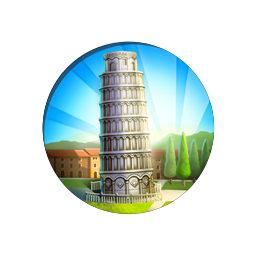
Leaning Tower of Pisa
Game Info:
Cost: 800 🔨
Always Retained on Conquest
----------------
🎵 Culture: +1
Local Effects:
• +15% ⭐ Great Person Rate
Empire-Wide Effects:
• +10% ⭐ Great Person Rate in all Cities
• On Completion: Spawn 1 Free ⭐ Great Person of your choice in 🏛️ Capital
----------------
Prerequisite Technologies: Chemistry
Number of Policies Required: 10
Max 1 in the World
Always Retained on Conquest
----------------
🎵 Culture: +1
Local Effects:
• +15% ⭐ Great Person Rate
Empire-Wide Effects:
• +10% ⭐ Great Person Rate in all Cities
• On Completion: Spawn 1 Free ⭐ Great Person of your choice in 🏛️ Capital
----------------
Prerequisite Technologies: Chemistry
Number of Policies Required: 10
Max 1 in the World
Required Technology:
Historical Info:
Found in the Piazza del Duomo ("Cathedral Square") in the city of Pisa, Italy, the famous bell tower commonly known as the Leaning Tower of Pisa has stood slightly off-kilter for centuries. Construction on the tower began in 1173, and it quickly became clear that the unstable soil and minimal foundation upon which the tower was built were not enough to prevent it from sinking. After leaving the tower incomplete for nearly a century, construction resumed in the late 13th century, with the final level completed in 1372. The tower is home to seven bells, each comprising a different note on the musical scale.

Louvre
Game Info:
Cost: 1,250 🔨
Always Retained on Conquest
----------------
🎵 Culture: +2
Great Work of Art or Artifact slots: 4
Local Effects:
• Up to +30 🎵 +15 🗿 when Themed
• On Completion: Spawn 1 Great Artist in or near City
• On Completion: Spawn 2 Archaeologist in or near City
• On Completion: Gain Free Museum
----------------
Prerequisite Technologies: Archaeology
Require Completion of Artistry
Max 1 in the World
----------------
Possible Theming Bonuses:
• +15 🎵 and 🗿 for two and two from different Civilizations and different Eras.
Always Retained on Conquest
----------------
🎵 Culture: +2
Great Work of Art or Artifact slots: 4
Local Effects:
• Up to +30 🎵 +15 🗿 when Themed
• On Completion: Spawn 1 Great Artist in or near City
• On Completion: Spawn 2 Archaeologist in or near City
• On Completion: Gain Free Museum
----------------
Prerequisite Technologies: Archaeology
Require Completion of Artistry
Max 1 in the World
----------------
Possible Theming Bonuses:
• +15 🎵 and 🗿 for two and two from different Civilizations and different Eras.
Required Technology:
Historical Info:
The Louvre is a large and incredibly ornate palace in Paris, France. Originally constructed in the 15th century on the site of an even older castle, for the next two and a half centuries the Louvre served as the home to many of France's kings, most of whom added to the already-huge structure. During the 17th century Kings Louis XIII and Louis XIV and their advisors Cardinals Richelieu and Mazarin began acquiring an extensive art collection which was kept at the Louvre. In 1682 the Royal court moved to Versailles, and in 1783 the Revolutionary government opened the palace to the public. It has remained a public museum ever since. Not surprisingly, it is considered to have the finest collection of pre-modern French paintings in the world.

Machu Picchu
Game Info:
Cost: 400 🔨
Always Retained on Conquest
----------------
💰 Gold: +5
🎵 Culture: +1
🕊️ Faith: +2
⭐ Great Merchant Points: 1
Empire-Wide Effects:
• +15% 🔨 Production/💰 Gold from 🔗 City Connections and Industrial City Connections in all Cities
----------------
City must be within 2 Tiles of a Mountain
Prerequisite Technologies: Physics
Number of Policies Required: 7
Max 1 in the World
----------------
List of possible boosts to this Building:
• Each Mountain within 3 Tiles of City: +1 🌾 +1 🔨 +1 🎵 +1 🕊️
Always Retained on Conquest
----------------
💰 Gold: +5
🎵 Culture: +1
🕊️ Faith: +2
⭐ Great Merchant Points: 1
Empire-Wide Effects:
• +15% 🔨 Production/💰 Gold from 🔗 City Connections and Industrial City Connections in all Cities
----------------
City must be within 2 Tiles of a Mountain
Prerequisite Technologies: Physics
Number of Policies Required: 7
Max 1 in the World
----------------
List of possible boosts to this Building:
• Each Mountain within 3 Tiles of City: +1 🌾 +1 🔨 +1 🎵 +1 🕊️
Required Technology:
Historical Info:
Clinging to a Peruvian mountaintop at an elevation of 7,700 feet, Machu Picchu was an extraordinary Incan city and a marvel of pre-Columbian architecture. Constructed in the mid-15th century, scholars believe that much of the city was a palace complex of the mighty Incan ruler Pachacuti Inca Yupanqui. Constructed almost entirely of white granite stone, the city was inexplicably deserted in the mid-16th century. The marauding Spanish Conquistadors did not discover the site during their conquest of the Incas, so it has remained relatively intact until today.
Archaeologists have identified the aforementioned palace complex, as well as temples, residential areas, plazas and a cemetery, all carved from the living rock. The mountainous terrain surrounding the central structures has been carved into stepped agricultural terraces which were at one time watered by an extensive aqueduct system, in itself a remarkable feat in a mountainous locale.
Although in ruins, Machu Picchu retains an extraordinary rugged beauty even today. It must have been an incredible city during the days when the mighty Incas called it home.
Archaeologists have identified the aforementioned palace complex, as well as temples, residential areas, plazas and a cemetery, all carved from the living rock. The mountainous terrain surrounding the central structures has been carved into stepped agricultural terraces which were at one time watered by an extensive aqueduct system, in itself a remarkable feat in a mountainous locale.
Although in ruins, Machu Picchu retains an extraordinary rugged beauty even today. It must have been an incredible city during the days when the mighty Incas called it home.

Mausoleum of Halicarnassus
Game Info:
Cost: 185 🔨
Always Retained on Conquest
----------------
🎵 Culture: +2
⭐ Great Merchant Points: 1
Local Effects:
• +10% 🔨 +10% 💰 +10% ⚗️ during 😊 "We Love the King Day"
• On Completion: +20 Turns of 😊 "We Love the King Day"
• On Completion: Gain Free Stone Works
----------------
Prerequisite Technologies: Construction
Number of Policies Required: 2
Max 1 in the World
Always Retained on Conquest
----------------
🎵 Culture: +2
⭐ Great Merchant Points: 1
Local Effects:
• +10% 🔨 +10% 💰 +10% ⚗️ during 😊 "We Love the King Day"
• On Completion: +20 Turns of 😊 "We Love the King Day"
• On Completion: Gain Free Stone Works
----------------
Prerequisite Technologies: Construction
Number of Policies Required: 2
Max 1 in the World
Required Technology:
Historical Info:
The Mausoleum of Halicarnassus was constructed c. 350 BC as a tomb for Mausolus, the ruler of Caria (an area of modern Turkey). Said to have been designed and constructed by the greatest sculptors and craftsmen of the time, the temple was known for its detailed sculptural reliefs and impressive scale, towering nearly 150 feet high (47m). Destroyed by a series of earthquakes that struck the region during the 1st millennium AD, portions of the tomb were excavated by British archaeologists in the mid 19th century. One of the Seven Wonders of the Ancient World, the term "Mausoleum" as it is used today traces its origins to this tomb.

Menin Gate
Game Info:
🥇 Reward of Global Wargames
----------------
Cost: 3,300 🔨 per Civilization at the start of the game
Always Retained on Conquest
----------------
🎵 Culture: +2
😊 Happiness: 2
⭐ Great Writer Points: 1
Empire-Wide Effects:
• +2 🎵 +2 🌟 to Fort in all Cities
• +2 🎵 +2 🌟 to Landmark in all Cities
• +2 🎵 +2 🌟 to Citadel in all Cities
• +2 🎵 +2 🌟 to Aplekton in all Cities
• +2 🎵 +2 🌟 to Isibaya in all Cities
• +2 🎵 +2 🌟 to Ordo in all Cities
• When an owned Military Unit is defeated: +2 🎵 +2 🌟 in 🏛️ Capital, scaling with Era
----------------
Max 1 in the World
----------------
Cost: 3,300 🔨 per Civilization at the start of the game
Always Retained on Conquest
----------------
🎵 Culture: +2
😊 Happiness: 2
⭐ Great Writer Points: 1
Empire-Wide Effects:
• +2 🎵 +2 🌟 to Fort in all Cities
• +2 🎵 +2 🌟 to Landmark in all Cities
• +2 🎵 +2 🌟 to Citadel in all Cities
• +2 🎵 +2 🌟 to Aplekton in all Cities
• +2 🎵 +2 🌟 to Isibaya in all Cities
• +2 🎵 +2 🌟 to Ordo in all Cities
• When an owned Military Unit is defeated: +2 🎵 +2 🌟 in 🏛️ Capital, scaling with Era
----------------
Max 1 in the World
Strategy:
A defensive wonder. Strengthens the yields from Forts, Citadels, and Landmarks. The Menin Gate also gives a small bonus for each unit that falls in battle. May only be built collaboratively through the World Congress.
Historical Info:
The Menin Gate Memorial to the Missing is a war memorial in Ypres, Belgium, dedicated to the British and Commonwealth soldiers who were killed in the Ypres Salient of World War I. The high, barrel-vaulted passageway is inscribed with the names of 54,395 Commonwealth soldiers who died in the Salient, but whose bodies were never recovered. The memorial stands at the eastern exit of the town, marking the starting point towards the front line, where more than 450,000 men on both sides of the conflict were killed.
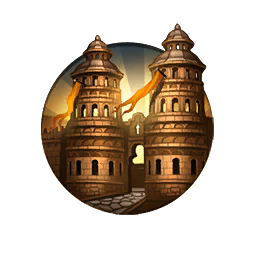
Nalanda
Game Info:
Cost: 250 🔨
Always Retained on Conquest
----------------
🎵 Culture: +2
Great Work of Writing slots: 2
Local Effects:
• Up to +9 🎵 +6 🗿 when Themed
• -1 Unhappiness from 🎵 Boredom
Empire-Wide Effects:
• +1 ⚗️ +1 🎵 to Amphitheater in all Cities
• On Completion: Gain Free Great Work: The Way of the Bodhisattva (placed in nearest compatible slot)
----------------
Prerequisite Technologies: Drama and Poetry
Number of Policies Required: 5
Max 1 in the World
----------------
Possible Theming Bonuses:
• +6 🎵 and 🗿 for two Domestic .
Always Retained on Conquest
----------------
🎵 Culture: +2
Great Work of Writing slots: 2
Local Effects:
• Up to +9 🎵 +6 🗿 when Themed
• -1 Unhappiness from 🎵 Boredom
Empire-Wide Effects:
• +1 ⚗️ +1 🎵 to Amphitheater in all Cities
• On Completion: Gain Free Great Work: The Way of the Bodhisattva (placed in nearest compatible slot)
----------------
Prerequisite Technologies: Drama and Poetry
Number of Policies Required: 5
Max 1 in the World
----------------
Possible Theming Bonuses:
• +6 🎵 and 🗿 for two Domestic .
Required Technology:
Historical Info:
The mahavihara of Nalanda was a complex of monasteries, libraries, observatories, and amphitheatres spanning 30 acres in modern day Bihar, in Eastern India. One of the earliest institutions that could properly be considered a university, Nalanda boasted a curriculum that included philosophy, epistemology, theology, medicine, mathematics, astrology, and alchemy. In addition to its educational role, Nalanda hosted some of the most influential thinkers and lecturers of the Buddhist world for over 7 centuries, and attracted visiting scholars from across Asia. The university survived the fall of the Gupta Empire in the 6th century, and gained powerful patrons with the rise of the Pala Empire, but came to a violent end with the Muslim invasion of India. Archeological evidence suggests that Islamic invaders sacked Nalanda 3 separate times, the monks and scholars either killed or forced to flee. The national government of India has committed to founding a new Nalanda as a modern university near the ruins of the old compound. The revived Nalanda University accepted its first class of students in 2020.

Neuschwanstein
Game Info:
Cost: 1,000 🔨
Always Retained on Conquest
----------------
💰 Gold: +6
🎵 Culture: +4
⭐ Great Merchant Points: 1
Empire-Wide Effects:
• +1 💰 +1 🎵 to Castle in all Cities
• +1 😊 Happiness to Castle in all Cities
----------------
City must be within 2 Tiles of a Mountain
Prerequisite Technologies: Railroad
Number of Policies Required: 14
Max 1 in the World
Always Retained on Conquest
----------------
💰 Gold: +6
🎵 Culture: +4
⭐ Great Merchant Points: 1
Empire-Wide Effects:
• +1 💰 +1 🎵 to Castle in all Cities
• +1 😊 Happiness to Castle in all Cities
----------------
City must be within 2 Tiles of a Mountain
Prerequisite Technologies: Railroad
Number of Policies Required: 14
Max 1 in the World
Required Technology:
Historical Info:
Commissioned by the "Mad King" Ludwig II of Bavaria in the late 19th century, the Neuschwanstein Castle has since become the symbol of iconic "fairy tale" castles commonly found in children's literature and fables. Built into a hillside near the town of Füssen in Germany, Ludwig had intended the castle to be his retreat from public view, as he was known for his reclusive nature. Following his death, the castle became a popular tourist attraction, and eventually served as the inspiration for the famous Sleeping Beauty Castle created by Walt Disney.

Notre Dame
Game Info:
Cost: 500 🔨
Always Retained on Conquest
----------------
🎵 Culture: +1
🕊️ Faith: +4
😊 Happiness: 1
⭐ Great Merchant Points: 1
Great Work of Art or Artifact slots: 2
Local Effects:
• Up to +8 🎵 +3 🕊️ +8 🗿 +3 🌟 when Themed
• On Completion: Gain Free Cathedral
Empire-Wide Effects:
• +30% Base Religious Pressure towards other Cities in all Cities
----------------
Prerequisite Technologies: Machinery
Number of Policies Required: 8
Max 1 in the World
----------------
Possible Theming Bonuses:
• +8 🎵 and 🗿 for two Foreign from different Civilizations.
Always Retained on Conquest
----------------
🎵 Culture: +1
🕊️ Faith: +4
😊 Happiness: 1
⭐ Great Merchant Points: 1
Great Work of Art or Artifact slots: 2
Local Effects:
• Up to +8 🎵 +3 🕊️ +8 🗿 +3 🌟 when Themed
• On Completion: Gain Free Cathedral
Empire-Wide Effects:
• +30% Base Religious Pressure towards other Cities in all Cities
----------------
Prerequisite Technologies: Machinery
Number of Policies Required: 8
Max 1 in the World
----------------
Possible Theming Bonuses:
• +8 🎵 and 🗿 for two Foreign from different Civilizations.
Required Technology:
Historical Info:
Notre Dame is a mighty cathedral standing on the "Ile de la Citie," an island in the Seine River in Paris, France. Built on the site of an older church, which was in turn built on the site of a Roman temple to Jupiter, Notre Dame is a magnificent example of gothic architecture and one of the greatest buildings standing. Construction of Notre Dame began in 1163 and took almost two centuries to complete.
Notre Dame is a massive stone building of square towers, flying buttresses, and tall spires. The exterior is decorated with delicate ribbons of arches and statues of saints and kings. The roofline of the building is festooned with gargoyles. The interior of the cathedral is a long, narrow space with columns lining each side, supporting two beautiful raised galleries. Brilliant stained glass windows shine gently down on the main altar, which contains a beautiful statue of the Virgin Mary, the cathedral's patron, holding the body of Jesus.
The cathedral has suffered many periods of neglect over the years. During the French Revolution, many of Notre Dame's treasures were stolen and the building was used as a warehouse. In the early 1800s, the cathedral was in such a state of disrepair that the city planners contemplated tearing it down. In fact, Victor Hugo wrote "The Hunchback of Notre Dame" in part to raise awareness of the cathedral's plight. In 1871, during the short-lived Paris Commune, Notre Dame was almost set on fire. Fortunately the cathedral survived it all, and has now been largely restored to its original grandeur.
Notre Dame is a massive stone building of square towers, flying buttresses, and tall spires. The exterior is decorated with delicate ribbons of arches and statues of saints and kings. The roofline of the building is festooned with gargoyles. The interior of the cathedral is a long, narrow space with columns lining each side, supporting two beautiful raised galleries. Brilliant stained glass windows shine gently down on the main altar, which contains a beautiful statue of the Virgin Mary, the cathedral's patron, holding the body of Jesus.
The cathedral has suffered many periods of neglect over the years. During the French Revolution, many of Notre Dame's treasures were stolen and the building was used as a warehouse. In the early 1800s, the cathedral was in such a state of disrepair that the city planners contemplated tearing it down. In fact, Victor Hugo wrote "The Hunchback of Notre Dame" in part to raise awareness of the cathedral's plight. In 1871, during the short-lived Paris Commune, Notre Dame was almost set on fire. Fortunately the cathedral survived it all, and has now been largely restored to its original grandeur.

Olympic Village
Game Info:
🥇 Reward of International Games
----------------
Cost: 6,750 🔨 per Civilization at the start of the game
Always Retained on Conquest
----------------
🎵 Culture: +3
😊 Happiness: 3
Local Effects:
• 25% of 🎵 Culture from Terrain and World Wonders is added to 🗿 Tourism output
• +25% 🗿 Tourism from Great Works
Empire-Wide Effects:
• +2 💰 +2 🗿 to Stadium in all Cities
----------------
Max 1 in the World
----------------
Cost: 6,750 🔨 per Civilization at the start of the game
Always Retained on Conquest
----------------
🎵 Culture: +3
😊 Happiness: 3
Local Effects:
• 25% of 🎵 Culture from Terrain and World Wonders is added to 🗿 Tourism output
• +25% 🗿 Tourism from Great Works
Empire-Wide Effects:
• +2 💰 +2 🗿 to Stadium in all Cities
----------------
Max 1 in the World
Strategy:
Combining the strengths of the Hotel, Stadium and Hermitage in one, the Olympic Village is a powerhouse of late-game culture. May only be built collaboratively through the World Congress.
Historical Info:
An Olympic Village is an accommodation center built for the Olympic Games, usually within an Olympic Park or elsewhere in a host city. Olympic Villages are built to house all participating athletes, as well as officials and athletic trainers. The idea of the Olympic Village comes from Pierre de Coubertin. Up until the 1924 Summer Olympic Games, National Olympic Committees rented locations around the host city to house participants, which was expensive. For the 1924 Summer Olympics, the organizers built cabins near the Stade Olympique de Colombes to allow the athletes to easily access the Games' venues. The Olympic Village of the 1932 Summer Olympics served as the model of today's Olympic Villages; it consisted of a group of buildings with rooms to lodge athletes, and buildings with other accommodations.

Oracle
Game Info:
Cost: 250 🔨
Always Retained on Conquest
----------------
⚗️ Science: +1
🎵 Culture: +1
⭐ Great Scientist Points: 1
Local Effects:
• -1 Unhappiness from ⚗️ Illiteracy
• On Completion: +400 ⚗️ +400 🎵
• On Completion: Gain Free Temple
----------------
Prerequisite Technologies: Philosophy
Number of Policies Required: 5
Max 1 in the World
Always Retained on Conquest
----------------
⚗️ Science: +1
🎵 Culture: +1
⭐ Great Scientist Points: 1
Local Effects:
• -1 Unhappiness from ⚗️ Illiteracy
• On Completion: +400 ⚗️ +400 🎵
• On Completion: Gain Free Temple
----------------
Prerequisite Technologies: Philosophy
Number of Policies Required: 5
Max 1 in the World
Required Technology:
Historical Info:
In ancient Greek religion, an oracle was a priest or priestess through whom the gods spoke in response to questions. The oracle interpreted dreams, the actions of entranced persons, and physical signs found in the entrails of sacrificed animals. The most famous oracle resided in the shrine of Apollo at Delphi, located on the slopes of Mount Parnassus. Greeks, Romans, and others consulted this oracle for centuries about public policy and private matters. A priestess called the Pythia would, for a fee, make public predictions of the future. These ecstatic pronouncements became infamous for their ambiguity.

Palace of Westminster
Game Info:
Cost: 1,250 🔨
Always Retained on Conquest
----------------
💰 Gold: +4
🎵 Culture: +1
⭐ Great Merchant Points: 2
Local Effects:
• -1 Unhappiness from 💰 Poverty
• On Completion: Spawn 1 Great Merchant in or near City
Empire-Wide Effects:
• +1 Delegate in the World Congress for every 4 City-States originally in the World
----------------
Prerequisite Technologies: Industrialization
Require Completion of Statecraft
Max 1 in the World
Always Retained on Conquest
----------------
💰 Gold: +4
🎵 Culture: +1
⭐ Great Merchant Points: 2
Local Effects:
• -1 Unhappiness from 💰 Poverty
• On Completion: Spawn 1 Great Merchant in or near City
Empire-Wide Effects:
• +1 Delegate in the World Congress for every 4 City-States originally in the World
----------------
Prerequisite Technologies: Industrialization
Require Completion of Statecraft
Max 1 in the World
Required Technology:
Historical Info:
Big Ben is the clock (and the clock tower) at the northern end of the Houses of Parliament in London, England. Big Ben (the clock) is famous for its accuracy and for its massive bell which weighs more than 13 tons and tolls out the day's hours.
Big Ben was designed by Lord Edmund Grimthorpe and constructed by Edward Dent and his son, Frederick. The clock and bell were installed in the tower in 1859. Big Ben is the second largest four-faced clock in the world. At the base of each face of the clock is the Latin inscription, "Oh Lord, keep safe our Queen Victoria the First."
Big Ben was designed by Lord Edmund Grimthorpe and constructed by Edward Dent and his son, Frederick. The clock and bell were installed in the tower in 1859. Big Ben is the second largest four-faced clock in the world. At the base of each face of the clock is the Latin inscription, "Oh Lord, keep safe our Queen Victoria the First."
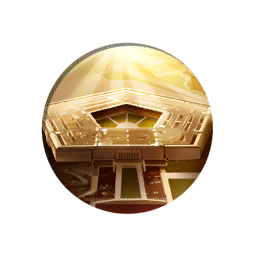
Pentagon
Game Info:
Cost: 1,900 🔨
Always Retained on Conquest
----------------
🎵 Culture: +1
⭐ Great Merchant Points: 2
Local Effects:
• +20 XP for Air Units
• +50% 🔨 Production for Air Units
• On Completion: Spawn 2 Jet Fighter in or near City
Empire-Wide Effects:
• +1 Military Supply in all Cities
• +2 Air Unit Slots in all Cities
----------------
Prerequisite Technologies: Combined Arms
Require Completion of Imperialism
Max 1 in the World
Always Retained on Conquest
----------------
🎵 Culture: +1
⭐ Great Merchant Points: 2
Local Effects:
• +20 XP for Air Units
• +50% 🔨 Production for Air Units
• On Completion: Spawn 2 Jet Fighter in or near City
Empire-Wide Effects:
• +1 Military Supply in all Cities
• +2 Air Unit Slots in all Cities
----------------
Prerequisite Technologies: Combined Arms
Require Completion of Imperialism
Max 1 in the World
Required Technology:
Historical Info:
The Pentagon is a large, five-sided building in Arlington, Virginia, USA, just across the Potomac River from Washington, DC. It is the headquarters of the United States Department of Defense and all three military branches: Army, Navy, and Air Force. The Pentagon was designed to consolidate the various parts of the War Department, until then scattered in seventeen separate buildings across Washington. Construction began in 1941, and was completed in 1943, an astonishingly short period for such a huge building, reflecting the frantic pace of American military expansion at the start of World War II. The Pentagon occupies some 30 acres and contains office space for 25,000 people, making it one of the largest office buildings ever constructed (it holds more workers than the Empire State Building, for example).
The Pentagon was struck by a passenger jet airplane piloted by terrorists on September 11, 2001. Fortunately, the area of the Pentagon that was hit was undergoing renovations at the time of the attack. The renovations were to improve the structural strength of the building, and many of the office workers occupying that portion of the building had temporarily relocated to other quarters. One hundred and twenty-five Pentagon workers were killed in the attack, along with all sixty-four passengers aboard the plane. The building has since been fully rebuilt and today remains the heart and brains of the US military.
The Pentagon was struck by a passenger jet airplane piloted by terrorists on September 11, 2001. Fortunately, the area of the Pentagon that was hit was undergoing renovations at the time of the attack. The renovations were to improve the structural strength of the building, and many of the office workers occupying that portion of the building had temporarily relocated to other quarters. One hundred and twenty-five Pentagon workers were killed in the attack, along with all sixty-four passengers aboard the plane. The building has since been fully rebuilt and today remains the heart and brains of the US military.
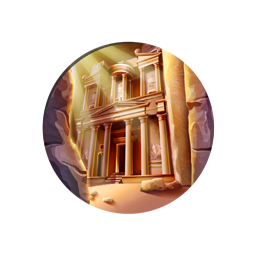
Petra
Game Info:
Cost: 185 🔨
Always Retained on Conquest
----------------
🎵 Culture: +2
⭐ Great Engineer Points: 1
Local Effects:
• +1 💰 to Desert
• On Completion: Spawn 1 Caravan in or near City
Empire-Wide Effects:
• +1 Trade Route
----------------
City must be on or adjacent to Desert
Prerequisite Technologies: Trade
Number of Policies Required: 2
Max 1 in the World
----------------
List of possible boosts to this Building:
• Archaeology: +6 🎵
Always Retained on Conquest
----------------
🎵 Culture: +2
⭐ Great Engineer Points: 1
Local Effects:
• +1 💰 to Desert
• On Completion: Spawn 1 Caravan in or near City
Empire-Wide Effects:
• +1 Trade Route
----------------
City must be on or adjacent to Desert
Prerequisite Technologies: Trade
Number of Policies Required: 2
Max 1 in the World
----------------
List of possible boosts to this Building:
• Archaeology: +6 🎵
Required Technology:
Historical Info:
Constructed sometime around 1000 BC, the site of Petra in Jordan is among the most famous examples of rock-cut architecture in the world. Numerous intricately carved structures were cut into the sandstone walls of the desert canyons surrounding the area, as Petra came to serve as the capital city for the once-nomadic Nabataen people. The most famous of these structures, the Al Khazneh or "The Treasury," has been featured in numerous major motion pictures, notably a prominent role in "Indiana Jones and the Last Crusade" when the Al Khazneh was used to represent the location of the Holy Grail.

Porcelain Tower
Game Info:
Cost: 900 🔨
Always Retained on Conquest
----------------
🎵 Culture: +1
⭐ Great Scientist Points: 2
Local Effects:
• +10% ⚗️ Science
• -1 Unhappiness from ⚗️ Illiteracy
• On Completion: Spawn 1 Great Scientist in or near City
----------------
Prerequisite Technologies: Architecture
Number of Policies Required: 12
Max 1 in the World
Always Retained on Conquest
----------------
🎵 Culture: +1
⭐ Great Scientist Points: 2
Local Effects:
• +10% ⚗️ Science
• -1 Unhappiness from ⚗️ Illiteracy
• On Completion: Spawn 1 Great Scientist in or near City
----------------
Prerequisite Technologies: Architecture
Number of Policies Required: 12
Max 1 in the World
Required Technology:
Historical Info:
Constructed by the Ming Dynasty in the 15th century, the Porcelain Tower of Nanjing was one of the most extraordinary architectural achievements of Chinese history. The tower was some 97 feet in diameter, with a height of 260 feet.
The exterior of the building was built of white porcelain bricks that shone like mirrors in the sunlight. At night the tower was hung from top to bottom with over 100 lamps. The tower stood in the center of Nanjing until 1854 when it was destroyed during the Taiping Rebellion.
The exterior of the building was built of white porcelain bricks that shone like mirrors in the sunlight. At night the tower was hung from top to bottom with over 100 lamps. The tower stood in the center of Nanjing until 1854 when it was destroyed during the Taiping Rebellion.

Prora
Game Info:
Cost: 1,700 🔨
Always Retained on Conquest
----------------
🎵 Culture: +1
😊 Happiness: 1
Local Effects:
• When pillaging an Improvement: +25 🎵, scaling with Era
Empire-Wide Effects:
• +1/2 😊 Happiness in 🏛️ Capital for every Policy adopted
• On Completion: Gain 1 Free Policy
----------------
City must be Coastal
Prerequisite Technologies: Flight
Require Any Autocracy Policy
Number of Policies Required: 20
Max 1 in the World
Always Retained on Conquest
----------------
🎵 Culture: +1
😊 Happiness: 1
Local Effects:
• When pillaging an Improvement: +25 🎵, scaling with Era
Empire-Wide Effects:
• +1/2 😊 Happiness in 🏛️ Capital for every Policy adopted
• On Completion: Gain 1 Free Policy
----------------
City must be Coastal
Prerequisite Technologies: Flight
Require Any Autocracy Policy
Number of Policies Required: 20
Max 1 in the World
Required Technology:
Historical Info:
Built between 1936 and 1939, Prora was to be a massive beach resort on the Baltic island of Ruegen. The massive megalomaniac complex was intended to provide vacations for German workers. As originally planned, the Prora Resort would consist of eight blocks of ten housing units, capable of providing rooms for 20,000 vacationers. The complex, if completed, would also have included restaurants, cinemas, swimming pools, gymnasiums, ballrooms and other amenities, all served by a rail station and a quay for cruise ships. The outbreak of World War II halted construction; during the war the buildings were used to house refugees and later served as a military hospital. After the war, the complex was occupied by Soviet units for a period, and then stripped of all useable materials, down to the wiring and plumbing. Aside from a museum for East German history, most of the complex has fallen to decay.

Pyramids
Game Info:
Cost: 150 🔨
Always Retained on Conquest
----------------
🎵 Culture: +1
⭐ Great Engineer Points: 1
Local Effects:
• On Completion: Spawn 1 Settler in or near City
Empire-Wide Effects:
• When expending a ⭐ Great Person: +50 🌟 in 🏛️ Capital, scaling with Era
----------------
Prerequisite Technologies: Mining
Max 1 in the World
Always Retained on Conquest
----------------
🎵 Culture: +1
⭐ Great Engineer Points: 1
Local Effects:
• On Completion: Spawn 1 Settler in or near City
Empire-Wide Effects:
• When expending a ⭐ Great Person: +50 🌟 in 🏛️ Capital, scaling with Era
----------------
Prerequisite Technologies: Mining
Max 1 in the World
Required Technology:
Historical Info:
Built by the fourth dynasty of Egyptian rulers, the Pyramids represent the pinnacle of ancient Egyptian cultural achievement. Constructed on the Giza plateau outside modern-day Cairo, these structures were burial tombs and monuments for the Pharaohs, and may have taken generations and tens of thousands of workers to complete. The Pyramids are the only one of the generally accepted man-made wonders of the ancient world that remains in existence today.
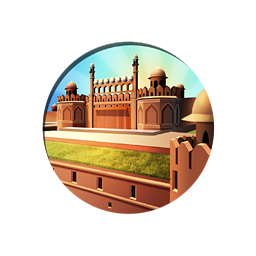
Red Fort
Game Info:
Cost: 900 🔨
Always Retained on Conquest
----------------
🎵 Culture: +1
⚔️ City Strength: +6
⚔️ Hit Points: +100
⭐ Great Scientist Points: 1
Local Effects:
• +10% 🏹 City Strike Strength
• +1 City Strike Range
• On Completion: Spawn 1 Great Engineer in or near City
• On Completion: Gain Free Arsenal
Empire-Wide Effects:
• +5% Military Supply from Population in all Cities
----------------
Prerequisite Technologies: Metallurgy
Require Completion of Fealty
Max 1 in the World
Always Retained on Conquest
----------------
🎵 Culture: +1
⚔️ City Strength: +6
⚔️ Hit Points: +100
⭐ Great Scientist Points: 1
Local Effects:
• +10% 🏹 City Strike Strength
• +1 City Strike Range
• On Completion: Spawn 1 Great Engineer in or near City
• On Completion: Gain Free Arsenal
Empire-Wide Effects:
• +5% Military Supply from Population in all Cities
----------------
Prerequisite Technologies: Metallurgy
Require Completion of Fealty
Max 1 in the World
Required Technology:
Historical Info:
Built by Shah Jahan, the Lal Qil'ah in Delhi, better known as the Red Fort, was the residence and administrative palace for the Mughal emperors from 1648 AD, when construction was completed, until 1857, when the last Mughal emperor was exiled by the British government. So-called for the red sandstone used to construct its massive 75-foot high outer walls, the Red Fort is a tribute to the magnificence of Mughal architecture with large audience halls, luxurious living quarters, richly landscaped gardens, baths, libraries, and sumptuous mosques. With British occupation the Red Fort was stripped of its valuables, a number of buildings inside it were demolished, the gardens largely filled in, and it was used as a military cantonment. In 2003, the Indian government began a long-term project to restore the Red Fort to its former opulence as a tourist site.

Roman Forum
Game Info:
Cost: 200 🔨
Always Retained on Conquest
----------------
🎵 Culture: +1
⭐ Great Diplomat Points: 1
Local Effects:
• +20% 🔨 Production for Diplomacy Units
• On Completion: Spawn 1 Great Diplomat in or near City
Empire-Wide Effects:
• +1 Paper
• Free Imperial Seal Promotion for all existing and future eligible Units
----------------
Prerequisite Technologies: Mathematics
Number of Policies Required: 3
Max 1 in the World
Always Retained on Conquest
----------------
🎵 Culture: +1
⭐ Great Diplomat Points: 1
Local Effects:
• +20% 🔨 Production for Diplomacy Units
• On Completion: Spawn 1 Great Diplomat in or near City
Empire-Wide Effects:
• +1 Paper
• Free Imperial Seal Promotion for all existing and future eligible Units
----------------
Prerequisite Technologies: Mathematics
Number of Policies Required: 3
Max 1 in the World
Required Technology:
Strategy:
Build this world wonder to receive a permanent boost to your relations with city-states through better-trained Diplomatic Units. Provides a free Great Diplomat to send to nearby city-states.
Historical Info:
The Roman Forum (Latin: Forum Romanum) is a rectangular forum (plaza) surrounded by the ruins of several important ancient government buildings at the center of the city of Rome. It was for centuries the center of Roman public life: the site of triumphal processions and elections, venue for public speeches, criminal trials, gladiatorial matches, and commercial affairs. The teeming heart of ancient Rome, it has been called the most celebrated meeting place in the world, and in all history.

Sistine Chapel
Game Info:
Cost: 900 🔨
Always Retained on Conquest
----------------
🎵 Culture: +1
Great Work of Art or Artifact slots: 2
Local Effects:
• Up to +13 🎵 +3 🕊️ +10 🗿 when Themed
Empire-Wide Effects:
• +10% 🎵 Culture in all Cities
----------------
Prerequisite Technologies: Acoustics
Number of Policies Required: 11
Max 1 in the World
----------------
Possible Theming Bonuses:
• +10 🎵 and 🗿 for two from the same Civilization and the same Era.
Always Retained on Conquest
----------------
🎵 Culture: +1
Great Work of Art or Artifact slots: 2
Local Effects:
• Up to +13 🎵 +3 🕊️ +10 🗿 when Themed
Empire-Wide Effects:
• +10% 🎵 Culture in all Cities
----------------
Prerequisite Technologies: Acoustics
Number of Policies Required: 11
Max 1 in the World
----------------
Possible Theming Bonuses:
• +10 🎵 and 🗿 for two from the same Civilization and the same Era.
Required Technology:
Historical Info:
The beauty of Rome's Sistine Chapel has long served as a testament to the mixture of strong religious beliefs and the love of art shared by the people of Renaissance Europe. The great Italian artist Michelangelo devoted four years to painting the mural that adorns the ceiling of the Apostolic Palace, the building that is the official residence of the Pope. Michelangelo's great work depicts events in the book of Genesis and other Biblical stories. Twenty years before Michelangelo began his work on the ceiling, other great Italian artists had painted the walls of the structure with various religious scenes.
Michelangelo was commissioned by Pope Julius II to paint the ceiling. He worked on the painting from 1508 to 1512. According to legend, Michelangelo had not wanted to work on the project at all. He was intimidated by the scale of the work and he believed that his true talents lay as a sculptor. In any event, Michelangelo's work has been acclaimed as one of the greatest paintings in western history. Few visitors to the Sistine Chapel have failed to be moved by the artist's dedication to his subject, or his feeling for the nature of human struggle, suffering, and spiritual triumph.
Michelangelo was commissioned by Pope Julius II to paint the ceiling. He worked on the painting from 1508 to 1512. According to legend, Michelangelo had not wanted to work on the project at all. He was intimidated by the scale of the work and he believed that his true talents lay as a sculptor. In any event, Michelangelo's work has been acclaimed as one of the greatest paintings in western history. Few visitors to the Sistine Chapel have failed to be moved by the artist's dedication to his subject, or his feeling for the nature of human struggle, suffering, and spiritual triumph.

Slater Mill
Game Info:
American Exclusive Building
----------------
Cost: 1,250 🔨
💰 Maintenance: 6
----------------
🔨 Production: +2
💰 Gold: +2
🎵 Culture: +1
⭐ Great Engineer Points: 2
Local Effects:
• On Completion: Gain Free Factory
Empire-Wide Effects:
• 10% of 💰 Gold output of each City (pre-Modifiers) is added to its 🔨 Production output (post-Modifiers)
• -25% Tile Purchase Cost in all Cities
• +5 🔨 +5 💰 to Factory in all Cities
• +5 🔨 +5 💰 to Stock Exchange in all Cities
• +2 🔨 +2 💰 to World Wonders in all Cities
• +1 Trade Route
• -25% Duration for Trade Routes
----------------
City must have access to Fresh Water
Required Buildings in any City: Royal Collection
Empire must not have the following Buildings: Smithsonian Institution, West Point
Prerequisite Technologies: Industrialization
Max 1 in the World
----------------
Cost: 1,250 🔨
💰 Maintenance: 6
----------------
🔨 Production: +2
💰 Gold: +2
🎵 Culture: +1
⭐ Great Engineer Points: 2
Local Effects:
• On Completion: Gain Free Factory
Empire-Wide Effects:
• 10% of 💰 Gold output of each City (pre-Modifiers) is added to its 🔨 Production output (post-Modifiers)
• -25% Tile Purchase Cost in all Cities
• +5 🔨 +5 💰 to Factory in all Cities
• +5 🔨 +5 💰 to Stock Exchange in all Cities
• +2 🔨 +2 💰 to World Wonders in all Cities
• +1 Trade Route
• -25% Duration for Trade Routes
----------------
City must have access to Fresh Water
Required Buildings in any City: Royal Collection
Empire must not have the following Buildings: Smithsonian Institution, West Point
Prerequisite Technologies: Industrialization
Max 1 in the World
Required Technology:
Strategy:
One of the three mutually exclusive Wonders that America can build after it has completed Independence Hall. Choose your destiny carefully.
Note that all 3 Wonders have symmetry between them, focusing either on 🎵 Culture, ⚗️ Science, or 🔨 Production in similar ways. Thus, which Yield and Victory type you care most about should influence your choice.
Build the Slater Mill if you aim for the Diplomatic or Domination victory. Your Cities receive extra 🔨 Production based on their 💰 Gold output, which lets you build Military and Diplomatic Units faster. The ⚗️ Science or 🎵 Culture that the alternatives provide is stronger, unless you heavily lack 🔨 Production. The West Point encourages Domination too, and it's usually a better choice, especially if you're lacking in ⚗️ Science but your 🔨 Production capacity is strong. Otherwise the Slater Mill might be better. Focusing on 💰 Gold per turn is a strong strategy from now on. This Wonder synergizes best with Statecraft as this Policy Branch helps with allying city states and gaining Congress Votes, and gives an extra Trade Route. Industry and Freedom will further add Trade Routes which are important, because with the Slater Mill's 25% shorter Trade Route duration, you will be able to establish your Franchises faster.
Factories and Stock Exchanges gain powerful yields so it's worth building them as soon as possible.
The 25% discount on tile 💰 Gold purchases promotes buying tiles liberally to boost prodution of important Buildings, Wonders or Units.
Note that all 3 Wonders have symmetry between them, focusing either on 🎵 Culture, ⚗️ Science, or 🔨 Production in similar ways. Thus, which Yield and Victory type you care most about should influence your choice.
Build the Slater Mill if you aim for the Diplomatic or Domination victory. Your Cities receive extra 🔨 Production based on their 💰 Gold output, which lets you build Military and Diplomatic Units faster. The ⚗️ Science or 🎵 Culture that the alternatives provide is stronger, unless you heavily lack 🔨 Production. The West Point encourages Domination too, and it's usually a better choice, especially if you're lacking in ⚗️ Science but your 🔨 Production capacity is strong. Otherwise the Slater Mill might be better. Focusing on 💰 Gold per turn is a strong strategy from now on. This Wonder synergizes best with Statecraft as this Policy Branch helps with allying city states and gaining Congress Votes, and gives an extra Trade Route. Industry and Freedom will further add Trade Routes which are important, because with the Slater Mill's 25% shorter Trade Route duration, you will be able to establish your Franchises faster.
Factories and Stock Exchanges gain powerful yields so it's worth building them as soon as possible.
The 25% discount on tile 💰 Gold purchases promotes buying tiles liberally to boost prodution of important Buildings, Wonders or Units.
Historical Info:
A National Historic Landmark, the Slater Mill is located next to the Blackstone River in Pawtucket, Rhode Island. Modeled after cotton spinning mills first established in England, the Slater Mill is the first water-powered cotton spinning mill in North America to utilize the Arkwright system of cotton spinning as developed by Richard Arkwright. Samuel Slater, the mill's founder, apprenticed as a young man in Belper, England with industrialist Jedediah Strutt. Shortly after immigrating to the United States, Slater was hired by Moses Brown of Providence, Rhode Island to produce a working set of machines necessary to spin cotton yarn using water-power. Construction of the machines, as well as a dam, waterway, waterwheel and mill was completed in 1793. Manufacturing was based on Richard Arkwright's cotton spinning system which included carding, drawing, and spinning machines. Slater initially hired children and families to work in his mill, establishing a pattern that was replicated throughout the Blackstone Valley and known as the "Rhode Island System". It was later eclipsed by Francis Cabot Lowell's Waltham System. Slater Mill was the first property to be listed on the National Register of Historic Places, and was designated a National Historic Landmark on November 13, 1966.

Smithsonian Institution
Game Info:
American Exclusive Building
----------------
Cost: 1,250 🔨
💰 Maintenance: 6
----------------
⚗️ Science: +2
🎵 Culture: +3
⭐ Great Scientist Points: 2
Local Effects:
• On Completion: Gain Free Museum
Empire-Wide Effects:
• 10% of 💰 Gold output of each City (pre-Modifiers) is added to its 🎵 Culture output (post-Modifiers)
• -25% Tile Purchase Cost in all Cities
• +5 ⚗️ +5 🎵 to Museum in all Cities
• +5 ⚗️ +5 🎵 to Research Lab in all Cities
• +5 ⚗️ to Landmark in all Cities
• +2 ⚗️ +2 🎵 to World Wonders in all Cities
• +1 ⚗️ to Great Works in all Cities
----------------
Required Buildings in any City: Royal Collection
Empire must not have the following Buildings: West Point, Slater Mill
Prerequisite Technologies: Archaeology
Max 1 in the World
----------------
Cost: 1,250 🔨
💰 Maintenance: 6
----------------
⚗️ Science: +2
🎵 Culture: +3
⭐ Great Scientist Points: 2
Local Effects:
• On Completion: Gain Free Museum
Empire-Wide Effects:
• 10% of 💰 Gold output of each City (pre-Modifiers) is added to its 🎵 Culture output (post-Modifiers)
• -25% Tile Purchase Cost in all Cities
• +5 ⚗️ +5 🎵 to Museum in all Cities
• +5 ⚗️ +5 🎵 to Research Lab in all Cities
• +5 ⚗️ to Landmark in all Cities
• +2 ⚗️ +2 🎵 to World Wonders in all Cities
• +1 ⚗️ to Great Works in all Cities
----------------
Required Buildings in any City: Royal Collection
Empire must not have the following Buildings: West Point, Slater Mill
Prerequisite Technologies: Archaeology
Max 1 in the World
Required Technology:
Strategy:
One of the three mutually exclusive Wonders that America can build after it has completed Independence Hall. Choose your destiny carefully.
Note that all 3 Wonders have symmetry between them, focusing either on 🎵 Culture, ⚗️ Science, or 🔨 Production in similar ways. Thus, which Yield and Victory type you care most about should influence your choice.
Build the Smithsonian Institution if you aim for the Cultural or Scientific victory. Your Cities receive extra 🎵 Culture based on their 💰 Gold output, which lets you unlock Policies faster. Focusing on 💰 Gold per turn is a strong strategy from now on. This wonder synergizes best with Artistry as this Policy Branch lets you create more Great Works or Landmarks that gain a ⚗️ Science bonus from this Wonder. Freedom Ideology will further benefit Landmarks and Tourism output.
Museums and Research Labs gain powerful yields, so it's worth building them as soon as possible.
Since it's unlocked at Archaeology, you will reveal antiquity sites early, so consider expanding near unowned sites to create Landmarks in your new territories. They are recommended over Great Works because on top of the bigger ⚗️ Science bonus, they provide 💰 Gold which feeds back to the 🎵 Culture bonus. However, keep your City number in check to avoid the 🗿 Tourism penalty.
The 25% discount on tile 💰 Gold purchases promotes buying tiles liberally to boost prodution of important Buildings, Wonders or Units.
Note that all 3 Wonders have symmetry between them, focusing either on 🎵 Culture, ⚗️ Science, or 🔨 Production in similar ways. Thus, which Yield and Victory type you care most about should influence your choice.
Build the Smithsonian Institution if you aim for the Cultural or Scientific victory. Your Cities receive extra 🎵 Culture based on their 💰 Gold output, which lets you unlock Policies faster. Focusing on 💰 Gold per turn is a strong strategy from now on. This wonder synergizes best with Artistry as this Policy Branch lets you create more Great Works or Landmarks that gain a ⚗️ Science bonus from this Wonder. Freedom Ideology will further benefit Landmarks and Tourism output.
Museums and Research Labs gain powerful yields, so it's worth building them as soon as possible.
Since it's unlocked at Archaeology, you will reveal antiquity sites early, so consider expanding near unowned sites to create Landmarks in your new territories. They are recommended over Great Works because on top of the bigger ⚗️ Science bonus, they provide 💰 Gold which feeds back to the 🎵 Culture bonus. However, keep your City number in check to avoid the 🗿 Tourism penalty.
The 25% discount on tile 💰 Gold purchases promotes buying tiles liberally to boost prodution of important Buildings, Wonders or Units.
Historical Info:
The Smithsonian Institution, originally established in 1846 as the United States National Museum is a group of museums and research centers administered by the Government of the United States. Lovingly called "the nation's attic" for its eclectic holdings of 138 million items, the Institution's nineteen museums, nine research centers, and zoo include historical and architectural landmarks, mostly located in the District of Columbia. Additional facilities are located in Arizona, Maryland, Massachusetts, New York City, Virginia, and Panama. A further 170 museums are Smithsonian Affiliates. The Institution's thirty million annual visitors are admitted without charge; funding comes from the Institution's endowment, private, corporate, and government contributions, membership dues, as well as retail, concession and licensing revenues. Institution publications include Smithsonian and Air and Space magazines.

Soho Foundry
Game Info:
Cost: 1,000 🔨
Always Retained on Conquest
----------------
🔨 Production: +5
🎵 Culture: +1
⭐ Great Engineer Points: 1
Local Effects:
• On Completion: Gain Free Factory
Empire-Wide Effects:
• +4 Coal
----------------
Prerequisite Technologies: Steam Power
Number of Policies Required: 14
Max 1 in the World
Always Retained on Conquest
----------------
🔨 Production: +5
🎵 Culture: +1
⭐ Great Engineer Points: 1
Local Effects:
• On Completion: Gain Free Factory
Empire-Wide Effects:
• +4 Coal
----------------
Prerequisite Technologies: Steam Power
Number of Policies Required: 14
Max 1 in the World
Required Technology:
Historical Info:
Soho Foundry was established in 1795 by James Watt and Matthew Boulton for the production of Watt's newest invention: The steam engine. An ingenious tinkerer, James Watt created several improvements over the old Newcomen designs to create a new steam engine which produced rotary motion with less wear and using one quarter of the coal. Watt patented his new machine and partnered with Matthew Boulton, a businessman and inventor in his own right, to found a new factory in Smethwick, England. The Soho Foundry was unprecedented for its time, producing standardized and interchangeable parts using new techniques like breaking larger tasks into smaller, specialized jobs. Management at Soho was also ahead of its time, providing sick leave benefits, as well as professional development and welfare programmes to its employees. The management theory, mass production techniques and steam engines produced at Soho Foundry were crucial to the industrialization of Britain and have made a lasting, global impact.

Statue of Liberty
Game Info:
Cost: 1,600 🔨
Always Retained on Conquest
----------------
🎵 Culture: +1
Empire-Wide Effects:
• +1 🔨 to Writers in all Cities
• +1 🔨 to Artists in all Cities
• +1 🔨 to Musicians in all Cities
• +1 🔨 to Scientists in all Cities
• +1 🔨 to Merchants in all Cities
• +1 🔨 to Engineers in all Cities
• +1 🔨 to Civil Servants in all Cities
• On Completion: Gain 1 Free Policy
----------------
Prerequisite Technologies: Biology
Require Any Freedom Policy
Number of Policies Required: 18
Max 1 in the World
Always Retained on Conquest
----------------
🎵 Culture: +1
Empire-Wide Effects:
• +1 🔨 to Writers in all Cities
• +1 🔨 to Artists in all Cities
• +1 🔨 to Musicians in all Cities
• +1 🔨 to Scientists in all Cities
• +1 🔨 to Merchants in all Cities
• +1 🔨 to Engineers in all Cities
• +1 🔨 to Civil Servants in all Cities
• On Completion: Gain 1 Free Policy
----------------
Prerequisite Technologies: Biology
Require Any Freedom Policy
Number of Policies Required: 18
Max 1 in the World
Required Technology:
Historical Info:
The Statue of Liberty is one of the largest statues in the world. Measuring over 300 feet tall from the base of its pedestal, the statue is constructed of copper plating over an iron framework and weighs over 250 metric tons. Designed by French sculptor Frederic Bartholdi, the statue, with upraised torch and the broken chains of tyranny at her feet, was presented to the United States by the French government in 1886 to commemorate 100 years of American independence. The statue itself, Liberty Island, and nearby Ellis Island became a national monument in 1924.
For more than a century, the Statue of Liberty has stood at the mouth of the New York harbor. Often the first sight seen by immigrants arriving in America, Lady Liberty symbolizes the ideals of freedom upon which the United States was founded.
For more than a century, the Statue of Liberty has stood at the mouth of the New York harbor. Often the first sight seen by immigrants arriving in America, Lady Liberty symbolizes the ideals of freedom upon which the United States was founded.

Statue of Zeus
Game Info:
Cost: 185 🔨
Always Retained on Conquest
----------------
🎵 Culture: +1
🕊️ Faith: +1
Local Effects:
• -1 Unhappiness from 🌾 and 🔨 Distress
• On Completion: Gain Free Barracks
Empire-Wide Effects:
• Free Statue of Zeus Promotion for all existing and future eligible Units
----------------
Prerequisite Technologies: Bronze Working
Number of Policies Required: 2
Max 1 in the World
Always Retained on Conquest
----------------
🎵 Culture: +1
🕊️ Faith: +1
Local Effects:
• -1 Unhappiness from 🌾 and 🔨 Distress
• On Completion: Gain Free Barracks
Empire-Wide Effects:
• Free Statue of Zeus Promotion for all existing and future eligible Units
----------------
Prerequisite Technologies: Bronze Working
Number of Policies Required: 2
Max 1 in the World
Required Technology:
Historical Info:
Standing over 40 feet tall (12m), the Statue of Zeus found in the Temple of Zeus at Olympia, Greece was another of the Seven Wonders of the Ancient World. Known to have been constructed by the Greek sculptor Phidias c. 440 BC, even with Zeus seated on a golden throne, the enormous statue could barely be contained by the temple itself. The statue is thought to have been destroyed no later than 425 AD, when the temple of Zeus was burned. Whether the statue was still present at that time is the subject of much debate.

Stonehenge
Game Info:
Cost: 150 🔨
Always Retained on Conquest
----------------
🎵 Culture: +1
🕊️ Faith: +2
⭐ Great Engineer Points: 1
Local Effects:
• On Completion: +60 🕊️
• On Completion: Gain Free Council
----------------
Prerequisite Technologies: The Wheel
Max 1 in the World
Always Retained on Conquest
----------------
🎵 Culture: +1
🕊️ Faith: +2
⭐ Great Engineer Points: 1
Local Effects:
• On Completion: +60 🕊️
• On Completion: Gain Free Council
----------------
Prerequisite Technologies: The Wheel
Max 1 in the World
Required Technology:
Historical Info:
Stonehenge is perhaps the most astounding construct of pre-history still standing. Though largely in ruins, this mighty relic still has the power to insight amazement, awe and wonder.
Stonehenge was built in southern England. Consisting of concentric circles of stone surrounded by a moat (called a "henge"), Stonehenge was constructed in stages over thousands of years. The henge was dug approximately 5000 years ago; the inner ring of smaller "bluestones" were added about a thousand years later, in approximately 2000 BC; and the outer ring of huge "sarsen" stones was completed 500 years after.
No one is sure exactly who constructed Stonehenge. For centuries it was romantically and erroneously believed that the Druids built the wonder, but in fact the edifice was completed 2000 years before there were any Druids. All we really know is that construction was begun by people of the Neolithic period and completed by those who supplanted them.
Stonehenge is a wonder of engineering constructed with the most primitive tools. It appears that the outer ditch was dug with wooden and bone implements. The 80 inner bluestones, weighing about 4 tons each, were transported from a quarry over 240 miles away. Scientists speculate that the stones were dragged on logs and wooden sledges for part of the journey and carried on river barges for the rest. The heaviest of the outer ring of stones weighs in at about 50 tons; it took approximately 600 men to drag such stones from their quarry, about 20 miles away. These monster stones had to be pulled upright in exactly the correct position by men equipped with ropes and wooden levers.
There is much debate about Stonehenge's purpose. Some theorize that it was built as a temple to honor earth gods, while others believe that it was a burial ground for ancient kings and noblemen. Another theory is that Stonehenge is an ancient astronomical observatory, charting the movement of the stars which men believed controlled their destinies.
Whatever its original purpose, it remains today a rugged and beautiful monument to the astonishing skill and dedication of its "primitive" builders.
Stonehenge was built in southern England. Consisting of concentric circles of stone surrounded by a moat (called a "henge"), Stonehenge was constructed in stages over thousands of years. The henge was dug approximately 5000 years ago; the inner ring of smaller "bluestones" were added about a thousand years later, in approximately 2000 BC; and the outer ring of huge "sarsen" stones was completed 500 years after.
No one is sure exactly who constructed Stonehenge. For centuries it was romantically and erroneously believed that the Druids built the wonder, but in fact the edifice was completed 2000 years before there were any Druids. All we really know is that construction was begun by people of the Neolithic period and completed by those who supplanted them.
Stonehenge is a wonder of engineering constructed with the most primitive tools. It appears that the outer ditch was dug with wooden and bone implements. The 80 inner bluestones, weighing about 4 tons each, were transported from a quarry over 240 miles away. Scientists speculate that the stones were dragged on logs and wooden sledges for part of the journey and carried on river barges for the rest. The heaviest of the outer ring of stones weighs in at about 50 tons; it took approximately 600 men to drag such stones from their quarry, about 20 miles away. These monster stones had to be pulled upright in exactly the correct position by men equipped with ropes and wooden levers.
There is much debate about Stonehenge's purpose. Some theorize that it was built as a temple to honor earth gods, while others believe that it was a burial ground for ancient kings and noblemen. Another theory is that Stonehenge is an ancient astronomical observatory, charting the movement of the stars which men believed controlled their destinies.
Whatever its original purpose, it remains today a rugged and beautiful monument to the astonishing skill and dedication of its "primitive" builders.

Summer Palace
Game Info:
Cost: 900 🔨
Always Retained on Conquest
----------------
🎵 Culture: +1
⭐ Great Diplomat Points: 1
Empire-Wide Effects:
• +20% 🔨 Production for Diplomacy Units in all Cities
• +3 💰 +1 🎵 to Chancery in all Cities
• +1 Paper
• Free Nobility Promotion for all existing and future eligible Units
----------------
Prerequisite Technologies: Acoustics
Number of Policies Required: 11
Max 1 in the World
Always Retained on Conquest
----------------
🎵 Culture: +1
⭐ Great Diplomat Points: 1
Empire-Wide Effects:
• +20% 🔨 Production for Diplomacy Units in all Cities
• +3 💰 +1 🎵 to Chancery in all Cities
• +1 Paper
• Free Nobility Promotion for all existing and future eligible Units
----------------
Prerequisite Technologies: Acoustics
Number of Policies Required: 11
Max 1 in the World
Required Technology:
Strategy:
Build this wonder for your Diplomatic Units to be able to enter a rival's territory without an Open Borders agreement centuries before anyone else. Boosts the potency of all Chancercies in your empire.
Historical Info:
Built in stages during the late-Medieval and Early Modern periods, the Summer Palace was a large, splendid edifice to the power and might of the early Qing Dynasty and a counterpart to the Emperor's main palace in Beijing. Famous for its exquisite landscaping, lush gardens and spectacular vista, the Summer Palace remains an important symbol of the power of Early Modern China and a popular tourist destination.

Sydney Opera House
Game Info:
Cost: 2,300 🔨
Always Retained on Conquest
----------------
🎵 Culture: +1
Great Work of Music slots: 2
Local Effects:
• +25% 🎵 Culture
• Up to +40 🎵 +25 🗿 when Themed
Empire-Wide Effects:
• On Completion: Gain 1 Free Policy
----------------
City must be Coastal
Prerequisite Technologies: Satellites
Number of Policies Required: 26
Max 1 in the World
----------------
Possible Theming Bonuses:
• +25 🎵 and 🗿 for two from the same Civilization and different Eras.
Always Retained on Conquest
----------------
🎵 Culture: +1
Great Work of Music slots: 2
Local Effects:
• +25% 🎵 Culture
• Up to +40 🎵 +25 🗿 when Themed
Empire-Wide Effects:
• On Completion: Gain 1 Free Policy
----------------
City must be Coastal
Prerequisite Technologies: Satellites
Number of Policies Required: 26
Max 1 in the World
----------------
Possible Theming Bonuses:
• +25 🎵 and 🗿 for two from the same Civilization and different Eras.
Required Technology:
Historical Info:
The Sydney Opera House is one of the grandest modern opera houses in the world. Constructed over a 20-year period ending in 1973, the Sydney Opera House is a beautiful building sitting atop Bennelong Point alongside Sydney Harbor in Sydney, Australia. Designed as a series of shells, or wings, the structure is one of the most recognizable in the world and it has come to symbolize Australia itself, in much the same way that the Statue of Liberty symbolizes the United States or the Great Pyramids symbolize Egypt. It houses an Opera Theatre, Concert Hall, three smaller venues, and a restaurant.

Taj Mahal
Game Info:
Cost: 900 🔨
Always Retained on Conquest
----------------
🎵 Culture: +2
Local Effects:
• On Completion: Start a 🌟 Golden Age
----------------
Prerequisite Technologies: Architecture
Number of Policies Required: 11
Max 1 in the World
----------------
List of possible boosts to this Building:
• Each Population in City: +0.5 🌟
• Each Religion with at least one Follower in City: +3 ⚗️ +3 🎵 +3 🕊️
Always Retained on Conquest
----------------
🎵 Culture: +2
Local Effects:
• On Completion: Start a 🌟 Golden Age
----------------
Prerequisite Technologies: Architecture
Number of Policies Required: 11
Max 1 in the World
----------------
List of possible boosts to this Building:
• Each Population in City: +0.5 🌟
• Each Religion with at least one Follower in City: +3 ⚗️ +3 🎵 +3 🕊️
Required Technology:
Historical Info:
The Taj Mahal stands in Agra, India. It was built in the mid-16th century at the orders of the Mughal Emperor Shah Jahan, as a mausoleum for his wife. Acknowledged as one of the most beautiful structures in the world, the Taj Mahal is composed of rare and brilliant materials imported from across India and Asia - it is said that over 1000 elephants were employed to carry the sandstone, marble, jade, turquoise, sapphires, and other materials used in its construction.
The Taj Mahal complex covers an area of approximately 1000 feet by 1900 feet and consists of a gateway, garden, mausoleum, mosque, and guest house. The first three buildings are clad in white marble and covered with geometric patterns, while the mosque and guesthouse are built of brilliant red sandstone. The buildings are topped with magnificent onion-shaped domes and minarets.
Experts have debated about what makes the Taj Mahal unique and beautiful. Some suggest that it lies in the structures' marvelous proportions and symmetry, while others argue in favor of the way that the marble buildings interact with the light, giving the Taj Mahal ever-changing character as the sun rises and sets. Still others believe that its inherent beauty lies in its purpose - a man seeking to cast in stone his love for his departed wife.
The Taj Mahal complex covers an area of approximately 1000 feet by 1900 feet and consists of a gateway, garden, mausoleum, mosque, and guest house. The first three buildings are clad in white marble and covered with geometric patterns, while the mosque and guesthouse are built of brilliant red sandstone. The buildings are topped with magnificent onion-shaped domes and minarets.
Experts have debated about what makes the Taj Mahal unique and beautiful. Some suggest that it lies in the structures' marvelous proportions and symmetry, while others argue in favor of the way that the marble buildings interact with the light, giving the Taj Mahal ever-changing character as the sun rises and sets. Still others believe that its inherent beauty lies in its purpose - a man seeking to cast in stone his love for his departed wife.

Temple of Artemis
Game Info:
Cost: 185 🔨
Always Retained on Conquest
----------------
🎵 Culture: +1
⭐ Great Engineer Points: 1
Local Effects:
• +25% 🔨 Production for Archery Units
• On Completion: Gain Free Herbalist
• +2 Specialists that do not produce Unhappiness from Urbanization
Empire-Wide Effects:
• +10% 🌾 Food in all Cities
----------------
Prerequisite Technologies: Calendar
Number of Policies Required: 2
Max 1 in the World
Always Retained on Conquest
----------------
🎵 Culture: +1
⭐ Great Engineer Points: 1
Local Effects:
• +25% 🔨 Production for Archery Units
• On Completion: Gain Free Herbalist
• +2 Specialists that do not produce Unhappiness from Urbanization
Empire-Wide Effects:
• +10% 🌾 Food in all Cities
----------------
Prerequisite Technologies: Calendar
Number of Policies Required: 2
Max 1 in the World
Required Technology:
Historical Info:
The Temple of Artemis, a Greek temple first constructed in 880 BC, was dedicated to the Goddess Artemis who represented the wilderness, the hunt and the moon. Originally built in the city of Ephesus, the temple is said to have been destroyed and rebuilt no less than seven times, the victim of both natural and man-made disasters. Considered one of the Seven Wonders of the Ancient World, the site was rediscovered by British archaeologists in the late 1800s, and today is marked by a single column made up of excavated remnants found at the site.
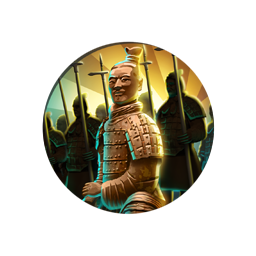
Terracotta Army
Game Info:
Cost: 200 🔨
Always Retained on Conquest
----------------
🎵 Culture: +1
Local Effects:
• +5 Military Supply
• When an owned Unit defeats a Military Unit: +10 🎵, scaling with Era
Empire-Wide Effects:
• +25% Tile Improvement Rate
----------------
Prerequisite Technologies: Masonry
Number of Policies Required: 4
Max 1 in the World
Always Retained on Conquest
----------------
🎵 Culture: +1
Local Effects:
• +5 Military Supply
• When an owned Unit defeats a Military Unit: +10 🎵, scaling with Era
Empire-Wide Effects:
• +25% Tile Improvement Rate
----------------
Prerequisite Technologies: Masonry
Number of Policies Required: 4
Max 1 in the World
Required Technology:
Historical Info:
Unearthed by Chinese farmers in 1974, the Terracotta Army of Emperor Qin Shi Huang was assembled to accompany the emperor in his burial tomb. Constructed during the 3rd century BC, workers created thousands of life-sized earthen figures, with each soldier having unique characteristics added during their construction. Positioned in proper military formation along deep pits carved within the tomb, the soldiers of the Terracotta Army are joined by horses, chariots, and cavalry which were also replicated in great detail.

The Motherland Calls
Game Info:
Cost: 2,150 🔨
Always Retained on Conquest
----------------
🎵 Culture: +1
Local Effects:
• +100% Military Supply from Population
• On Completion: Gain Free Police Station
Empire-Wide Effects:
• -10% 💰 Gold Maintenance for Buildings in all Cities
----------------
Prerequisite Technologies: Electronics
Number of Policies Required: 22
Max 1 in the World
Always Retained on Conquest
----------------
🎵 Culture: +1
Local Effects:
• +100% Military Supply from Population
• On Completion: Gain Free Police Station
Empire-Wide Effects:
• -10% 💰 Gold Maintenance for Buildings in all Cities
----------------
Prerequisite Technologies: Electronics
Number of Policies Required: 22
Max 1 in the World
Required Technology:
Historical Info:
The Motherland Calls, also called Mother Motherland, Mother Motherland Is Calling, simply The Motherland, or The Mamayev Monument, is a statue in Mamayev Kurgan in Volgograd, Russia, commemorating the Battle of Stalingrad. It was designed by sculptor Yevgeny Vuchetich and structural engineer Nikolai Nikitin, and declared the largest statue in the world in 1967. Compared with the later higher statues, The Motherland Calls is significantly more complex from an engineering point of view, due to its characteristic posture with a sword raised high in the right hand and the left hand extended in a calling gesture. The technology behind the statue is based on a combination of prestressed concrete with wire ropes structure, a solution which can be found also in another work of Nikitin's, the super-tall Ostankino Tower in Moscow. It is the tallest statue of a woman in the world.

Uffizi
Game Info:
Cost: 900 🔨
Always Retained on Conquest
----------------
🎵 Culture: +2
Great Work of Art or Artifact slots: 3
Local Effects:
• Up to +25 🎵 +15 🗿 when Themed
• On Completion: Spawn 1 Great Artist in or near City
• On Completion: Gain Free Gallery
Empire-Wide Effects:
• +1 🎵 to Great Works in all Cities
• +1 Specialist that does not produce Unhappiness from Urbanization in all Cities
----------------
Prerequisite Technologies: Economics
Number of Policies Required: 11
Max 1 in the World
----------------
Possible Theming Bonuses:
• +15 🎵 and 🗿 for three from the same Civilization and the same Era.
Always Retained on Conquest
----------------
🎵 Culture: +2
Great Work of Art or Artifact slots: 3
Local Effects:
• Up to +25 🎵 +15 🗿 when Themed
• On Completion: Spawn 1 Great Artist in or near City
• On Completion: Gain Free Gallery
Empire-Wide Effects:
• +1 🎵 to Great Works in all Cities
• +1 Specialist that does not produce Unhappiness from Urbanization in all Cities
----------------
Prerequisite Technologies: Economics
Number of Policies Required: 11
Max 1 in the World
----------------
Possible Theming Bonuses:
• +15 🎵 and 🗿 for three from the same Civilization and the same Era.
Required Technology:
Historical Info:
Originally constructed from 1560 through 1581 AD as offices (in Italian, uffizi) for the Florentine magistrates, the Uffizi Gallery is one of the world's oldest and most famous art repositories, housing the finest collection of Italian Renaissance paintings anywhere. It is also now home to priceless antiques, sculptures, and more than 100,000 drawing and prints. In 1574, the unfinished top floor was converted into a repository for art treasures amassed by the ruling de Medici family. Over the following decades, other portions of the structure were refurbished as art galleries and storage areas. According to Vasari, artists such as da Vinci and Michelangelo gathered at the Uffizi "for beauty, for work and for recreation."

United Nations
Game Info:
🥇 Reward of United Nations
----------------
Cost: 5,100 🔨 per Civilization at the start of the game
Always Retained on Conquest
Is required to trigger the Special Session for World Ideology
----------------
🎵 Culture: +1
⭐ Great Diplomat Points: 1
Local Effects:
• On Completion: Start a 🌟 Golden Age
Empire-Wide Effects:
• +1 Delegate in the World Congress for every 8 City-States originally in the World
• When expending a ⭐ Great Person: +25 Influence with all City-States
----------------
Max 1 in the World
----------------
Cost: 5,100 🔨 per Civilization at the start of the game
Always Retained on Conquest
Is required to trigger the Special Session for World Ideology
----------------
🎵 Culture: +1
⭐ Great Diplomat Points: 1
Local Effects:
• On Completion: Start a 🌟 Golden Age
Empire-Wide Effects:
• +1 Delegate in the World Congress for every 8 City-States originally in the World
• When expending a ⭐ Great Person: +25 Influence with all City-States
----------------
Max 1 in the World
Strategy:
When paired with a high rate of Great Person production, the United Nations grants a significant boost to diplomatic power in the World Congress for its owner. It also provides an additional Delegate, and triggers a Golden Age.
In addition to these immediate benefits, the construction of the United Nations triggers the start of the United Nations Special Session of the World Congress, which enables the Diplomatic Victory. May only be built collaboratively through the World Congress.
In addition to these immediate benefits, the construction of the United Nations triggers the start of the United Nations Special Session of the World Congress, which enables the Diplomatic Victory. May only be built collaboratively through the World Congress.
Historical Info:
Created in 1945 to maintain international peace and security, the United Nations was the second of two laudable efforts to establish an international authority on law and human rights between the self governing nations of the world. Headquartered in New York City, the United Nations was established at the end of World War II in response to the apparent ineffectiveness of the League of Nations to prevent another global conflict on the scale of "The War to End All Wars."
The UN was originally conceived in 1941 as the Atlantic Charter, an agreement signed between Winston Churchill and Franklin D. Roosevelt, but developed into a pact signed by 26 countries to try to stop the aggression of the Axis powers. In 1945, in a conference between "The Big Three", Churchill, Roosevelt, and Stalin, the original charter was laid down.
Throughout its history the United Nations has had great success in establishing many permanent international laws on subjects ranging from human rights and international treaties, to worldwide decolonization. Although the United Nations does not have the power to enforce decisions or compel nations to take military action, the ability to compel member nations to impose economic sanctions against countries guilty of violating security orders gives it significant power on the world stage.
The UN was originally conceived in 1941 as the Atlantic Charter, an agreement signed between Winston Churchill and Franklin D. Roosevelt, but developed into a pact signed by 26 countries to try to stop the aggression of the Axis powers. In 1945, in a conference between "The Big Three", Churchill, Roosevelt, and Stalin, the original charter was laid down.
Throughout its history the United Nations has had great success in establishing many permanent international laws on subjects ranging from human rights and international treaties, to worldwide decolonization. Although the United Nations does not have the power to enforce decisions or compel nations to take military action, the ability to compel member nations to impose economic sanctions against countries guilty of violating security orders gives it significant power on the world stage.

University of Sankore
Game Info:
Cost: 400 🔨
Always Retained on Conquest
----------------
⚗️ Science: +1
🎵 Culture: +1
🕊️ Faith: +1
⭐ Great Scientist Points: 1
Local Effects:
• On Completion: Gain Free Mosque
Empire-Wide Effects:
• When expending a ⭐ Great Person: +50 ⚗️ in 🏛️ Capital, scaling with Era
----------------
Prerequisite Technologies: Education
Require Completion of Tradition
Max 1 in the World
Always Retained on Conquest
----------------
⚗️ Science: +1
🎵 Culture: +1
🕊️ Faith: +1
⭐ Great Scientist Points: 1
Local Effects:
• On Completion: Gain Free Mosque
Empire-Wide Effects:
• When expending a ⭐ Great Person: +50 ⚗️ in 🏛️ Capital, scaling with Era
----------------
Prerequisite Technologies: Education
Require Completion of Tradition
Max 1 in the World
Required Technology:
Historical Info:
As the center of an Islamic scholarly community, the University of Sankore was very different in organization from the universities of medieval Europe. It had no central administration other than the Emperor. It had no student registers but kept copies of its student publishings. It was composed of several entirely independent schools or colleges, each run by a single master or imam. Students associated themselves with a single teacher, and courses took place in the open courtyard of the mosque or at private residences.

West Point
Game Info:
American Exclusive Building
----------------
Cost: 1,250 🔨
💰 Maintenance: 6
----------------
🔨 Production: +2
⚗️ Science: +2
🎵 Culture: +1
Great General Points: +5
⚔️ City Strength: +5
Local Effects:
• On Completion: Gain Free Military Academy
Empire-Wide Effects:
• 10% of 💰 Gold output of each City (pre-Modifiers) is added to its ⚗️ Science output (post-Modifiers)
• -25% Tile Purchase Cost in all Cities
• +5 🔨 +5 ⚗️ to Military Academy in all Cities
• +5 🔨 +5 ⚗️ to Arsenal in all Cities
• +2 🔨 +2 ⚗️ to World Wonders in all Cities
• Free Splash I Promotion for all existing and future eligible Units
----------------
Required Buildings in any City: Royal Collection
Empire must not have the following Buildings: Smithsonian Institution, Slater Mill
Prerequisite Technologies: Military Science
Max 1 in the World
----------------
Cost: 1,250 🔨
💰 Maintenance: 6
----------------
🔨 Production: +2
⚗️ Science: +2
🎵 Culture: +1
Great General Points: +5
⚔️ City Strength: +5
Local Effects:
• On Completion: Gain Free Military Academy
Empire-Wide Effects:
• 10% of 💰 Gold output of each City (pre-Modifiers) is added to its ⚗️ Science output (post-Modifiers)
• -25% Tile Purchase Cost in all Cities
• +5 🔨 +5 ⚗️ to Military Academy in all Cities
• +5 🔨 +5 ⚗️ to Arsenal in all Cities
• +2 🔨 +2 ⚗️ to World Wonders in all Cities
• Free Splash I Promotion for all existing and future eligible Units
----------------
Required Buildings in any City: Royal Collection
Empire must not have the following Buildings: Smithsonian Institution, Slater Mill
Prerequisite Technologies: Military Science
Max 1 in the World
Required Technology:
Strategy:
One of the three mutually exclusive Wonders that America can build after it has completed Independence Hall. Choose your destiny carefully.
Note that all 3 Wonders have symmetry between them, focusing either on 🎵 Culture, ⚗️ Science, or 🔨 Production in similar ways. Thus, which Yield and Victory type you care most about should influence your choice.
Build West Point if you aim for the Scientific or Domination Victory. Your Cities receive extra ⚗️ Science based on their 💰 Gold output, which lets you unlock Techonologies faster and therefore also helps with gaining a military advantage. Focusing on 💰 Gold per turn is a strong strategy from now on. Moreover, Splash I is a strong Promotion that is given to all Siege and Naval Ranged Units, so if you plan to war, consider this Wonder more. Despite Splash I is given to Siege units, Minutemen are so strong that they shouldn't be replaced in attacking enemy Units in any way. West Point benefits most from Fealty which encourages wide empires, because such an empire is needed both for Scientific and Domination victories. Both Rationalism and Industry fit too, by multiplying ⚗️ Science yields from the Buildings and boosting 💰 Gold generation respectively.
Military Academies and Arsenals gain powerful yields so it's worth building them as soon as possible.
Since it's unlocked at Military Science, try to focus on this Technology first, and at that point why not build Brandenburg Gate as well if you can?
The 25% discount on tile 💰 Gold purchases promotes buying tiles liberally to boost prodution of important Buildings, Wonders or Units.
Note that all 3 Wonders have symmetry between them, focusing either on 🎵 Culture, ⚗️ Science, or 🔨 Production in similar ways. Thus, which Yield and Victory type you care most about should influence your choice.
Build West Point if you aim for the Scientific or Domination Victory. Your Cities receive extra ⚗️ Science based on their 💰 Gold output, which lets you unlock Techonologies faster and therefore also helps with gaining a military advantage. Focusing on 💰 Gold per turn is a strong strategy from now on. Moreover, Splash I is a strong Promotion that is given to all Siege and Naval Ranged Units, so if you plan to war, consider this Wonder more. Despite Splash I is given to Siege units, Minutemen are so strong that they shouldn't be replaced in attacking enemy Units in any way. West Point benefits most from Fealty which encourages wide empires, because such an empire is needed both for Scientific and Domination victories. Both Rationalism and Industry fit too, by multiplying ⚗️ Science yields from the Buildings and boosting 💰 Gold generation respectively.
Military Academies and Arsenals gain powerful yields so it's worth building them as soon as possible.
Since it's unlocked at Military Science, try to focus on this Technology first, and at that point why not build Brandenburg Gate as well if you can?
The 25% discount on tile 💰 Gold purchases promotes buying tiles liberally to boost prodution of important Buildings, Wonders or Units.
Historical Info:
The United States Military Academy, informally known as West Point, is the oldest service academy, educating cadets to become commissioned officers for the United States Army. The academy is notable for producing some of the most renowned generals in modern history in addition to numerous heads of state, both foreign and domestic. The campus is the oldest continuously operating American army post, originally built as a river fort to overlook and control shipping along the Hudson River. As a result, the campus is a national landmark, dotted with numerous monuments and statues representing its long and storied history.

Apostolic Palace
Game Info:
Cost: 125 🔨
Destroyed on Conquest
----------------
🕊️ Faith: +4
🌟 Golden Age Points: +4
Local Effects:
• +25% Religious Pressure towards other Cities if Belief unlocking this Building belongs to Majority Religion
• City receives -20% Religious Pressure of non-Majority Religion from active and passive spread
• -1 Unhappiness from Religious Unrest
Empire-Wide Effects:
• +5 🗿 to Holy Site in all Cities
• +1 Delegate in the World Congress for every 10 Cities following your Primary Religion
• On Completion: Allow you to select a Reformation Belief
----------------
Holy City Only
City must not have the following Buildings: Mausoleum, Celestial Throne, Great Altar, Chartarium, Divine Court, Sacred Garden, Holy Council, Grand Ossuary
Must be built in Holy City of Primary Religion with one of the following Beliefs: Evangelism
Worldwide Followers of Primary Religion Required: 15% of World Population (scaling with map size)
Max 1 per Player
Destroyed on Conquest
----------------
🕊️ Faith: +4
🌟 Golden Age Points: +4
Local Effects:
• +25% Religious Pressure towards other Cities if Belief unlocking this Building belongs to Majority Religion
• City receives -20% Religious Pressure of non-Majority Religion from active and passive spread
• -1 Unhappiness from Religious Unrest
Empire-Wide Effects:
• +5 🗿 to Holy Site in all Cities
• +1 Delegate in the World Congress for every 10 Cities following your Primary Religion
• On Completion: Allow you to select a Reformation Belief
----------------
Holy City Only
City must not have the following Buildings: Mausoleum, Celestial Throne, Great Altar, Chartarium, Divine Court, Sacred Garden, Holy Council, Grand Ossuary
Must be built in Holy City of Primary Religion with one of the following Beliefs: Evangelism
Worldwide Followers of Primary Religion Required: 15% of World Population (scaling with map size)
Max 1 per Player
Strategy:
Build the Apostolic Palace for more rapid Golden Ages and to improve all Holy Sites. Constructing this National Wonder will also allow you to choose a Reformation Belief. May only be constructed in a Holy City, and only if at least 15% of the global population follows your Religion (scaling with map size). Reduces Religious Unrest, and allows you to select a Reformation Belief.
Historical Info:
The Latin word basilica has three distinct applications in modern English. The word was originally used to describe an open, Roman, public court building, usually located adjacent to the forum of a Roman town. By extension it was applied to Christian buildings of the same form and continues to be used in an architectural sense to describe those buildings with a central nave and aisles. Later, the term came to refer specifically to a large and important church, the Apostolic Palace, that has been given special ceremonial rights by the Pope.

Celestial Throne
Game Info:
Cost: 125 🔨
Destroyed on Conquest
----------------
🌾 Food: +2
🔨 Production: +2
💰 Gold: +2
⚗️ Science: +2
🎵 Culture: +2
🕊️ Faith: +2
Local Effects:
• +25% Religious Pressure towards other Cities if Belief unlocking this Building belongs to Majority Religion
• City receives -20% Religious Pressure of non-Majority Religion from active and passive spread
• -1 Unhappiness from Religious Unrest
Empire-Wide Effects:
• +5 🌟 to Holy Site in all Cities
• +1 Delegate in the World Congress for every 10 Cities following your Primary Religion
• On Completion: Allow you to select a Reformation Belief
----------------
Holy City Only
City must not have the following Buildings: Mausoleum, Great Altar, Chartarium, Divine Court, Sacred Garden, Holy Council, Apostolic Palace, Grand Ossuary
Must be built in Holy City of Primary Religion with one of the following Beliefs: Divine Inheritance
Worldwide Followers of Primary Religion Required: 15% of World Population (scaling with map size)
Max 1 per Player
Destroyed on Conquest
----------------
🌾 Food: +2
🔨 Production: +2
💰 Gold: +2
⚗️ Science: +2
🎵 Culture: +2
🕊️ Faith: +2
Local Effects:
• +25% Religious Pressure towards other Cities if Belief unlocking this Building belongs to Majority Religion
• City receives -20% Religious Pressure of non-Majority Religion from active and passive spread
• -1 Unhappiness from Religious Unrest
Empire-Wide Effects:
• +5 🌟 to Holy Site in all Cities
• +1 Delegate in the World Congress for every 10 Cities following your Primary Religion
• On Completion: Allow you to select a Reformation Belief
----------------
Holy City Only
City must not have the following Buildings: Mausoleum, Great Altar, Chartarium, Divine Court, Sacred Garden, Holy Council, Apostolic Palace, Grand Ossuary
Must be built in Holy City of Primary Religion with one of the following Beliefs: Divine Inheritance
Worldwide Followers of Primary Religion Required: 15% of World Population (scaling with map size)
Max 1 per Player
Strategy:
Build the Celestial Throne for a big boost to your Holy City's base yields and to improve all Holy Sites. Constructing this National Wonder will also allow you to choose a Reformation Belief. May only be constructed in a Holy City, and only if at least 15% of the global population follows your Religion (scaling with map size). Reduces Religious Unrest, and allows you to select a Reformation Belief.
Historical Info:
A throne is the seat of state of a potentate or dignitary, especially the seat occupied by a sovereign on state occasions; or the seat occupied by a pope or bishop on ceremonial occasions. "Throne" in an abstract sense can also refer to the monarchy or the Crown itself, an instance of metonymy, and is also used in many expressions such as "the power behind the throne".

Chartarium
Game Info:
Cost: 125 🔨
Destroyed on Conquest
----------------
⚗️ Science: +4
Great Work of Writing slots: 3
Local Effects:
• Up to +2 ⚗️ +8 🎵 +6 🕊️ +8 🗿 when Themed
• +25% Religious Pressure towards other Cities if Belief unlocking this Building belongs to Majority Religion
• City receives -20% Religious Pressure of non-Majority Religion from active and passive spread
• -1 Unhappiness from Religious Unrest
Empire-Wide Effects:
• +5 ⚗️ to Holy Site in all Cities
• +1 Delegate in the World Congress for every 10 Cities following your Primary Religion
• On Completion: Allow you to select a Reformation Belief
----------------
Holy City Only
City must not have the following Buildings: Mausoleum, Celestial Throne, Great Altar, Divine Court, Sacred Garden, Holy Council, Apostolic Palace, Grand Ossuary
Must be built in Holy City of Primary Religion with one of the following Beliefs: Revelation
Worldwide Followers of Primary Religion Required: 15% of World Population (scaling with map size)
Max 1 per Player
----------------
Possible Theming Bonuses:
• +8 🎵 and 🗿 for three from the same Civilization.
Destroyed on Conquest
----------------
⚗️ Science: +4
Great Work of Writing slots: 3
Local Effects:
• Up to +2 ⚗️ +8 🎵 +6 🕊️ +8 🗿 when Themed
• +25% Religious Pressure towards other Cities if Belief unlocking this Building belongs to Majority Religion
• City receives -20% Religious Pressure of non-Majority Religion from active and passive spread
• -1 Unhappiness from Religious Unrest
Empire-Wide Effects:
• +5 ⚗️ to Holy Site in all Cities
• +1 Delegate in the World Congress for every 10 Cities following your Primary Religion
• On Completion: Allow you to select a Reformation Belief
----------------
Holy City Only
City must not have the following Buildings: Mausoleum, Celestial Throne, Great Altar, Divine Court, Sacred Garden, Holy Council, Apostolic Palace, Grand Ossuary
Must be built in Holy City of Primary Religion with one of the following Beliefs: Revelation
Worldwide Followers of Primary Religion Required: 15% of World Population (scaling with map size)
Max 1 per Player
----------------
Possible Theming Bonuses:
• +8 🎵 and 🗿 for three from the same Civilization.
Strategy:
Build the Chartarium to gain 🌟 Golden Age Points, 🗿 Tourism and 🎵 Culture from researching techs and to improve all Holy Sites. Constructing this National Wonder will also allow you to choose a Reformation Belief. May only be constructed in a Holy City, and only if at least 15% of the global population follows your Religion (scaling with map size).
Historical Info:
The Chartarium was a collection of correspondences and minutes held privately by the office of the Papacy. This collection formed the precursor to the Vatican's Secret Archives.
Chartered Company
Game Info:
Cost: 140 🔨
Destroyed on Conquest
----------------
💰 Gold: +4
Local Effects:
• +4 💰 Gold to International Trade Routes targeting this City
• +2 💰 Gold to Origin City of International Trade Routes targeting this City
• +25% Resource Diversity for Trade Routes
• +100% Luxury Resources from Improved Tiles owned by this City
Empire-Wide Effects:
• -1 Unhappiness from 💰 Poverty in all Cities
----------------
Required Buildings: Customs House
Prerequisite Technologies: Guilds
National Population Required: 22 (scaling with number of Cities)
Max 1 per Player
----------------
List of possible boosts to this Building:
• Ceremony: +1 😊 Happiness
Destroyed on Conquest
----------------
💰 Gold: +4
Local Effects:
• +4 💰 Gold to International Trade Routes targeting this City
• +2 💰 Gold to Origin City of International Trade Routes targeting this City
• +25% Resource Diversity for Trade Routes
• +100% Luxury Resources from Improved Tiles owned by this City
Empire-Wide Effects:
• -1 Unhappiness from 💰 Poverty in all Cities
----------------
Required Buildings: Customs House
Prerequisite Technologies: Guilds
National Population Required: 22 (scaling with number of Cities)
Max 1 per Player
----------------
List of possible boosts to this Building:
• Ceremony: +1 😊 Happiness
Required Buildings:
Required Technology:
Strategy:
The East India Company increases the amount of 💰 Gold a city generates. Trade routes other players make to a city with an East India Company will generate an extra 4 💰 Gold for the city owner and the trade route owner gains an additional 2 💰 Gold for the trade route.
Historical Info:
A chartered company was an early modern form of business organization typically engaged in long-distance trade, operating in Europe, the Atlantic World, and Asia.
Many chartered companies were joint-stock companies; capital was accumulated with the help of transferable shares and, if the company was profitable, shareholders received dividends. The liability of the owners was limited to what they had invested or guaranteed to the company.
These companies were granted exclusive rights through royal charters, enabling them to trade, explore, and colonize specific regions. Acting as quasi-sovereign entities, chartered companies established settlements, raised armies, and conducted diplomacy with indigenous peoples, wielding considerable political power and generating immense wealth for their home countries.
Notable examples include the Dutch East India Company (VOC, 1602-1799) and the English East India Company (EIC, 1600-1874), which played pivotal roles in European expansion and colonialism in South and East Asia.
Operating in various geographical regions, chartered companies faced differing levels of success. While those in Asia, like the VOC and the EIC, thrived due to large investments and state support, those in the Atlantic world struggled amidst private competition and limited profitability. A successful exception was the Hudson Bay Company (HBC): established in 1670, the company traded in furs and European goods within the area where the rivers fed the bay.
Chartered companies were integral to early modern political economy, reflecting responses to Spanish and Portuguese expansion in the 16th century. While perceived as tools for promoting state wealth and power, they faced criticism for draining national economies and generating private fortunes, notably in the case of the EIC.
By the late 18th century, chartered companies fell out of favor in Europe, although the British revived the concept in colonial ventures in Africa during the late 19th century.
Many chartered companies were joint-stock companies; capital was accumulated with the help of transferable shares and, if the company was profitable, shareholders received dividends. The liability of the owners was limited to what they had invested or guaranteed to the company.
These companies were granted exclusive rights through royal charters, enabling them to trade, explore, and colonize specific regions. Acting as quasi-sovereign entities, chartered companies established settlements, raised armies, and conducted diplomacy with indigenous peoples, wielding considerable political power and generating immense wealth for their home countries.
Notable examples include the Dutch East India Company (VOC, 1602-1799) and the English East India Company (EIC, 1600-1874), which played pivotal roles in European expansion and colonialism in South and East Asia.
Operating in various geographical regions, chartered companies faced differing levels of success. While those in Asia, like the VOC and the EIC, thrived due to large investments and state support, those in the Atlantic world struggled amidst private competition and limited profitability. A successful exception was the Hudson Bay Company (HBC): established in 1670, the company traded in furs and European goods within the area where the rivers fed the bay.
Chartered companies were integral to early modern political economy, reflecting responses to Spanish and Portuguese expansion in the 16th century. While perceived as tools for promoting state wealth and power, they faced criticism for draining national economies and generating private fortunes, notably in the case of the EIC.
By the late 18th century, chartered companies fell out of favor in Europe, although the British revived the concept in colonial ventures in Africa during the late 19th century.
Circus Maximus
Game Info:
Cost: 80 🔨
Destroyed on Conquest
----------------
🎵 Culture: +1
😊 Happiness: 2
Local Effects:
• -1 Unhappiness from 🎵 Boredom
• +10% 💰 +10% 🎵 during 😊 "We Love the King Day"
Empire-Wide Effects:
• +2 💰 to Arena in all Cities
• +2 Horses
----------------
Required Buildings: Arena
Prerequisite Technologies: Metal Casting
National Population Required: 15 (scaling with number of Cities)
Max 1 per Player
----------------
List of possible boosts to this Building:
• Ceremony: +1 😊 Happiness
Destroyed on Conquest
----------------
🎵 Culture: +1
😊 Happiness: 2
Local Effects:
• -1 Unhappiness from 🎵 Boredom
• +10% 💰 +10% 🎵 during 😊 "We Love the King Day"
Empire-Wide Effects:
• +2 💰 to Arena in all Cities
• +2 Horses
----------------
Required Buildings: Arena
Prerequisite Technologies: Metal Casting
National Population Required: 15 (scaling with number of Cities)
Max 1 per Player
----------------
List of possible boosts to this Building:
• Ceremony: +1 😊 Happiness
Required Buildings:
Required Technology:
Strategy:
This National Wonder provides +2 😊 Happiness, 2 Horses, +1 🎵 Culture, and reduces Boredom, and generates +10% 🎵 Culture and 💰 Gold during "We Love the King Day" in the City where it is built. The City must have an Arena before it can construct the Circus Maximus.
Historical Info:
A massive stadium located in the heart of Rome, the Circus Maximus was the first, and largest, chariot racing venue in ancient Rome. At the time of its usage, it could hold over a quarter of a million people, over 25% of the city's population. Measuring over 2000 ft in length, twelve full-sized chariots could easily race side by side. Originally used by the Etruscan kings to host their entertainments and festivals, the first Roman Games were held at the racetrack by the fifth Roman King, Tarquinius Priscus. The site was later expanded by Julius Caesar in 50 BC to its current size.
The last recorded race was held in 549 AD by the Ostrogoth king Totila, and was later abandoned. Now the Circus is a public park, the track covered over in grass. Some of the original structures still remain, namely a few starting gates and medians, but now the Circus is mostly used to host live concerts and meetings on the open green.
The last recorded race was held in 549 AD by the Ostrogoth king Totila, and was later abandoned. Now the Circus is a public park, the track covered over in grass. Some of the original structures still remain, namely a few starting gates and medians, but now the Circus is mostly used to host live concerts and meetings on the open green.

Consulate
Game Info:
🥈 Reward of United Nations
----------------
Destroyed on Conquest
----------------
🎵 Culture: +1
Empire-Wide Effects:
• +1 Delegate in the World Congress for every 8 City-States originally in the World
----------------
Max 1 per Player
----------------
Destroyed on Conquest
----------------
🎵 Culture: +1
Empire-Wide Effects:
• +1 Delegate in the World Congress for every 8 City-States originally in the World
----------------
Max 1 per Player
Strategy:
The Consulate gives its owner a slight edge in the World Congress by granting an additional Delegate for every 8 City-States originally in the World. May only be built collaboratively through the World Congress.
Historical Info:
The office of a Consul is termed a Consulate, and is usually subordinate to the state's main representation in that foreign country, usually an Embassy, or High Commission between Commonwealth countries, in the capital city of the host state. Like the term embassy, the word consulate may refer not only to the office of consul, but also to the building occupied by the consul and his or her staff. The consulate may share premises with the embassy itself. In the modern age, many Consulates are affiliated with the United Nations and/or other international organizations.
Divine Court
Game Info:
Cost: 125 🔨
Destroyed on Conquest
----------------
💰 Gold: +6
🕊️ Faith: +3
Local Effects:
• +25% Religious Pressure towards other Cities if Belief unlocking this Building belongs to Majority Religion
• City receives -20% Religious Pressure of non-Majority Religion from active and passive spread
• -1 Unhappiness from Religious Unrest
Empire-Wide Effects:
• +5 🎵 to Holy Site in all Cities
• +1 Delegate in the World Congress for every 10 Cities following your Primary Religion
• On Completion: Allow you to select a Reformation Belief
----------------
Holy City Only
City must not have the following Buildings: Mausoleum, Celestial Throne, Great Altar, Chartarium, Sacred Garden, Holy Council, Apostolic Palace, Grand Ossuary
Must be built in Holy City of Primary Religion with one of the following Beliefs: Holy Law
Worldwide Followers of Primary Religion Required: 15% of World Population (scaling with map size)
Max 1 per Player
Destroyed on Conquest
----------------
💰 Gold: +6
🕊️ Faith: +3
Local Effects:
• +25% Religious Pressure towards other Cities if Belief unlocking this Building belongs to Majority Religion
• City receives -20% Religious Pressure of non-Majority Religion from active and passive spread
• -1 Unhappiness from Religious Unrest
Empire-Wide Effects:
• +5 🎵 to Holy Site in all Cities
• +1 Delegate in the World Congress for every 10 Cities following your Primary Religion
• On Completion: Allow you to select a Reformation Belief
----------------
Holy City Only
City must not have the following Buildings: Mausoleum, Celestial Throne, Great Altar, Chartarium, Sacred Garden, Holy Council, Apostolic Palace, Grand Ossuary
Must be built in Holy City of Primary Religion with one of the following Beliefs: Holy Law
Worldwide Followers of Primary Religion Required: 15% of World Population (scaling with map size)
Max 1 per Player
Strategy:
Build the Divine Court for a boost to Gold output and to improve all Holy Sites. Constructing this National Wonder will also allow you to choose a Reformation Belief. May only be constructed in a Holy City, and only if at least 15% of the global population follows your Religion (scaling with map size). Reduces Religious Unrest, and allows you to select a Reformation Belief.
Historical Info:
A beth din ("house of judgment," or divine court) is a rabbinical court of Judaism. In ancient times, it was the building block of the legal system in the Biblical Land of Israel. Today, it is invested with legal powers in a number of religious matters (din Torah, "matter of litigation," plural dinei Torah) both in Israel and in Jewish communities in the Diaspora, where its judgments hold varying degrees of authority (depending upon the jurisdiction and subject matter) in matters specifically related to Jewish religious life.

Grand Ossuary
Game Info:
Cost: 125 🔨
Destroyed on Conquest
----------------
🕊️ Faith: +10
Local Effects:
• +25% Religious Pressure towards other Cities if Belief unlocking this Building belongs to Majority Religion
• City receives -20% Religious Pressure of non-Majority Religion from active and passive spread
• -1 Unhappiness from Religious Unrest
Empire-Wide Effects:
• +5 💰 to Holy Site in all Cities
• +1 Delegate in the World Congress for every 10 Cities following your Primary Religion
• On Completion: Allow you to select a Reformation Belief
----------------
Holy City Only
City must not have the following Buildings: Mausoleum, Celestial Throne, Great Altar, Chartarium, Divine Court, Sacred Garden, Holy Council, Apostolic Palace
Must be built in Holy City of Primary Religion with one of the following Beliefs: Theocratic Rule
Worldwide Followers of Primary Religion Required: 15% of World Population (scaling with map size)
Max 1 per Player
Destroyed on Conquest
----------------
🕊️ Faith: +10
Local Effects:
• +25% Religious Pressure towards other Cities if Belief unlocking this Building belongs to Majority Religion
• City receives -20% Religious Pressure of non-Majority Religion from active and passive spread
• -1 Unhappiness from Religious Unrest
Empire-Wide Effects:
• +5 💰 to Holy Site in all Cities
• +1 Delegate in the World Congress for every 10 Cities following your Primary Religion
• On Completion: Allow you to select a Reformation Belief
----------------
Holy City Only
City must not have the following Buildings: Mausoleum, Celestial Throne, Great Altar, Chartarium, Divine Court, Sacred Garden, Holy Council, Apostolic Palace
Must be built in Holy City of Primary Religion with one of the following Beliefs: Theocratic Rule
Worldwide Followers of Primary Religion Required: 15% of World Population (scaling with map size)
Max 1 per Player
Strategy:
Build the Ossuary for lots of Faith and to improve all Holy Sites. Constructing this National Wonder will also allow you to choose a Reformation Belief. May only be constructed in a Holy City, and only if at least 15% of the global population follows your Religion (scaling with map size). Reduces Religious Unrest, and allows you to select a Reformation Belief.
Historical Info:
An ossuary is a chest, box, building, well, or site made to serve as the final resting place of human skeletal remains. They are frequently used where burial space is scarce. A body is first buried in a temporary grave, then after some years the skeletal remains are removed and placed in an ossuary. The greatly reduced space taken up by an ossuary means that it is possible to store the remains of many more people in a single tomb than if the original coffins were left as is. In Persia, the Zoroastrians used a deep well for this function from the earliest times (circa 3,000 years ago) and called it astudan (literally, "the place for the bones"). There are many rituals and regulations in the Zoroastrian faith concerning the astudans. Among the pre-7th-century Sogdians in the region of central Asia, the name for an ossuary was tanbar.

Grand Temple
Game Info:
Cost: 120 🔨
Destroyed on Conquest
----------------
🕊️ Faith: +6
Great Work of Music slots: 1
Local Effects:
• -1 Unhappiness from Religious Unrest
Empire-Wide Effects:
• -1 Unhappiness from Religious Unrest in all Cities
• +1 💰 +2 🕊️ to Temple in all Cities
----------------
Required Buildings: Temple
Prerequisite Technologies: Theology
National Population Required: 19 (scaling with number of Cities)
Max 1 per Player
----------------
List of possible boosts to this Building:
• Ceremony: +1 😊 Happiness
Destroyed on Conquest
----------------
🕊️ Faith: +6
Great Work of Music slots: 1
Local Effects:
• -1 Unhappiness from Religious Unrest
Empire-Wide Effects:
• -1 Unhappiness from Religious Unrest in all Cities
• +1 💰 +2 🕊️ to Temple in all Cities
----------------
Required Buildings: Temple
Prerequisite Technologies: Theology
National Population Required: 19 (scaling with number of Cities)
Max 1 per Player
----------------
List of possible boosts to this Building:
• Ceremony: +1 😊 Happiness
Required Buildings:
Required Technology:
Strategy:
An important building for a civilization trying to spread their religion world-wide from an empire with few, populous cities. A City must have a Temple before it can construct the Grand Temple.
Historical Info:
A Grand Temple is a revered holy site held sacred among the followers of a given religion. These temples often feature grand architecture and ornate inscriptions that stand for centuries as a testament to the faith of the religion's adherents. Although there is no clear consensus as to which of the many temples found throughout the world today is the oldest, many believe the Göbekli Tepe - found in modern Turkey and assembled over 12,000 years ago - to be the earliest man-made religious structure ever discovered.
Great Altar
Game Info:
Cost: 125 🔨
Destroyed on Conquest
----------------
🕊️ Faith: +5
Local Effects:
• +25% Religious Pressure towards other Cities if Belief unlocking this Building belongs to Majority Religion
• City receives -20% Religious Pressure of non-Majority Religion from active and passive spread
• +15% 🔨 Production for Military Units
• -1 Unhappiness from Religious Unrest
Empire-Wide Effects:
• +5 🔨 to Holy Site in all Cities
• +1 Delegate in the World Congress for every 10 Cities following your Primary Religion
• On Completion: Allow you to select a Reformation Belief
----------------
Holy City Only
City must not have the following Buildings: Mausoleum, Celestial Throne, Chartarium, Divine Court, Sacred Garden, Holy Council, Apostolic Palace, Grand Ossuary
Must be built in Holy City of Primary Religion with one of the following Beliefs: Hero Worship
Worldwide Followers of Primary Religion Required: 15% of World Population (scaling with map size)
Max 1 per Player
Destroyed on Conquest
----------------
🕊️ Faith: +5
Local Effects:
• +25% Religious Pressure towards other Cities if Belief unlocking this Building belongs to Majority Religion
• City receives -20% Religious Pressure of non-Majority Religion from active and passive spread
• +15% 🔨 Production for Military Units
• -1 Unhappiness from Religious Unrest
Empire-Wide Effects:
• +5 🔨 to Holy Site in all Cities
• +1 Delegate in the World Congress for every 10 Cities following your Primary Religion
• On Completion: Allow you to select a Reformation Belief
----------------
Holy City Only
City must not have the following Buildings: Mausoleum, Celestial Throne, Chartarium, Divine Court, Sacred Garden, Holy Council, Apostolic Palace, Grand Ossuary
Must be built in Holy City of Primary Religion with one of the following Beliefs: Hero Worship
Worldwide Followers of Primary Religion Required: 15% of World Population (scaling with map size)
Max 1 per Player
Strategy:
Build the Great Altar for a boost to Military Unit production and to improve all Holy Sites. Constructing this National Wonder will also allow you to choose a Reformation Belief. May only be constructed in a Holy City, and only if at least 15% of the global population follows your Religion (scaling with map size). Reduces Religious Unrest, and allows you to select a Reformation Belief.
Historical Info:
An altar is any structure upon which offerings such as sacrifices are made for religious purposes. Altars are usually found at shrines, and they can be located in temples, churches and other places of worship. Today they are used particularly in Christianity, Buddhism, Hinduism, Shinto, Taoism, as well as in Neopaganism and Ceremonial Magic. Judaism used such a structure until the destruction of the Second Temple. Many historical faiths also made use of them, including Greek and Norse religion.

Hall of Honor
Game Info:
Cost: 800 🔨
Destroyed on Conquest
----------------
🎵 Culture: +4
🗿 Tourism: +15
⭐ Great Diplomat Points: 1
Local Effects:
• +5% 🔨 Production
Empire-Wide Effects:
• +2 Delegate in the World Congress for every Foreign original 🏛️ Capital Cities you control
----------------
Required Buildings: Military Academy
Prerequisite Technologies: Ballistics
Require Any Autocracy Policy
National Population Required: 40 (scaling with number of Cities)
Max 1 per Player
----------------
List of possible boosts to this Building:
• Ceremony: +1 😊 Happiness
Destroyed on Conquest
----------------
🎵 Culture: +4
🗿 Tourism: +15
⭐ Great Diplomat Points: 1
Local Effects:
• +5% 🔨 Production
Empire-Wide Effects:
• +2 Delegate in the World Congress for every Foreign original 🏛️ Capital Cities you control
----------------
Required Buildings: Military Academy
Prerequisite Technologies: Ballistics
Require Any Autocracy Policy
National Population Required: 40 (scaling with number of Cities)
Max 1 per Player
----------------
List of possible boosts to this Building:
• Ceremony: +1 😊 Happiness
Required Buildings:
Required Technology:
Strategy:
This National Wonder cannot be built unless the city has a Military Academy. Build this national wonder to receive additional Delegates in the World Congress based on the number of enemy Capitals you have conquered. You will also receive a large boost to the Tourism and Production output of the city where it is built.
Historical Info:
The "Ehrenhalle" (Hall of Honor) was built by the city of Nuremberg according to a plan of German architect Fritz Mayer. It was inaugurated in 1930, before the Hitler era during the Weimar Republic. It is an arcaded hall with an adjacent cobbled stone terrace with two rows of pedestals for fire bowls. All fourteen pylons remain virtually intact and have not been ignited since the final Nazi party rally in September, 1938. Originally, the hall was to be a memorial site for the 9,855 soldiers from Nuremberg who were fallen in World War I. During the Party Congress of 1929 the then unfinished "Hall of Honour" was used for the enactment of a cult of the dead by the National Socialists for the first time. During the Third Reich, the Nazis used the site primarily as a commemoration for the fallen soldiers of World War I and a commemoration of the 16 dead of the "Hitlerputsch" (the so-called "Martyrs of the NS Movement") (Beer Hall Putsch) on 9 November, 1923, in Munich. Hitler, accompanied by SS-leader Heinrich Himmler and SA-leader Viktor Lutze, strode through the arena over the 240 meters long granite path from the main grandstand to the terrace of the Ehrenhalle and showed the Nazi salute there. The ritual was the climax of the celebration.

Heroic Epic
Game Info:
Cost: 60 🔨
Destroyed on Conquest
----------------
🎵 Culture: +1
Great Work of Writing slots: 1
Local Effects:
• +10% Military Supply from Population
• On Completion: Spawn 1 Great Writer in or near City
• Free Morale Promotion for all existing and future eligible Units trained in this City
----------------
Required Buildings: Barracks
Prerequisite Technologies: Iron Working
National Population Required: 12 (scaling with number of Cities)
Max 1 per Player
----------------
List of possible boosts to this Building:
• Ceremony: +1 😊 Happiness
Destroyed on Conquest
----------------
🎵 Culture: +1
Great Work of Writing slots: 1
Local Effects:
• +10% Military Supply from Population
• On Completion: Spawn 1 Great Writer in or near City
• Free Morale Promotion for all existing and future eligible Units trained in this City
----------------
Required Buildings: Barracks
Prerequisite Technologies: Iron Working
National Population Required: 12 (scaling with number of Cities)
Max 1 per Player
----------------
List of possible boosts to this Building:
• Ceremony: +1 😊 Happiness
Required Buildings:
Required Technology:
Strategy:
This National Wonder gives all land units built in this City (past and future) the "Morale" promotion, increasing their combat strength by +10%. +1 🔨 Production in the City for every 5 Citizens. Increases Military Units supplied by this City's population by 10%. Also creates a free Great Writer upon completion. The City must have a Barracks before it can construct the Heroic Epic.
Historical Info:
From ancient times, a "heroic epic" is a poem that defines a people or an era, and is usually centered upon the heroic actions of one or more people. The "Odyssey" is such a work, as is the Mesopotamian "Epic of Gilgamesh" and the Anglo-Saxon "Beowulf."

Holy Council
Game Info:
Cost: 125 🔨
Destroyed on Conquest
----------------
🌾 Food: +5
🕊️ Faith: +4
Local Effects:
• +25% Religious Pressure towards other Cities if Belief unlocking this Building belongs to Majority Religion
• City receives -20% Religious Pressure of non-Majority Religion from active and passive spread
• -1 Unhappiness from Religious Unrest
Empire-Wide Effects:
• +5 ⚗️ to Holy Site in all Cities
• +1 Delegate in the World Congress for every 10 Cities following your Primary Religion
• On Completion: Allow you to select a Reformation Belief
----------------
Holy City Only
City must not have the following Buildings: Mausoleum, Celestial Throne, Great Altar, Chartarium, Divine Court, Sacred Garden, Apostolic Palace, Grand Ossuary
Must be built in Holy City of Primary Religion with one of the following Beliefs: Council of Elders
Worldwide Followers of Primary Religion Required: 15% of World Population (scaling with map size)
Max 1 per Player
Destroyed on Conquest
----------------
🌾 Food: +5
🕊️ Faith: +4
Local Effects:
• +25% Religious Pressure towards other Cities if Belief unlocking this Building belongs to Majority Religion
• City receives -20% Religious Pressure of non-Majority Religion from active and passive spread
• -1 Unhappiness from Religious Unrest
Empire-Wide Effects:
• +5 ⚗️ to Holy Site in all Cities
• +1 Delegate in the World Congress for every 10 Cities following your Primary Religion
• On Completion: Allow you to select a Reformation Belief
----------------
Holy City Only
City must not have the following Buildings: Mausoleum, Celestial Throne, Great Altar, Chartarium, Divine Court, Sacred Garden, Apostolic Palace, Grand Ossuary
Must be built in Holy City of Primary Religion with one of the following Beliefs: Council of Elders
Worldwide Followers of Primary Religion Required: 15% of World Population (scaling with map size)
Max 1 per Player
Strategy:
Build the Holy Council for a boost to Food output and to improve all Holy Sites. Constructing this National Wonder will also allow you to choose a Reformation Belief. May only be constructed in a Holy City, and only if at least 15% of the global population follows your Religion (scaling with map size). Reduces Religious Unrest, and allows you to select a Reformation Belief.
Historical Info:
An ecumenical council (or holy council) is a conference of ecclesiastical dignitaries and theological experts convened to discuss and settle matters of Church doctrine and practice in which those entitled to vote are convoked from the whole world (oikoumene) and which secures the approbation of the whole Church.

Imperial College
Game Info:
Cost: 120 🔨
Destroyed on Conquest
----------------
⚗️ Science: +3
🎵 Culture: +3
Great Work of Writing slots: 2
Local Effects:
• Up to +4 ⚗️ +10 🎵 +10 🗿 when Themed
• -1 Unhappiness from ⚗️ Illiteracy
• On Completion: Spawn 1 Great Scientist in or near City
• When researching a Technology: +50 🎵, scaling with Era
----------------
Required Buildings: University
Prerequisite Technologies: Education
National Population Required: 19 (scaling with number of Cities)
Max 1 per Player
----------------
List of possible boosts to this Building:
• Ceremony: +1 😊 Happiness
----------------
Possible Theming Bonuses:
• +10 🎵 and 🗿 for two Foreign from different Eras.
Destroyed on Conquest
----------------
⚗️ Science: +3
🎵 Culture: +3
Great Work of Writing slots: 2
Local Effects:
• Up to +4 ⚗️ +10 🎵 +10 🗿 when Themed
• -1 Unhappiness from ⚗️ Illiteracy
• On Completion: Spawn 1 Great Scientist in or near City
• When researching a Technology: +50 🎵, scaling with Era
----------------
Required Buildings: University
Prerequisite Technologies: Education
National Population Required: 19 (scaling with number of Cities)
Max 1 per Player
----------------
List of possible boosts to this Building:
• Ceremony: +1 😊 Happiness
----------------
Possible Theming Bonuses:
• +10 🎵 and 🗿 for two Foreign from different Eras.
Required Buildings:
Required Technology:
Strategy:
The Imperial College National Wonder provides +1 🎵 Culture, and reduces Illiteracy. +50 🎵 Culture every time you research a Technology. The City must have a University before it can construct the Imperial College.
Historical Info:
In the medieval period, higher education evolved in various regions, each with its own distinct institutions and traditions. In Europe, the earliest universities emerged spontaneously as a scholastic guild, whether of masters or students, without any express authorization of a prince, king, pope or prelate.
In many cases, however, universities petitioned secular power for privileges. Emperor Frederick I in Authentica Habita (1158) gave the first privileges to students in Bologna. Another step was Pope Alexander III in 1179 requiring that masters of church schools give licenses to properly qualified teachers and forbidding them from charging for it. The integrity of a university was only preserved in such an internally regulated corporation, which protected the scholars from external intervention. This independently evolving organization was absent in the universities of southern Italy and Spain, which served the bureaucratic needs of monarchs, and were therefore their artificial creations.
The University of Paris was formally recognized when Pope Gregory IX issued the bull Parens scientiarum (1231). This was a revolutionary step: studium generale (universities) and universitas (corporations of students or teachers) existed beforehand, but after the issuing of the bull, they attained autonomy. The papal bull of 1233 stipulated that anyone admitted as a teacher in Toulouse had the right to teach everywhere without further examinations. In time, this privilege became the single most important defining characteristic of the university and the symbol of its institutional autonomy. By the year 1292, even the two oldest universities, Bologna and Paris, felt the need to seek similar bulls from Pope Nicholas IV.
Meanwhile, in the Islamic world, institutions such as madrasas and the House of Wisdom in Baghdad (established in the late 8th century) played vital roles in preserving and advancing knowledge, spanning fields from theology to medicine.
Outside of Europe and the Islamic world, East Asia saw the rise of educational centers like the Imperial Academy in China (founded in 3 AD under Emperor Ping of Han as Taixue, then renamed Guozijian after the Sui dynasty) as well as the National Confucian Academy in Korea (Sungkyunkwan, 1398), which emphasized Confucian teachings and governmental administration. The Imperial Examination system in China further democratized access to education by selecting officials based on merit rather than birthright, fostering social mobility and intellectual development. These diverse educational systems in medieval times contributed to the spread of knowledge, cultural exchange, and societal progress, leaving a lasting impact on the intellectual landscape of their respective regions.
In many cases, however, universities petitioned secular power for privileges. Emperor Frederick I in Authentica Habita (1158) gave the first privileges to students in Bologna. Another step was Pope Alexander III in 1179 requiring that masters of church schools give licenses to properly qualified teachers and forbidding them from charging for it. The integrity of a university was only preserved in such an internally regulated corporation, which protected the scholars from external intervention. This independently evolving organization was absent in the universities of southern Italy and Spain, which served the bureaucratic needs of monarchs, and were therefore their artificial creations.
The University of Paris was formally recognized when Pope Gregory IX issued the bull Parens scientiarum (1231). This was a revolutionary step: studium generale (universities) and universitas (corporations of students or teachers) existed beforehand, but after the issuing of the bull, they attained autonomy. The papal bull of 1233 stipulated that anyone admitted as a teacher in Toulouse had the right to teach everywhere without further examinations. In time, this privilege became the single most important defining characteristic of the university and the symbol of its institutional autonomy. By the year 1292, even the two oldest universities, Bologna and Paris, felt the need to seek similar bulls from Pope Nicholas IV.
Meanwhile, in the Islamic world, institutions such as madrasas and the House of Wisdom in Baghdad (established in the late 8th century) played vital roles in preserving and advancing knowledge, spanning fields from theology to medicine.
Outside of Europe and the Islamic world, East Asia saw the rise of educational centers like the Imperial Academy in China (founded in 3 AD under Emperor Ping of Han as Taixue, then renamed Guozijian after the Sui dynasty) as well as the National Confucian Academy in Korea (Sungkyunkwan, 1398), which emphasized Confucian teachings and governmental administration. The Imperial Examination system in China further democratized access to education by selecting officials based on merit rather than birthright, fostering social mobility and intellectual development. These diverse educational systems in medieval times contributed to the spread of knowledge, cultural exchange, and societal progress, leaving a lasting impact on the intellectual landscape of their respective regions.

International Finance Center
Game Info:
Cost: 800 🔨
Destroyed on Conquest
----------------
🎵 Culture: +4
⭐ Great Diplomat Points: 1
Local Effects:
• +5% 🌾 Food
• +5% 💰 Gold
Empire-Wide Effects:
• +1 Delegate in the World Congress for every 2 active Declarations of Friendship with your Empire
----------------
Required Buildings: Stock Exchange
Prerequisite Technologies: Biology
Require Any Freedom Policy
National Population Required: 40 (scaling with number of Cities)
Max 1 per Player
----------------
List of possible boosts to this Building:
• Ceremony: +1 😊 Happiness
Destroyed on Conquest
----------------
🎵 Culture: +4
⭐ Great Diplomat Points: 1
Local Effects:
• +5% 🌾 Food
• +5% 💰 Gold
Empire-Wide Effects:
• +1 Delegate in the World Congress for every 2 active Declarations of Friendship with your Empire
----------------
Required Buildings: Stock Exchange
Prerequisite Technologies: Biology
Require Any Freedom Policy
National Population Required: 40 (scaling with number of Cities)
Max 1 per Player
----------------
List of possible boosts to this Building:
• Ceremony: +1 😊 Happiness
Required Buildings:
Required Technology:
Strategy:
This National Wonder cannot be built unless the city has a Stock Exchange. Build this national wonder to receive additional Delegates in the World Congress based on the number of Declaration of Friendships you currently have with other players. You will also receive a large boost to the Food and Gold output of the city where it is built.
Historical Info:
A Financial Center is a global city that is home to a large number of internationally significant banks, businesses, and stock exchanges. An International Financial Center, sometimes abbreviated to IFC, is a non-specific term usually used to describe an important participant in international financial market trading, usually having at least one major stock market. During much of the 20th century, the United States and its financial capital, New York City, were the leaders. But since the 1990s, with the rise of a multipolar world with new regional powers and global capitalism, numerous financial centres have challenged the predominance of Wall Street, particularly from Asia, which some analysts believe will be the focus of new worldwide growth.

Ironworks
Game Info:
Cost: 140 🔨
Destroyed on Conquest
----------------
🔨 Production: +10
Local Effects:
• When completing a Building in this City: +25 ⚗️, scaling with Era
Empire-Wide Effects:
• +2 Iron
----------------
Required Buildings: Forge
Prerequisite Technologies: Machinery
National Population Required: 22 (scaling with number of Cities)
Max 1 per Player
----------------
List of possible boosts to this Building:
• Ceremony: +1 😊 Happiness
Destroyed on Conquest
----------------
🔨 Production: +10
Local Effects:
• When completing a Building in this City: +25 ⚗️, scaling with Era
Empire-Wide Effects:
• +2 Iron
----------------
Required Buildings: Forge
Prerequisite Technologies: Machinery
National Population Required: 22 (scaling with number of Cities)
Max 1 per Player
----------------
List of possible boosts to this Building:
• Ceremony: +1 😊 Happiness
Required Buildings:
Required Technology:
Strategy:
The Ironworks National Wonder provides 2 Iron, increases 🔨 Production in a City by 10, and generates ⚗️ Science every time you construct a building. The City must have a Forge before it can construct an Ironworks.
Historical Info:
An ironworks is a facility where iron ore is purified and fashioned into iron or steel. The process begins with exposing the raw material to extremely high heat, and after possibly mixing in other materials, results in some form of purified iron or steel. Iron smelting dates back at least to 1200 BC, and perhaps earlier. Not surprisingly, ironworks are dangerous places, and they require tough, highly-skilled and courageous workers.

Mausoleum
Game Info:
Cost: 125 🔨
Destroyed on Conquest
----------------
🕊️ Faith: +5
Local Effects:
• +25% Religious Pressure towards other Cities if Belief unlocking this Building belongs to Majority Religion
• City receives -20% Religious Pressure of non-Majority Religion from active and passive spread
• -1 Unhappiness from Religious Unrest
Empire-Wide Effects:
• +5 🕊️ to Holy Site in all Cities
• +1 Delegate in the World Congress for every 10 Cities following your Primary Religion
• On Completion: Allow you to select a Reformation Belief
• When an owned Military Unit is defeated: +30 🕊️ in 🏛️ Capital, scaling with Era
----------------
Holy City Only
City must not have the following Buildings: Celestial Throne, Great Altar, Chartarium, Divine Court, Sacred Garden, Holy Council, Apostolic Palace, Grand Ossuary
Must be built in Holy City of Primary Religion with one of the following Beliefs: Ceremonial Burial
Worldwide Followers of Primary Religion Required: 15% of World Population (scaling with map size)
Max 1 per Player
Destroyed on Conquest
----------------
🕊️ Faith: +5
Local Effects:
• +25% Religious Pressure towards other Cities if Belief unlocking this Building belongs to Majority Religion
• City receives -20% Religious Pressure of non-Majority Religion from active and passive spread
• -1 Unhappiness from Religious Unrest
Empire-Wide Effects:
• +5 🕊️ to Holy Site in all Cities
• +1 Delegate in the World Congress for every 10 Cities following your Primary Religion
• On Completion: Allow you to select a Reformation Belief
• When an owned Military Unit is defeated: +30 🕊️ in 🏛️ Capital, scaling with Era
----------------
Holy City Only
City must not have the following Buildings: Celestial Throne, Great Altar, Chartarium, Divine Court, Sacred Garden, Holy Council, Apostolic Palace, Grand Ossuary
Must be built in Holy City of Primary Religion with one of the following Beliefs: Ceremonial Burial
Worldwide Followers of Primary Religion Required: 15% of World Population (scaling with map size)
Max 1 per Player
Strategy:
Build the Mausoleum to gain 🕊️ Faith from casualties in war and to improve all Holy Sites. Constructing this National Wonder will also allow you to choose a Reformation Belief. May only be constructed in a Holy City, and only if at least 15% of the global population follows your Religion (scaling with map size).
Historical Info:
A mausoleum is an external free-standing building constructed as a monument enclosing the interment space or burial chamber of a deceased person or people. A monument without the interment is a cenotaph. A mausoleum may be considered a type of tomb, or the tomb may be considered to be within the mausoleum. A Christian mausoleum sometimes includes a chapel.

National Intelligence Agency
Game Info:
Cost: 900 🔨
Destroyed on Conquest
----------------
Local Effects:
• +10 City Security
• When completing a Spy Mission: +100 💰 +100 ⚗️, scaling with Era
• When killing or identifying an enemy 🕵️ Spy: +100 💰 +100 ⚗️, scaling with Era
• When successfully rigging an election: +50 💰 +50 ⚗️, scaling with Era
Empire-Wide Effects:
• On Completion: Gain 100 🕵️ Spy Points
----------------
Required Buildings: Police Station
Prerequisite Technologies: Computers
National Population Required: 50 (scaling with number of Cities)
Max 1 per Player
----------------
List of possible boosts to this Building:
• Ceremony: +1 😊 Happiness
Destroyed on Conquest
----------------
Local Effects:
• +10 City Security
• When completing a Spy Mission: +100 💰 +100 ⚗️, scaling with Era
• When killing or identifying an enemy 🕵️ Spy: +100 💰 +100 ⚗️, scaling with Era
• When successfully rigging an election: +50 💰 +50 ⚗️, scaling with Era
Empire-Wide Effects:
• On Completion: Gain 100 🕵️ Spy Points
----------------
Required Buildings: Police Station
Prerequisite Technologies: Computers
National Population Required: 50 (scaling with number of Cities)
Max 1 per Player
----------------
List of possible boosts to this Building:
• Ceremony: +1 😊 Happiness
Required Buildings:
Required Technology:
Strategy:
An important defensive National Wonder for a technology-driven civilization. Reduces Distress in all Cities. The National Intelligence Agency provides 100 Spy Points and improves City Security by 10. It also provides instant yields when performing Spy Missions or when defending against them. Empires with a lot of offensive spies will benefit greatly from this building. The City must have a Police Station before it can construct the National Intelligence Agency.
Historical Info:
A National Intelligence Agency provides government resources for the acquisition of information and intelligence data key to providing security and national defense. Everything from covert operations, including espionage and infiltration, to the assessment of national security risks and response recommendations are made by these agencies. The Central Intelligence Agency of the United States is perhaps the most famous (or notorious) of the world's intelligence agencies, as the program has continually influenced global affairs through various means for decades.

National Monument
Game Info:
Cost: 80 🔨
Destroyed on Conquest
----------------
🎵 Culture: +1
Great Work of Art or Artifact slots: 1
Local Effects:
• +25% ⭐ Great Person Rate
• When a Citizen is born in this City: +15 🎵, scaling with Era
• When adopting a Policy: +50 🌟, scaling with Era
----------------
Required Buildings: Monument
Prerequisite Technologies: Drama and Poetry
National Population Required: 15 (scaling with number of Cities)
Max 1 per Player
----------------
List of possible boosts to this Building:
• Ceremony: +1 😊 Happiness
Destroyed on Conquest
----------------
🎵 Culture: +1
Great Work of Art or Artifact slots: 1
Local Effects:
• +25% ⭐ Great Person Rate
• When a Citizen is born in this City: +15 🎵, scaling with Era
• When adopting a Policy: +50 🌟, scaling with Era
----------------
Required Buildings: Monument
Prerequisite Technologies: Drama and Poetry
National Population Required: 15 (scaling with number of Cities)
Max 1 per Player
----------------
List of possible boosts to this Building:
• Ceremony: +1 😊 Happiness
Required Buildings:
Required Technology:
Strategy:
This National Wonder increases the ⭐ Great People generation of a City by 25%. Receive 🎵 Culture when a Citizen is born in the City, and 🌟 Golden Age Points whenever you unlock a policy. It also provides +1 🎵 Culture. The City must have a Monument before it can construct the National Monument.
Historical Info:
A National monument is a monument constructed in order to commemorate something of national importance such as a war or the founding of the country. The term may also refer to a specific monument status, such as a national heritage site, which most national monuments are by reason of their cultural importance rather than age. The National monument aims to represent the nation, and serve as a focus for national identity.

Palace
Game Info:
Destroyed on Conquest
----------------
🔨 Production: +3
💰 Gold: +5
⚗️ Science: +6
🎵 Culture: +1
⚔️ City Strength: +4
Great Work of Art or Artifact slots: 1
Local Effects:
• +1 Specialist that does not produce Unhappiness from Urbanization
• When entering a new Era: receive 2 Units from each Vassal near City
Trigger or Enhance the following Historic Events:
• Enter a new Era (Relative Strength: 21)
• Complete a World Wonder (Relative Strength: 42)
• Earn a ⭐ Great Person (Relative Strength: 14)
• Win a War (Warscore 25+) (Relative Strength: 42)
----------------
Max 1 per Player
----------------
List of possible boosts to this Building:
• Each Population in City: +0.34 ⚗️
• God of Craftsmen: +2 ⚗️ +2 🕊️
• Goddess of Festivals: +1 🕊️
• Goddess of Protection: +3 🕊️
• Goddess of Beauty: +2 🕊️
• God of All Creation: +1 🎵
• God-King: +2 🔨 +2 🕊️
• Ogma, the Learned: +3 ⚗️ +3 🎵
• Bran, the Sleeping Guardian: +1 🔨 +1 💰 +1 ⚗️ +1 🎵
• Each Villa in Empire: +2 🌾
• Tradition: +2 😊 Happiness
----------------
Automatically built in 🏛️ Capitals.
----------------
🔨 Production: +3
💰 Gold: +5
⚗️ Science: +6
🎵 Culture: +1
⚔️ City Strength: +4
Great Work of Art or Artifact slots: 1
Local Effects:
• +1 Specialist that does not produce Unhappiness from Urbanization
• When entering a new Era: receive 2 Units from each Vassal near City
Trigger or Enhance the following Historic Events:
• Enter a new Era (Relative Strength: 21)
• Complete a World Wonder (Relative Strength: 42)
• Earn a ⭐ Great Person (Relative Strength: 14)
• Win a War (Warscore 25+) (Relative Strength: 42)
----------------
Max 1 per Player
----------------
List of possible boosts to this Building:
• Each Population in City: +0.34 ⚗️
• God of Craftsmen: +2 ⚗️ +2 🕊️
• Goddess of Festivals: +1 🕊️
• Goddess of Protection: +3 🕊️
• Goddess of Beauty: +2 🕊️
• God of All Creation: +1 🎵
• God-King: +2 🔨 +2 🕊️
• Ogma, the Learned: +3 ⚗️ +3 🎵
• Bran, the Sleeping Guardian: +1 🔨 +1 💰 +1 ⚗️ +1 🎵
• Each Villa in Empire: +2 🌾
• Tradition: +2 😊 Happiness
----------------
Automatically built in 🏛️ Capitals.
Leads to Buildings:
Strategy:
Your palace is the seat of your government. Early in the game it provides a significant portion of your capital city's culture, gold, science, and production. It also forms the heart of your empire's trading system. Although the palace is automatically rebuilt in another city if your capital is captured, it can still be a terrible blow to your civilization (and it makes it impossible for you to win a Domination victory until you get it back). Protect your palace!
Historical Info:
A palace is the residence of a civilization's ruler. The term is somewhat anachronistic, dating back to a time when most countries were ruled by kings or other hereditary leaders. Nowadays modern rulers live in ornate buildings called something like "the People's House" or "the Place of Justice," but the effect is the same. Palaces (and their modern equivalents) are designed to do three things: to provide the ruler with access to the people and communications necessary to rule, to defend the leader from attack, and to impress upon subjects and foreign visitors the leader's importance and grandeur.

Palace of Culture and Science
Game Info:
Cost: 800 🔨
Destroyed on Conquest
----------------
🎵 Culture: +4
⭐ Great Diplomat Points: 1
Local Effects:
• +5% ⚗️ Science
• +5% 🎵 Culture
Empire-Wide Effects:
• +1 Delegate in the World Congress for every active Defensive Pact with your Empire and every Vassal you currently have
• Remove limit on number of active Defensive Pacts
----------------
Required Buildings: Public School
Prerequisite Technologies: Plastics
Require Any Order Policy
National Population Required: 40 (scaling with number of Cities)
Max 1 per Player
----------------
List of possible boosts to this Building:
• Ceremony: +1 😊 Happiness
Destroyed on Conquest
----------------
🎵 Culture: +4
⭐ Great Diplomat Points: 1
Local Effects:
• +5% ⚗️ Science
• +5% 🎵 Culture
Empire-Wide Effects:
• +1 Delegate in the World Congress for every active Defensive Pact with your Empire and every Vassal you currently have
• Remove limit on number of active Defensive Pacts
----------------
Required Buildings: Public School
Prerequisite Technologies: Plastics
Require Any Order Policy
National Population Required: 40 (scaling with number of Cities)
Max 1 per Player
----------------
List of possible boosts to this Building:
• Ceremony: +1 😊 Happiness
Required Buildings:
Required Technology:
Strategy:
This National Wonder cannot be built unless the city has a Public School. Build this national wonder to receive additional Delegates in the World Congress based on the number of Defensive Pacts and Vassals you currently have. You will also receive a large boost to the Culture and Science output of the city where it is built.
Historical Info:
The Palace of Culture and Science in Warsaw is the tallest building in Poland, the eighth tallest building in the European Union. The building was originally known as the Joseph Stalin Palace of Culture and Science, but in the wake of destalinization the dedication to Stalin was revoked; Stalin's name was removed from the interior lobby and one of the building's sculptures. Currently it is the 187th tallest building in the world.

Royal Collection
Game Info:
Cost: 240 🔨
Destroyed on Conquest
----------------
🎵 Culture: +2
Great Work of Art or Artifact slots: 3
Local Effects:
• +10% 🎵 Culture
• Up to +4 💰 +19 🎵 +15 🗿 when Themed
Empire-Wide Effects:
• -1 Unhappiness from 🎵 Boredom in all Cities
----------------
Required Buildings: Gallery
Prerequisite Technologies: Architecture
National Population Required: 30 (scaling with number of Cities)
Max 1 per Player
----------------
List of possible boosts to this Building:
• Each Population in City: +0.25 🎵
• Sacred Sites: +10 🎵 +10 🗿
• Ceremony: +1 😊 Happiness
----------------
Possible Theming Bonuses:
• +15 🎵 and 🗿 for three from different Civilizations and different Eras.
Destroyed on Conquest
----------------
🎵 Culture: +2
Great Work of Art or Artifact slots: 3
Local Effects:
• +10% 🎵 Culture
• Up to +4 💰 +19 🎵 +15 🗿 when Themed
Empire-Wide Effects:
• -1 Unhappiness from 🎵 Boredom in all Cities
----------------
Required Buildings: Gallery
Prerequisite Technologies: Architecture
National Population Required: 30 (scaling with number of Cities)
Max 1 per Player
----------------
List of possible boosts to this Building:
• Each Population in City: +0.25 🎵
• Sacred Sites: +10 🎵 +10 🗿
• Ceremony: +1 😊 Happiness
----------------
Possible Theming Bonuses:
• +15 🎵 and 🗿 for three from different Civilizations and different Eras.
Required Buildings:
Required Technology:
Strategy:
This National Wonder produces +1 🎵 Culture for every 4 Citizens in the City, and +10% 🎵 Culture for the City. The City must have a Gallery before it can be constructed.
Historical Info:
The largest private collections of fine art pieces have historically accrued to royalty, who purchase and patronize artistic works as an exercise of their prestige. Many of the largest art collections in the world have started from the private collections of monarchs which were handed down for generations. In response to public pressure and popular desire for a stronger national identity, many royal collections (and often the private residences that house them) have been nationalized by their respective governments to form State Galleries and National Art Museums in the modern day.

Sacred Garden
Game Info:
Cost: 125 🔨
Destroyed on Conquest
----------------
🎵 Culture: +5
🕊️ Faith: +3
Local Effects:
• +25% Religious Pressure towards other Cities if Belief unlocking this Building belongs to Majority Religion
• City receives -20% Religious Pressure of non-Majority Religion from active and passive spread
• -1 Unhappiness from Religious Unrest
Empire-Wide Effects:
• +5 🌾 to Holy Site in all Cities
• +1 Delegate in the World Congress for every 10 Cities following your Primary Religion
• On Completion: Allow you to select a Reformation Belief
----------------
Holy City Only
City must not have the following Buildings: Mausoleum, Celestial Throne, Great Altar, Chartarium, Divine Court, Holy Council, Apostolic Palace, Grand Ossuary
Must be built in Holy City of Primary Religion with one of the following Beliefs: Transcendent Thoughts
Worldwide Followers of Primary Religion Required: 15% of World Population (scaling with map size)
Max 1 per Player
Destroyed on Conquest
----------------
🎵 Culture: +5
🕊️ Faith: +3
Local Effects:
• +25% Religious Pressure towards other Cities if Belief unlocking this Building belongs to Majority Religion
• City receives -20% Religious Pressure of non-Majority Religion from active and passive spread
• -1 Unhappiness from Religious Unrest
Empire-Wide Effects:
• +5 🌾 to Holy Site in all Cities
• +1 Delegate in the World Congress for every 10 Cities following your Primary Religion
• On Completion: Allow you to select a Reformation Belief
----------------
Holy City Only
City must not have the following Buildings: Mausoleum, Celestial Throne, Great Altar, Chartarium, Divine Court, Holy Council, Apostolic Palace, Grand Ossuary
Must be built in Holy City of Primary Religion with one of the following Beliefs: Transcendent Thoughts
Worldwide Followers of Primary Religion Required: 15% of World Population (scaling with map size)
Max 1 per Player
Strategy:
Build the Sacred Garden for a boost to Culture output and to improve all Holy Sites. Constructing this National Wonder will also allow you to choose a Reformation Belief. May only be constructed in a Holy City, and only if at least 15% of the global population follows your Religion (scaling with map size). Reduces Religious Unrest, and allows you to select a Reformation Belief.
Historical Info:
Religion has been an important influence on garden design. Temple gardens were made in Mesopotamia and Ancient Egypt. Sacred groves were made in ancient India, Greece, Rome, China and Japan. Sacred trees were important in Celtic and Germanic Europe and still are important in India. Many groves or forests were sacred in ancient India and continue to be so in modern Hindu worship. Buddhism had a significant influence on garden design, with the Zen gardens of China and Japan as famous examples. In Christianity, particularly Catholicism and Anglicanism, Mary gardens are common among churches and institutions. The practise of creating sacred gardens is re-invigorated and adapted for modern times in the Ringing Cedars Series of books by Russian author Vladimir Megre.

School of Philosophy
Game Info:
Cost: 80 🔨
Destroyed on Conquest
----------------
⚗️ Science: +5
🎵 Culture: +1
⭐ Great Scientist Points: 2
Great Work of Writing slots: 1
Local Effects:
• +20% ⚗️ during 🌟 Golden Age
• +1 Specialist that does not produce Unhappiness from Urbanization
Empire-Wide Effects:
• -1 Unhappiness from ⚗️ Illiteracy in all Cities
----------------
Required Buildings: Library
Prerequisite Technologies: Philosophy
National Population Required: 15 (scaling with number of Cities)
Max 1 per Player
----------------
List of possible boosts to this Building:
• Ceremony: +1 😊 Happiness
Destroyed on Conquest
----------------
⚗️ Science: +5
🎵 Culture: +1
⭐ Great Scientist Points: 2
Great Work of Writing slots: 1
Local Effects:
• +20% ⚗️ during 🌟 Golden Age
• +1 Specialist that does not produce Unhappiness from Urbanization
Empire-Wide Effects:
• -1 Unhappiness from ⚗️ Illiteracy in all Cities
----------------
Required Buildings: Library
Prerequisite Technologies: Philosophy
National Population Required: 15 (scaling with number of Cities)
Max 1 per Player
----------------
List of possible boosts to this Building:
• Ceremony: +1 😊 Happiness
Required Buildings:
Required Technology:
Strategy:
The School of Philosophy National Wonder produces ⚗️ Science and 🎵 Culture, especially during 🌟 Golden Ages. The City must have a Library before it can construct the School of Philosophy.
Historical Info:
Philosophy is the study of general and fundamental problems, such as those connected with reality, existence, knowledge, values, reason, mind, and language. Philosophy is organized into schools of thought and distinguished from other ways of addressing such problems by its critical, generally systematic approach and its reliance on rational argument. In more casual speech, by extension, philosophy can refer to the most basic beliefs, concepts, and attitudes of an individual or group. The word philosophy comes from the Ancient Greek philosophia, which literally means "love of wisdom". The introduction of the terms philosopher and philosophy has been ascribed to the Greek thinker Pythagoras.
[ENDCOLOR] Independence Hall](generated_icons/VPBuildingAtlas1_256/BUILDING_INDEPENDENCE_HALL.png)
(American) Independence Hall
Game Info:
American Unique Royal Collection
----------------
Cost: 240 🔨
Destroyed on Conquest
----------------
🎵 Culture: +2
Great Work of Art or Artifact slots: 2
Local Effects:
• +10% 🎵 Culture
• Up to +3 💰 +11 🎵 +8 🗿 when Themed
Empire-Wide Effects:
• -5% Policy Cost
• -1 Unhappiness from 🎵 Boredom in all Cities
----------------
Required Buildings: Gallery
Prerequisite Technologies: Architecture
Max 1 per Player
----------------
List of possible boosts to this Building:
• Each Population in City: +0.25 🎵
• Sacred Sites: +10 🎵 +10 🗿
• Ceremony: +1 😊 Happiness
----------------
Unlocks access to Slater Mill, West Point, and Smithsonian Institute in the Industrial Era.
Possible Theming Bonuses:
• +8 🎵 and 🗿 for two Domestic .
----------------
Cost: 240 🔨
Destroyed on Conquest
----------------
🎵 Culture: +2
Great Work of Art or Artifact slots: 2
Local Effects:
• +10% 🎵 Culture
• Up to +3 💰 +11 🎵 +8 🗿 when Themed
Empire-Wide Effects:
• -5% Policy Cost
• -1 Unhappiness from 🎵 Boredom in all Cities
----------------
Required Buildings: Gallery
Prerequisite Technologies: Architecture
Max 1 per Player
----------------
List of possible boosts to this Building:
• Each Population in City: +0.25 🎵
• Sacred Sites: +10 🎵 +10 🗿
• Ceremony: +1 😊 Happiness
----------------
Unlocks access to Slater Mill, West Point, and Smithsonian Institute in the Industrial Era.
Possible Theming Bonuses:
• +8 🎵 and 🗿 for two Domestic .
Required Buildings:
Leads to Buildings:
Required Technology:
Civilization:
Strategy:
Make sure to build it before you gain the next Policy, to benefit from the unique 5% Policy cost reduction at the first occasion. The Culture bonuses are the same as that of The Royal Collection, but it lacks any Theming requirements, so place any Great Works of Art in the slots. Additionally, it reduces Boredom by 1 in all cities. In short, constructing The Independence Hall is a priority.
Unlocks the ability for America to build 1 of 3 unique wonders in the Industrial Era. Choose which wonder is the best for you early to arrange you technology research order accordingly.
Unlocks the ability for America to build 1 of 3 unique wonders in the Industrial Era. Choose which wonder is the best for you early to arrange you technology research order accordingly.
Historical Info:
Originally constructed as the state house of Pennsylvannia, Independence Hall is where the United States Declaration of Independence and Constitution were debated and formally adopted, making it the birthplace of the American nation. Today, Independence Hall is a museum and the centre of the Independence National Park in the heart of Philadelphia.
[ENDCOLOR] Royal Library](bnw_icons/BuildingPortraits256_Exp2/BUILDING_ROYAL_LIBRARY.png)
(Assyrian) Royal Library
Game Info:
Assyrian Unique School of Philosophy
----------------
Cost: 80 🔨
Destroyed on Conquest
----------------
⚗️ Science: +5
🎵 Culture: +3
⭐ Great Scientist Points: 2
Great Work of Writing slots: 3
Local Effects:
• Up to +3 🔨 +3 ⚗️ +6 🎵 +6 🗿 when Themed
• +20% ⚗️ during 🌟 Golden Age
• On Completion: Gain Free Library
• +1 Specialist that does not produce Unhappiness from Urbanization
Empire-Wide Effects:
• +5 XP for Land Units in all Cities per Great Work of Writing in Empire, capped at 45 XP in all Cities
• +5 XP for Water Units in all Cities per Great Work of Writing in Empire, capped at 45 XP in all Cities
• +5 XP for Air Units in all Cities per Great Work of Writing in Empire, capped at 45 XP in all Cities
• -1 Unhappiness from ⚗️ Illiteracy in all Cities
• +3 ⚗️ to Library in all Cities
• On Completion: Gain Free Great Work: The Flood Tablet (placed in nearest compatible slot)
----------------
Prerequisite Technologies: Writing
Max 1 per Player
----------------
List of possible boosts to this Building:
• Each Population in City: +0.5 ⚗️
• Ceremony: +1 😊 Happiness
----------------
Possible Theming Bonuses:
• +6 🎵 and 🗿 for three Foreign .
----------------
Cost: 80 🔨
Destroyed on Conquest
----------------
⚗️ Science: +5
🎵 Culture: +3
⭐ Great Scientist Points: 2
Great Work of Writing slots: 3
Local Effects:
• Up to +3 🔨 +3 ⚗️ +6 🎵 +6 🗿 when Themed
• +20% ⚗️ during 🌟 Golden Age
• On Completion: Gain Free Library
• +1 Specialist that does not produce Unhappiness from Urbanization
Empire-Wide Effects:
• +5 XP for Land Units in all Cities per Great Work of Writing in Empire, capped at 45 XP in all Cities
• +5 XP for Water Units in all Cities per Great Work of Writing in Empire, capped at 45 XP in all Cities
• +5 XP for Air Units in all Cities per Great Work of Writing in Empire, capped at 45 XP in all Cities
• -1 Unhappiness from ⚗️ Illiteracy in all Cities
• +3 ⚗️ to Library in all Cities
• On Completion: Gain Free Great Work: The Flood Tablet (placed in nearest compatible slot)
----------------
Prerequisite Technologies: Writing
Max 1 per Player
----------------
List of possible boosts to this Building:
• Each Population in City: +0.5 ⚗️
• Ceremony: +1 😊 Happiness
----------------
Possible Theming Bonuses:
• +6 🎵 and 🗿 for three Foreign .
Required Technology:
Civilization:
Strategy:
Unique Assyrian replacement for the School of Philosophy. In addition to the bonuses of the School of Philosophy, the Royal Library generates more ⚗️ Science and 🎵 Culture and boosts all Libraries. It contains more slots for Great Works of Writing, and comes with a free Great Work of Writing. Units trained in all cities gain extra XP based on the number of Great Works of Writing in your empire. Unlike the School of Philosophy, the Royal Library is made available with the discovery of Writing, and comes with a free Library in the city instead of requiring one.
Historical Info:
The world's first known library dates to the reign of the Assyrian king Sennacherib, c. 700 BC, who gathered thousands of clay tablets at his palace in Nineveh. But it was his grandson, Ashurbanipal, who created the famed Royal Library. Being a passionate collector, the king sent scholars throughout the region to collect texts, mainly Babylonian but also from neighboring kingdoms. To insure the survival of his extensive library of tablets, the king had scribes copy the texts, which could then be housed in other neo-Assyrian cities in his expanding empire. The Royal Library itself was ravaged when Nineveh was sacked in 612 BC, but some 10,000 fragments of the cuneiform tablets have been found by archeologists.
[ENDCOLOR] Huey Teocalli](generated_icons/VPBuildingAtlas1_256/BUILDING_HUEY_TEOCALLI.png)
(Aztec) Huey Teocalli
Game Info:
Aztec Unique Grand Temple
----------------
Cost: 120 🔨
Destroyed on Conquest
----------------
🌾 Food: +3
🕊️ Faith: +6
Great Work of Music slots: 1
Local Effects:
• -1 Unhappiness from Religious Unrest
• On Completion: Start a 🌟 Golden Age
• When starting a 🌟 Golden Age: +1
• When an owned Unit defeats a Military Unit during 🌟 Golden Age: +10 💰 +10 🕊️, scaling with Era
Empire-Wide Effects:
• -1 Unhappiness from Religious Unrest in all Cities
• +2 🌾 +1 💰 +2 🕊️ to Temple in all Cities
• +2 🌾 +1 💰 +2 🕊️ to Barracks in all Cities
• +2 🌾 to Lake Tiles in all Cities
----------------
Prerequisite Technologies: Theology
Max 1 per Player
----------------
List of possible boosts to this Building:
• Ceremony: +1 😊 Happiness
----------------
Cost: 120 🔨
Destroyed on Conquest
----------------
🌾 Food: +3
🕊️ Faith: +6
Great Work of Music slots: 1
Local Effects:
• -1 Unhappiness from Religious Unrest
• On Completion: Start a 🌟 Golden Age
• When starting a 🌟 Golden Age: +1
• When an owned Unit defeats a Military Unit during 🌟 Golden Age: +10 💰 +10 🕊️, scaling with Era
Empire-Wide Effects:
• -1 Unhappiness from Religious Unrest in all Cities
• +2 🌾 +1 💰 +2 🕊️ to Temple in all Cities
• +2 🌾 +1 💰 +2 🕊️ to Barracks in all Cities
• +2 🌾 to Lake Tiles in all Cities
----------------
Prerequisite Technologies: Theology
Max 1 per Player
----------------
List of possible boosts to this Building:
• Ceremony: +1 😊 Happiness
Required Technology:
Civilization:
Historical Info:
In the Aztec Empire, a teocalli was a terraced pyramid surmounted by a roofed temple, and acted as the site of all the important religious rituals in the town. The greatest of these teocalli was located in the heart of Tenochtitlan, the Huey Teocalli (or, according to the Spanish, the Templo Mayor) dedicated to a pair of gods: Huitzilopochtli, the god of war, and Tlaloc, the god of agriculture (an indication of what was important in Aztec culture). Each god had a separate temple, reached by separate staircases.
[ENDCOLOR] Etemenanki](generated_icons/VPBuildingAtlas1_256/BUILDING_ETEMENANKI.png)
(Babylonian) Etemenanki
Game Info:
Babylonian Unique National Monument
----------------
Cost: 80 🔨
Destroyed on Conquest
----------------
🌾 Food: +4
🎵 Culture: +4
🕊️ Faith: +2
Great Work of Art or Artifact slots: 1
Local Effects:
• +25% ⭐ Great Person Rate
• When purchasing/investing with 💰 Gold in any City: gain 🌾 Food equal to 10% of 💰 Gold cost
• When purchasing/investing with 💰 Gold in any City: gain ⚗️ Science equal to 10% of 💰 Gold cost
• When a Citizen is born in this City: +25 🎵, scaling with Era
• When adopting a Policy: +50 🌟, scaling with Era
Empire-Wide Effects:
• +1 ⚗️ to Monument in all Cities
• +2 🌾 to Shrine in all Cities
----------------
Required Buildings: Monument
Prerequisite Technologies: Drama and Poetry
Max 1 per Player
----------------
List of possible boosts to this Building:
• Ceremony: +1 😊 Happiness
----------------
Cost: 80 🔨
Destroyed on Conquest
----------------
🌾 Food: +4
🎵 Culture: +4
🕊️ Faith: +2
Great Work of Art or Artifact slots: 1
Local Effects:
• +25% ⭐ Great Person Rate
• When purchasing/investing with 💰 Gold in any City: gain 🌾 Food equal to 10% of 💰 Gold cost
• When purchasing/investing with 💰 Gold in any City: gain ⚗️ Science equal to 10% of 💰 Gold cost
• When a Citizen is born in this City: +25 🎵, scaling with Era
• When adopting a Policy: +50 🌟, scaling with Era
Empire-Wide Effects:
• +1 ⚗️ to Monument in all Cities
• +2 🌾 to Shrine in all Cities
----------------
Required Buildings: Monument
Prerequisite Technologies: Drama and Poetry
Max 1 per Player
----------------
List of possible boosts to this Building:
• Ceremony: +1 😊 Happiness
Required Buildings:
Required Technology:
Civilization:
Historical Info:
Etemenanki was the Ziggurat of Marduk, god of storms and head of the Babylonian pantheon. Ziggurats were religious temples erected in Mesopotamian cities as the literal homes for the city's patron god. It was believed that the gods originally lived in the high mountains, so Ziggurats took the form of artificial mountains inside the city to make their resident god feel more comfortable.
[ENDCOLOR] Great Cothon](generated_icons/VPBuildingAtlas1_256/BUILDING_GREAT_COTHON.png)
(Carthaginian) Great Cothon
Game Info:
Carthaginian Unique Chartered Company
----------------
Cost: 140 🔨
Destroyed on Conquest
----------------
💰 Gold: +4
Local Effects:
• -1 Unhappiness from 💰 Poverty
• +5 💰 Gold to International Trade Routes targeting this City
• +3 💰 Gold to Origin City of International Trade Routes targeting this City
• +25% Resource Diversity for Trade Routes
• +100% Luxury Resources from Improved Tiles owned by this City
Empire-Wide Effects:
• -1 Unhappiness from 💰 Poverty in all Cities
• +2 🎵 to Lighthouse in all Cities
• +3 🔨 to Harbor in all Cities
• On Completion: Gain Free Harbor in all Cities
• +2 Trade Routes
----------------
City must be Coastal
Prerequisite Technologies: Currency
Max 1 per Player
----------------
List of possible boosts to this Building:
• Ceremony: +1 😊 Happiness
----------------
Cost: 140 🔨
Destroyed on Conquest
----------------
💰 Gold: +4
Local Effects:
• -1 Unhappiness from 💰 Poverty
• +5 💰 Gold to International Trade Routes targeting this City
• +3 💰 Gold to Origin City of International Trade Routes targeting this City
• +25% Resource Diversity for Trade Routes
• +100% Luxury Resources from Improved Tiles owned by this City
Empire-Wide Effects:
• -1 Unhappiness from 💰 Poverty in all Cities
• +2 🎵 to Lighthouse in all Cities
• +3 🔨 to Harbor in all Cities
• On Completion: Gain Free Harbor in all Cities
• +2 Trade Routes
----------------
City must be Coastal
Prerequisite Technologies: Currency
Max 1 per Player
----------------
List of possible boosts to this Building:
• Ceremony: +1 😊 Happiness
Required Technology:
Civilization:
Strategy:
Maximizing the amount of Trade Routes is a prority for Carthage because their bonus to Trade Route 💰 Gold generation from Resource Diversity makes them much more profitable. Since the Great Cothon grants 2 additional Trade Routes and many other strong bonuses, this Wonder is an absolute priority, especially since it's unlocked earlier at Currency.
Build it in the City with the highest amount of unique Luxury Resources as it is the main determinant of the profitability of your Trade Routes and like the Chartered Company, the Great Cothon further increases this bonus for the City in which it is built, and grants an additional copy of each of these Resources. This City should become your main sender of Trade Routes.
As this National Wonder grants 🔨 Production and 🎵 Culture to all Lighthouses and Harbors and grants free Harbors to all coastal Cities, it is strongly encouraged to settle coastal Cities over landlocked ones.
Build it in the City with the highest amount of unique Luxury Resources as it is the main determinant of the profitability of your Trade Routes and like the Chartered Company, the Great Cothon further increases this bonus for the City in which it is built, and grants an additional copy of each of these Resources. This City should become your main sender of Trade Routes.
As this National Wonder grants 🔨 Production and 🎵 Culture to all Lighthouses and Harbors and grants free Harbors to all coastal Cities, it is strongly encouraged to settle coastal Cities over landlocked ones.
Historical Info:
A cothon is an artificial, protected inner harbor such as that in Carthage during the Punic Wars around 200 BC. The cothon at Carthage was divided into a rectangular merchant harbor followed by an inner protected harbor reserved for military use only. This inner harbor was circular and surrounded by an outer ring of structures divided into a series of docking bays for ship maintenance, along with an island structure at its centre that also housed navy ships. Each individual docking bay featured a raised slipway. Above the raised docking bays was a second level consisting of warehouses where oars and rigging were kept along with supplies such as wood and canvas. On the island structure there existed a raised 'cabin' where the admiral in command could observe the whole harbor along with the surrounding sea. Altogether the inner docking complex could house up to 220 ships. The entire harbor was protected by an outer wall and the main entrance could be closed off with iron chains.
[ENDCOLOR] White Tower](generated_icons/VPBuildingAtlas1_256/BUILDING_WHITE_TOWER.png)
(English) White Tower
Game Info:
English Unique Ironworks
----------------
Cost: 140 🔨
Destroyed on Conquest
----------------
🔨 Production: +10
💰 Gold: +2
⚗️ Science: +2
🎵 Culture: +2
⚔️ City Strength: +3
Great Work of Art or Artifact slots: 1
Local Effects:
• When completing a Building in this City: +25 💰 +25 ⚗️, scaling with Era
• When completing a Spy Mission: +40 💰 +40 ⚗️ +40 , scaling with Era
• When killing or identifying an enemy 🕵️ Spy: +40 💰 +40 ⚗️ +40 , scaling with Era
• When successfully rigging an election: +25 💰 +25 ⚗️ +25 , scaling with Era
Empire-Wide Effects:
• +1 🎵 to Armory in all Cities
• +1 🎵 to Castle in all Cities
• +1 🎵 to Constabulary in all Cities
• +2 Iron
• On Completion: Gain Free Great Work: The Crown Jewels (placed in nearest compatible slot)
• On Completion: Gain 100 🕵️ Spy Points
----------------
Required Buildings: Forge
Prerequisite Technologies: Machinery
Max 1 per Player
----------------
List of possible boosts to this Building:
• Ceremony: +1 😊 Happiness
----------------
Cost: 140 🔨
Destroyed on Conquest
----------------
🔨 Production: +10
💰 Gold: +2
⚗️ Science: +2
🎵 Culture: +2
⚔️ City Strength: +3
Great Work of Art or Artifact slots: 1
Local Effects:
• When completing a Building in this City: +25 💰 +25 ⚗️, scaling with Era
• When completing a Spy Mission: +40 💰 +40 ⚗️ +40 , scaling with Era
• When killing or identifying an enemy 🕵️ Spy: +40 💰 +40 ⚗️ +40 , scaling with Era
• When successfully rigging an election: +25 💰 +25 ⚗️ +25 , scaling with Era
Empire-Wide Effects:
• +1 🎵 to Armory in all Cities
• +1 🎵 to Castle in all Cities
• +1 🎵 to Constabulary in all Cities
• +2 Iron
• On Completion: Gain Free Great Work: The Crown Jewels (placed in nearest compatible slot)
• On Completion: Gain 100 🕵️ Spy Points
----------------
Required Buildings: Forge
Prerequisite Technologies: Machinery
Max 1 per Player
----------------
List of possible boosts to this Building:
• Ceremony: +1 😊 Happiness
Required Buildings:
Required Technology:
Civilization:
Strategy:
Unique English replacement for the Ironworks. In addition to the bonuses of the Ironworks, the White Tower boosts Constabularies, Castles, and Armories; provides 💰 Gold and ⚗️ Science for both offensive and defensive Spy actions; and contains a free Great Work of Art.
Historical Info:
The White Tower is the old keep at the Tower of London. It was built by William the Conqueror during the early 1080s, and was later extended. The White Tower was the castle's strongest defensive point, and originally housed the king and his representatives. Throughout its long history, the Tower has been many things to England: A symbol of tyranny, a treasury, a menagerie, a mint, a palace and a prison. Today, the Tower of London is a vast museum which boasts, amongst its many treasures, the Crown Jewels of the English Monarchy.
[ENDCOLOR] Ulticur](generated_icons/VPBuildingAtlas1_256/BUILDING_ULTICUR.png)
(Hunnic) Ulticur
Game Info:
Hunnic Unique Circus Maximus
----------------
Cost: 80 🔨
Destroyed on Conquest
----------------
🔨 Production: +3
🎵 Culture: +3
😊 Happiness: 2
Local Effects:
• -1 Unhappiness from 🎵 Boredom
• +10% 💰 +10% 🎵 during 😊 "We Love the King Day"
Empire-Wide Effects:
• +2 Empire 😊 Happiness for every Major Civilization at war with your Empire
• +5% 🔨 Production for Military Units in all Cities for every Major Civilization at war with your Empire
• +2 🔨 +2 💰 to Stable in all Cities
• +3 🔨 +2 💰 to Arena in all Cities
• +4 Horses
----------------
Required Buildings: Arena
Prerequisite Technologies: Metal Casting
Max 1 per Player
----------------
List of possible boosts to this Building:
• Ceremony: +1 😊 Happiness
----------------
Cost: 80 🔨
Destroyed on Conquest
----------------
🔨 Production: +3
🎵 Culture: +3
😊 Happiness: 2
Local Effects:
• -1 Unhappiness from 🎵 Boredom
• +10% 💰 +10% 🎵 during 😊 "We Love the King Day"
Empire-Wide Effects:
• +2 Empire 😊 Happiness for every Major Civilization at war with your Empire
• +5% 🔨 Production for Military Units in all Cities for every Major Civilization at war with your Empire
• +2 🔨 +2 💰 to Stable in all Cities
• +3 🔨 +2 💰 to Arena in all Cities
• +4 Horses
----------------
Required Buildings: Arena
Prerequisite Technologies: Metal Casting
Max 1 per Player
----------------
List of possible boosts to this Building:
• Ceremony: +1 😊 Happiness
Required Buildings:
Required Technology:
Civilization:
Historical Info:
The Huns' origins remain shrouded in mystery, but one clue to their Xiongnu heritage is their rule by an Ulticur, or "Six-Horns Council". The Ulticur was a small council of nobles, the most powerful men within the Hunnic Empire besides the emperor himself. Each was seated according to their standing with the emperor, with the emperor's favorite seated to his immediate right.
An emperor's legitimacy depended heavily on the tributes he could extract from the surrounding kingdoms and distribute to his nobles. It is surmised that insufficient tributes from the Chinese and other client tribes triggered the decline and disappearance of the Xiongnu in East Asia, only for them reappear as the Huns of Eastern Europe.
An emperor's legitimacy depended heavily on the tributes he could extract from the surrounding kingdoms and distribute to his nobles. It is surmised that insufficient tributes from the Chinese and other client tribes triggered the decline and disappearance of the Xiongnu in East Asia, only for them reappear as the Huns of Eastern Europe.
[ENDCOLOR] University of Coimbra](generated_icons/VPBuildingAtlas1_256/BUILDING_UNIVERSITY_OF_COIMBRA.png)
(Portuguese) University of Coimbra
Game Info:
Portuguese Unique Imperial College
----------------
Cost: 120 🔨
Destroyed on Conquest
----------------
⚗️ Science: +5
🎵 Culture: +5
Great Work of Writing slots: 2
Local Effects:
• Up to +4 ⚗️ when Themed
• -1 Unhappiness from ⚗️ Illiteracy
• On Completion: Spawn 1 Great Scientist in or near City
• On Completion: Gain Free University
• When researching a Technology: +50 🎵, scaling with Era
Empire-Wide Effects:
• +200% 🔨 Production for Caravan Units in all Cities
• +200% 🔨 Production for Cargo Units in all Cities
• +3 💰 to University in all Cities
• Free Age of Discovery Promotion for all existing and future eligible Units
----------------
Prerequisite Technologies: Education
Max 1 per Player
----------------
List of possible boosts to this Building:
• Ceremony: +1 😊 Happiness
----------------
Cost: 120 🔨
Destroyed on Conquest
----------------
⚗️ Science: +5
🎵 Culture: +5
Great Work of Writing slots: 2
Local Effects:
• Up to +4 ⚗️ when Themed
• -1 Unhappiness from ⚗️ Illiteracy
• On Completion: Spawn 1 Great Scientist in or near City
• On Completion: Gain Free University
• When researching a Technology: +50 🎵, scaling with Era
Empire-Wide Effects:
• +200% 🔨 Production for Caravan Units in all Cities
• +200% 🔨 Production for Cargo Units in all Cities
• +3 💰 to University in all Cities
• Free Age of Discovery Promotion for all existing and future eligible Units
----------------
Prerequisite Technologies: Education
Max 1 per Player
----------------
List of possible boosts to this Building:
• Ceremony: +1 😊 Happiness
Required Technology:
Civilization:
Historical Info:
Opened in 1290, the University of Coimbra is one of the oldest centers of higher learning in the world. The university was founded by King Dinis as the Lisbon Estudo Geral, originally with faculties of Arts, Law, Canon Law and Medicine. As the first and only university in Portugal for 350 years, the University of Coimbra became a focus of educational, political, and social influence in Portugal.
[ENDCOLOR] Fornix](generated_icons/VPBuildingAtlas1_256/BUILDING_FORNIX.png)
(Roman) Fornix
Game Info:
Roman Unique Heroic Epic
----------------
Cost: 60 🔨
Destroyed on Conquest
----------------
🎵 Culture: +2
🗿 Tourism: +2
Great Work of Writing slots: 1
Local Effects:
• +10% Military Supply from Population
• +1 💰 +1 🗿 to Aqueduct
• On Completion: +10 Turns of 😊 "We Love the King Day"
• On Completion: Spawn 1 Great Writer in or near City
• Free Morale Promotion for all existing and future eligible Units trained in this City
Empire-Wide Effects:
• +1 💰 +1 🗿 to Aqueduct in all Cities
----------------
Required Buildings: Barracks
Prerequisite Technologies: Iron Working
Max 1 per Player
----------------
List of possible boosts to this Building:
• Ceremony: +1 😊 Happiness
• Eliminating a Player: May build 1 more of this Building
----------------
Cost: 60 🔨
Destroyed on Conquest
----------------
🎵 Culture: +2
🗿 Tourism: +2
Great Work of Writing slots: 1
Local Effects:
• +10% Military Supply from Population
• +1 💰 +1 🗿 to Aqueduct
• On Completion: +10 Turns of 😊 "We Love the King Day"
• On Completion: Spawn 1 Great Writer in or near City
• Free Morale Promotion for all existing and future eligible Units trained in this City
Empire-Wide Effects:
• +1 💰 +1 🗿 to Aqueduct in all Cities
----------------
Required Buildings: Barracks
Prerequisite Technologies: Iron Working
Max 1 per Player
----------------
List of possible boosts to this Building:
• Ceremony: +1 😊 Happiness
• Eliminating a Player: May build 1 more of this Building
Required Buildings:
Required Technology:
Civilization:
Historical Info:
A Roman Triumphal Arch, or Fornix, are freestanding archways designed to span over roadways, a monument you can walk through that is emblematic of Roman architecture. During the Roman Republic, Fornices were constructed in honour of generals who led the Romans to a great victory. The general would lead a parade through the city of Rome until arriving at the senate. Often the festivities were prolonged by a series of games and banquets. Late imperial Romans emulated the semi-mythical tradition of the triumph and its arches, but the archways started to be used more loosely to commemorate the deaths of various emperors, the founding of new colonies, and the construction of other infrastructure. The use of large arches as war memorials has continued to the present day.
[ENDCOLOR] Piazza San Marco](generated_icons/VPBuildingAtlas1_256/BUILDING_PIAZZA_SAN_MARCO.png)
(Venetian) Piazza San Marco
Game Info:
Venetian Unique National Monument
----------------
Cost: 80 🔨
Destroyed on Conquest
----------------
🌾 Food: +2
🔨 Production: +2
💰 Gold: +2
⚗️ Science: +1
🎵 Culture: +1
Great Work of Art or Artifact slots: 1
Local Effects:
• +33% ⭐ Great Person Rate
• +5 Military Supply
• +10 City Security
• -1 Cooldown Turn for Purchasing Military Units
• -3 Cooldown Turns for Purchasing Civilian Units
• When a Citizen is born in this City: +15 🎵, scaling with Era
• When adopting a Policy: +50 🌟, scaling with Era
----------------
Required Buildings: Palace
Prerequisite Technologies: Writing
Max 1 per Player
----------------
List of possible boosts to this Building:
• Ceremony: +1 😊 Happiness
----------------
Unlocks access to Murano Glassworks, Arsenale di Venezia, and Rialto District once Guilds is researched.
Possible Theming Bonuses:
• +8 🎵 and 🗿 for two Domestic
----------------
Cost: 80 🔨
Destroyed on Conquest
----------------
🌾 Food: +2
🔨 Production: +2
💰 Gold: +2
⚗️ Science: +1
🎵 Culture: +1
Great Work of Art or Artifact slots: 1
Local Effects:
• +33% ⭐ Great Person Rate
• +5 Military Supply
• +10 City Security
• -1 Cooldown Turn for Purchasing Military Units
• -3 Cooldown Turns for Purchasing Civilian Units
• When a Citizen is born in this City: +15 🎵, scaling with Era
• When adopting a Policy: +50 🌟, scaling with Era
----------------
Required Buildings: Palace
Prerequisite Technologies: Writing
Max 1 per Player
----------------
List of possible boosts to this Building:
• Ceremony: +1 😊 Happiness
----------------
Unlocks access to Murano Glassworks, Arsenale di Venezia, and Rialto District once Guilds is researched.
Possible Theming Bonuses:
• +8 🎵 and 🗿 for two Domestic
Required Buildings:
Leads to Buildings:
Required Technology:
Civilization:
Strategy:
Unique Venetian replacement for the National Monument. In addition to the bonuses of the National Monument, Piazza San Marco provides additional 🌾 Food, 🔨 Production, 💰 Gold, ⚗️ Science, City Security, and Military Supply, and an extra boost to the city's ⭐ Great People generation. This building also reduces the cooldown of purchasing civilian units and removes the cooldown of purchasing military units. Unlocks the ability for Venice to build 1 of 3 unique buildings once Guilds is researched. Unlike the National Monument, the Piazza San Marco is made available with the discovery of Writing, does not require a TXT_KEY_BUILDING_MONUMENT in the city, but can only be built in the 🏛️ Capital.
Historical Info:
Piazza San Marco (often known in English as St Mark's Square), is the principal public square of Venice, Italy, where it is generally known just as "the Piazza" (la Piazza). All other urban spaces in the city (except the Piazzetta and the Piazzale Roma) are called "campi" (fields). The Piazzetta (the 'little Piazza') is an extension of the Piazza towards the lagoon in its south east corner (see plan). The two spaces together form the social, religious and political centre of Venice and are commonly considered together.

Apollo Program
Game Info:
Signals the start of the space race, allowing your Cities to build Spaceship parts. When the Spaceship is completed, you win a Science Victory!
If you are the First to complete this, receive 1 Free Great Scientist near your 🏛️ Capital, and your Empire enters a 🌟 Golden Age.
If you are the First to complete this, receive 1 Free Great Scientist near your 🏛️ Capital, and your Empire enters a 🌟 Golden Age.
Strategy:
The Apollo Program is the start of the space race. It allows construction of spaceship parts. Each civilization must complete this project before they can construct spaceship parts. If you are part of the first global team to complete this, you will receive a free Great Scientist near your Capital, and a Golden Age will begin.
Historical Info:
The Apollo Program was a United States initiative to put the first human being on the moon. Conceived in the 1950s, the program began in full earnest in 1961 under President John F. Kennedy. Within a decade, on July 20, 1969, Americans Neil Armstrong and Buzz Aldrin landed on the moon, arguably the single greatest feat of engineering in human history. The Apollo Program was hugely expensive, but the advances it brought in technology and science have changed the world forever.

Citizen Earth Protocol
Game Info:
Construct the Citizen Earth Protocol to win a Cultural Victory!
Requirements for Construction:
• Must have an Ideology (with a Content Population).
• Must be 🗿 Influential with all other Civilizations in the world.
• Must have 2 Tier 3 Tenets in your current Ideology.
Requirements for Construction:
• Must have an Ideology (with a Content Population).
• Must be 🗿 Influential with all other Civilizations in the world.
• Must have 2 Tier 3 Tenets in your current Ideology.
Strategy:
You must have an Ideology (with a Content population), two Tier 3 Tenets in this Ideology, and be 🗿 Influential with all other Civilizations in the world in order to construct this. Once you have completed these tasks, construct this project to win a Cultural Victory!
Historical Info:
Global citizenship is idea of all persons having rights and civic responsibilities that come with being a member of the World, with whole-world philosophy and sensibilities, rather than as a citizen of a particular nation or place. The idea is that ones identity transcends geography or political borders and that responsibilities or rights are derived from membership in a broader class: 'humanity.' This does not mean that such a person denounces or waives their nationality or other, more local identities, but such identities are given 'second place' to their membership in a global community. Extended, the idea leads to questions about the state of global society in the age of globalization. In general usage, the term may have much the same meaning as 'world citizen' or cosmopolitan, but it also has additional, specialized meanings in differing contexts. Various organizations, such as the World Service Authority, have advocated global citizenship.

Manhattan Project
Game Info:
Allows your Cities to build Atomic Bombs and Nuclear Missiles.
If you are the First to complete this, receive 1 Free Atomic Bomb and a Free Research Lab in your 🏛️ Capital.
If you are the First to complete this, receive 1 Free Atomic Bomb and a Free Research Lab in your 🏛️ Capital.
Strategy:
The Manhattan Project allows a civilization to construct nuclear weapons. Each civilization must construct the Manhattan Project before it can construct nukes. If you are part of the first global team to complete this, you will receive a free Research Lab and Atomic Bomb in your Capital.
Historical Info:
The Manhattan Project is the code name for the Anglo-European effort to develop a nuclear bomb during World War II. The project was led by the US but included scientists and engineers from the United Kingdom and Canada. The US began serious efforts to create a nuclear bomb in the 1930s, but the program ramped up into high gear after the Japanese bombed Pearl Harbor in late 1941. Eventually the program would employ some 125,000 people and cost approximately $20 billion (in today's dollars). By 1945 the Manhattan Project had successfully constructed and tested nuclear weapons, and in early August of that year a uranium and a plutonium bomb were dropped upon Japan. Japan surrendered less than a week later, ending World War II.

Public Works
Game Info:
Increases 😊 Happiness in the City by 1, reduces the City's Empire Size Modifier by 10%, and reduces Unhappiness from all Needs by 1 in the City. Also improves the City's City Security by 5.
Is a repeatable project, however the 🔨 Production cost scales by +100 🔨 Production every Era, and +100 🔨 Production every time you construct this project in this City.
Increases the City's 💰 Gold maintenance by 2 every time it is constructed.
Is a repeatable project, however the 🔨 Production cost scales by +100 🔨 Production every Era, and +100 🔨 Production every time you construct this project in this City.
Increases the City's 💰 Gold maintenance by 2 every time it is constructed.
Strategy:
Construct this Project in cities that are suffering from chronic Unhappiness caused by Needs, and you have run out options to deal with it. Watch out, however, as this project becomes more expensive to build every time you construct it in this City, and it costs Gold to upkeep. Use this as a last resort, not as a first solution, when dealing with Unhappiness from Needs.
Historical Info:
Public works are a broad category of infrastructure projects, financed and constructed by the government, for recreational, employment, and health and safety uses in the greater community. They include public buildings (municipal buildings, schools, hospitals), transport infrastructure (roads, railroads, bridges, pipelines, canals, ports, airports), public spaces (public squares, parks, beaches), public services (water supply and treatment, sewage treatment, electrical grid, dams), and other, usually long-term, physical assets and facilities. Though often interchangeable with public infrastructure and public capital, public works does not necessarily carry an economic component, thereby being a broader term.
[ENDCOLOR] Adopt the Yassa](generated_icons/VPProcessProjectAtlas_256/PROJECT_YASSA.png)
(Mongolian) Adopt the Yassa
Civilization:
Historical Info:
Yassa was a secret written code of law created by Genghis Khan. The word Yassa translates into "order" or "decree". It was the de facto law of the Mongol Empire even though the "law" was never actually made public. The Yassa seems to have originated from decrees issued in wartime, and was later codified and expanded to include cultural and life-style conventions. By keeping the Yassa secret, the decrees could be modified and used selectively. It is believed that the Yassa was supervised by Genghis Khan himself with the help of the high judge of the Mongol Empire: His stepbrother, Shihihutag. Genghis Khan appointed his second son Chagatai (a.k.a. Chagatai Khan) to oversee the execution of the laws.

Centaurus Extractors Headquarters
Game Info:
Headquarters of Centaurus Extractors, Inc.
----------------
Base Franchise Limit: 3
5% chance of a Franchise appearing in a random foreign City each Turn
Cost: 1,300 🔨
💰 Maintenance: 4
Always Retained on Conquest
----------------
🎵 Culture: +1
Corporation Benefits:
• +1 Trade Route
• +2 🔨 to Seaport in all Cities
• +2 🔨 to Harbor in all Cities
• +100% Range for Sea Trade Routes in all Cities
• +2% 🗿 Tourism to another Civilization for each Established Franchise in its territory in all Cities
Local Effects:
• On Completion: Gain Free Centaurus Extractors Office
----------------
Require one of the following Global Monopolies: Horses, Whales, Crab, Ivory, Coral
Max 1 in the World
----------------
Base Franchise Limit: 3
5% chance of a Franchise appearing in a random foreign City each Turn
Cost: 1,300 🔨
💰 Maintenance: 4
Always Retained on Conquest
----------------
🎵 Culture: +1
Corporation Benefits:
• +1 Trade Route
• +2 🔨 to Seaport in all Cities
• +2 🔨 to Harbor in all Cities
• +100% Range for Sea Trade Routes in all Cities
• +2% 🗿 Tourism to another Civilization for each Established Franchise in its territory in all Cities
Local Effects:
• On Completion: Gain Free Centaurus Extractors Office
----------------
Require one of the following Global Monopolies: Horses, Whales, Crab, Ivory, Coral
Max 1 in the World
Strategy:
Construct this building in one of your cities to found the Centaurus Extractor's Corporation. See the Corporations section of the Civilopedia for more information.
Remember that each Civilization may only found one Corporation, so make sure the benefits are applicable to your Victory Strategy!
Remember that each Civilization may only found one Corporation, so make sure the benefits are applicable to your Victory Strategy!
Historical Info:
A corporation is a company or group of people authorized to act as a single entity (legally a person) and recognized as such in law. Early incorporated entities were established by charter (i.e. by an ad hoc act granted by a monarch or passed by a parliament or legislature). Most jurisdictions now allow the creation of new corporations through registration. Corporations come in many different types but are usually divided by the law of the jurisdiction where they are chartered into two kinds: by whether or not they can issue stock, or by whether or not they are for profit.

Civilized Jewelers Headquarters
Game Info:
Headquarters of Civilized Jewelers, Inc.
----------------
Base Franchise Limit: 3
5% chance of a Franchise appearing in a random foreign City each Turn
Cost: 1,300 🔨
💰 Maintenance: 4
Always Retained on Conquest
----------------
🎵 Culture: +1
Corporation Benefits:
• +1 Trade Route
• +4 🌟 to Customs House in all Cities
• +4 🌟 to Bank in all Cities
• +2% 🗿 Tourism to another Civilization for each Established Franchise in its territory in all Cities
• 2x Speed for Trade Units
Local Effects:
• On Completion: Gain Free Civilized Jewelers Office
----------------
Require one of the following Global Monopolies: Gold, Silver, Gems, Pearls, Amber, Jewelry
Max 1 in the World
----------------
Base Franchise Limit: 3
5% chance of a Franchise appearing in a random foreign City each Turn
Cost: 1,300 🔨
💰 Maintenance: 4
Always Retained on Conquest
----------------
🎵 Culture: +1
Corporation Benefits:
• +1 Trade Route
• +4 🌟 to Customs House in all Cities
• +4 🌟 to Bank in all Cities
• +2% 🗿 Tourism to another Civilization for each Established Franchise in its territory in all Cities
• 2x Speed for Trade Units
Local Effects:
• On Completion: Gain Free Civilized Jewelers Office
----------------
Require one of the following Global Monopolies: Gold, Silver, Gems, Pearls, Amber, Jewelry
Max 1 in the World
Strategy:
Construct this building in one of your cities to found the Civilized Jewelers Corporation. See the Corporations section of the Civilopedia for more information.
Remember that each Civilization may only found one Corporation, so make sure the benefits are applicable to your Victory Strategy!
Remember that each Civilization may only found one Corporation, so make sure the benefits are applicable to your Victory Strategy!
Historical Info:
A corporation is a company or group of people authorized to act as a single entity (legally a person) and recognized as such in law. Early incorporated entities were established by charter (i.e. by an ad hoc act granted by a monarch or passed by a parliament or legislature). Most jurisdictions now allow the creation of new corporations through registration. Corporations come in many different types but are usually divided by the law of the jurisdiction where they are chartered into two kinds: by whether or not they can issue stock, or by whether or not they are for profit.

Firaxite Materials Headquarters
Game Info:
Headquarters of Firaxite Materials, Inc.
----------------
Base Franchise Limit: 3
5% chance of a Franchise appearing in a random foreign City each Turn
Cost: 1,300 🔨
💰 Maintenance: 4
Always Retained on Conquest
----------------
🎵 Culture: +1
Corporation Benefits:
• +1 Trade Route
• +3 ⚗️ to Factory in all Cities
• +3 ⚗️ to University in all Cities
• +2% 🗿 Tourism to another Civilization for each Established Franchise in its territory in all Cities
• Trade Routes cannot be plundered
Local Effects:
• On Completion: Gain Free Firaxite Materials Office
----------------
Require one of the following Global Monopolies: Iron, Aluminum, Marble, Copper, Jade, Porcelain
Max 1 in the World
----------------
Base Franchise Limit: 3
5% chance of a Franchise appearing in a random foreign City each Turn
Cost: 1,300 🔨
💰 Maintenance: 4
Always Retained on Conquest
----------------
🎵 Culture: +1
Corporation Benefits:
• +1 Trade Route
• +3 ⚗️ to Factory in all Cities
• +3 ⚗️ to University in all Cities
• +2% 🗿 Tourism to another Civilization for each Established Franchise in its territory in all Cities
• Trade Routes cannot be plundered
Local Effects:
• On Completion: Gain Free Firaxite Materials Office
----------------
Require one of the following Global Monopolies: Iron, Aluminum, Marble, Copper, Jade, Porcelain
Max 1 in the World
Strategy:
Construct this building in one of your cities to found the Firaxite Materials Corporation. See the Corporations section of the Civilopedia for more information.
Remember that each Civilization may only found one Corporation, so make sure the benefits are applicable to your Victory Strategy!
Remember that each Civilization may only found one Corporation, so make sure the benefits are applicable to your Victory Strategy!
Historical Info:
A corporation is a company or group of people authorized to act as a single entity (legally a person) and recognized as such in law. Early incorporated entities were established by charter (i.e. by an ad hoc act granted by a monarch or passed by a parliament or legislature). Most jurisdictions now allow the creation of new corporations through registration. Corporations come in many different types but are usually divided by the law of the jurisdiction where they are chartered into two kinds: by whether or not they can issue stock, or by whether or not they are for profit.

Giorgio Armeier Headquarters
Game Info:
Headquarters of Giorgio Armeier, Inc.
----------------
Base Franchise Limit: 3
5% chance of a Franchise appearing in a random foreign City each Turn
Cost: 1,300 🔨
💰 Maintenance: 4
Always Retained on Conquest
----------------
🎵 Culture: +1
Corporation Benefits:
• +1 Trade Route
• +2 🎵 to Opera House in all Cities
• +2 🎵 to Museum in all Cities
• +2 🎵 to Writers in all Cities
• +2 🎵 to Artists in all Cities
• +2 🎵 to Musicians in all Cities
• +2% 🗿 Tourism to another Civilization for each Established Franchise in its territory in all Cities
Local Effects:
• On Completion: Gain Free Giorgio Armeier Office
----------------
Require one of the following Global Monopolies: Silk, Cotton, Dyes, Furs, Lapis Lazuli
Max 1 in the World
----------------
Base Franchise Limit: 3
5% chance of a Franchise appearing in a random foreign City each Turn
Cost: 1,300 🔨
💰 Maintenance: 4
Always Retained on Conquest
----------------
🎵 Culture: +1
Corporation Benefits:
• +1 Trade Route
• +2 🎵 to Opera House in all Cities
• +2 🎵 to Museum in all Cities
• +2 🎵 to Writers in all Cities
• +2 🎵 to Artists in all Cities
• +2 🎵 to Musicians in all Cities
• +2% 🗿 Tourism to another Civilization for each Established Franchise in its territory in all Cities
Local Effects:
• On Completion: Gain Free Giorgio Armeier Office
----------------
Require one of the following Global Monopolies: Silk, Cotton, Dyes, Furs, Lapis Lazuli
Max 1 in the World
Strategy:
Construct this building in one of your cities to found the Giorgio Armeier Corporation. See the Corporations section of the Civilopedia for more information.
Remember that each Civilization may only found one Corporation, so make sure the benefits are applicable to your Victory Strategy!
Remember that each Civilization may only found one Corporation, so make sure the benefits are applicable to your Victory Strategy!
Historical Info:
A corporation is a company or group of people authorized to act as a single entity (legally a person) and recognized as such in law. Early incorporated entities were established by charter (i.e. by an ad hoc act granted by a monarch or passed by a parliament or legislature). Most jurisdictions now allow the creation of new corporations through registration. Corporations come in many different types but are usually divided by the law of the jurisdiction where they are chartered into two kinds: by whether or not they can issue stock, or by whether or not they are for profit.

Hexxon Refineries Headquarters
Game Info:
Headquarters of Hexxon Refinery, Inc.
----------------
Base Franchise Limit: 3
5% chance of a Franchise appearing in a random foreign City each Turn
Cost: 1,300 🔨
💰 Maintenance: 4
Always Retained on Conquest
----------------
🎵 Culture: +1
Corporation Benefits:
• +1 Trade Route
• +3 🔨 to Hydroelectric Power Plant in all Cities
• +3 🔨 to Solar Power Plant in all Cities
• +3 🔨 to Nuclear Power Plant in all Cities
• +3 🔨 to Wind Power Plant in all Cities
• +3 🔨 to Tidal Power Plant in all Cities
• +3 🔨 to Refinery in all Cities
• +15% 🔨 Production for Units requiring Oil
• +15% 🔨 Production for Units requiring Aluminum
• +15% 🔨 Production for Units requiring Uranium
• +2% 🗿 Tourism to another Civilization for each Established Franchise in its territory in all Cities
Local Effects:
• On Completion: Gain Free Hexxon Refineries Office
----------------
Require one of the following Global Monopolies: Coal, Oil, Uranium, Incense, Perfume, Glass, Brazilwood
Max 1 in the World
----------------
Base Franchise Limit: 3
5% chance of a Franchise appearing in a random foreign City each Turn
Cost: 1,300 🔨
💰 Maintenance: 4
Always Retained on Conquest
----------------
🎵 Culture: +1
Corporation Benefits:
• +1 Trade Route
• +3 🔨 to Hydroelectric Power Plant in all Cities
• +3 🔨 to Solar Power Plant in all Cities
• +3 🔨 to Nuclear Power Plant in all Cities
• +3 🔨 to Wind Power Plant in all Cities
• +3 🔨 to Tidal Power Plant in all Cities
• +3 🔨 to Refinery in all Cities
• +15% 🔨 Production for Units requiring Oil
• +15% 🔨 Production for Units requiring Aluminum
• +15% 🔨 Production for Units requiring Uranium
• +2% 🗿 Tourism to another Civilization for each Established Franchise in its territory in all Cities
Local Effects:
• On Completion: Gain Free Hexxon Refineries Office
----------------
Require one of the following Global Monopolies: Coal, Oil, Uranium, Incense, Perfume, Glass, Brazilwood
Max 1 in the World
Strategy:
Construct this building in one of your cities to found the Hexxon Refineries Corporation. See the Corporations section of the Civilopedia for more information.
Remember that each Civilization may only found one Corporation, so make sure the benefits are applicable to your Victory Strategy!
Remember that each Civilization may only found one Corporation, so make sure the benefits are applicable to your Victory Strategy!
Historical Info:
A corporation is a company or group of people authorized to act as a single entity (legally a person) and recognized as such in law. Early incorporated entities were established by charter (i.e. by an ad hoc act granted by a monarch or passed by a parliament or legislature). Most jurisdictions now allow the creation of new corporations through registration. Corporations come in many different types but are usually divided by the law of the jurisdiction where they are chartered into two kinds: by whether or not they can issue stock, or by whether or not they are for profit.

Trader Sid's Headquarters
Game Info:
Headquarters of Trader Sid's, Inc.
----------------
Base Franchise Limit: 3
5% chance of a Franchise appearing in a random foreign City each Turn
Cost: 1,300 🔨
💰 Maintenance: 4
Always Retained on Conquest
----------------
🎵 Culture: +1
Corporation Benefits:
• +1 Trade Route
• +3 💰 to Market in all Cities
• +3 💰 to Caravansary in all Cities
• +100% Range for Land Trade Routes in all Cities
• +2% 🗿 Tourism to another Civilization for each Established Franchise in its territory in all Cities
Local Effects:
• On Completion: Gain Free Trader Sid's Office
----------------
Require one of the following Global Monopolies: Cocoa, Salt, Cinnamon, Sugar, Tobacco, Cloves, Nutmeg, Pepper
Max 1 in the World
----------------
Base Franchise Limit: 3
5% chance of a Franchise appearing in a random foreign City each Turn
Cost: 1,300 🔨
💰 Maintenance: 4
Always Retained on Conquest
----------------
🎵 Culture: +1
Corporation Benefits:
• +1 Trade Route
• +3 💰 to Market in all Cities
• +3 💰 to Caravansary in all Cities
• +100% Range for Land Trade Routes in all Cities
• +2% 🗿 Tourism to another Civilization for each Established Franchise in its territory in all Cities
Local Effects:
• On Completion: Gain Free Trader Sid's Office
----------------
Require one of the following Global Monopolies: Cocoa, Salt, Cinnamon, Sugar, Tobacco, Cloves, Nutmeg, Pepper
Max 1 in the World
Strategy:
Construct this building in one of your cities to found the Trader Sid's Corporation. See the Corporations section of the Civilopedia for more information.
Remember that each Civilization may only found one Corporation, so make sure the benefits are applicable to your Victory Strategy!
Remember that each Civilization may only found one Corporation, so make sure the benefits are applicable to your Victory Strategy!
Historical Info:
A corporation is a company or group of people authorized to act as a single entity (legally a person) and recognized as such in law. Early incorporated entities were established by charter (i.e. by an ad hoc act granted by a monarch or passed by a parliament or legislature). Most jurisdictions now allow the creation of new corporations through registration. Corporations come in many different types but are usually divided by the law of the jurisdiction where they are chartered into two kinds: by whether or not they can issue stock, or by whether or not they are for profit.

TwoKay Foods Headquarters
Game Info:
Headquarters of TwoKay Foods, Inc.
----------------
Base Franchise Limit: 3
5% chance of a Franchise appearing in a random foreign City each Turn
Cost: 1,300 🔨
💰 Maintenance: 4
Always Retained on Conquest
----------------
🎵 Culture: +1
Corporation Benefits:
• +1 Trade Route
• +3 🌾 to Hospital in all Cities
• +3 🌾 to Grocer in all Cities
• +3 🌾 to Agribusiness in all Cities
• +1 Sight for Trade Units in all Cities
• +2% 🗿 Tourism to another Civilization for each Established Franchise in its territory in all Cities
Local Effects:
• On Completion: Gain Free TwoKay Foods Office
----------------
Require one of the following Global Monopolies: Wine, Truffles, Citrus, Olives, Coffee, Tea
Max 1 in the World
----------------
Base Franchise Limit: 3
5% chance of a Franchise appearing in a random foreign City each Turn
Cost: 1,300 🔨
💰 Maintenance: 4
Always Retained on Conquest
----------------
🎵 Culture: +1
Corporation Benefits:
• +1 Trade Route
• +3 🌾 to Hospital in all Cities
• +3 🌾 to Grocer in all Cities
• +3 🌾 to Agribusiness in all Cities
• +1 Sight for Trade Units in all Cities
• +2% 🗿 Tourism to another Civilization for each Established Franchise in its territory in all Cities
Local Effects:
• On Completion: Gain Free TwoKay Foods Office
----------------
Require one of the following Global Monopolies: Wine, Truffles, Citrus, Olives, Coffee, Tea
Max 1 in the World
Strategy:
Construct this building in one of your cities to found the TwoKay Foods Corporation. See the Corporations section of the Civilopedia for more information.
Remember that each Civilization may only found one Corporation, so make sure the benefits are applicable to your Victory Strategy!
Remember that each Civilization may only found one Corporation, so make sure the benefits are applicable to your Victory Strategy!
Historical Info:
A corporation is a company or group of people authorized to act as a single entity (legally a person) and recognized as such in law. Early incorporated entities were established by charter (i.e. by an ad hoc act granted by a monarch or passed by a parliament or legislature). Most jurisdictions now allow the creation of new corporations through registration. Corporations come in many different types but are usually divided by the law of the jurisdiction where they are chartered into two kinds: by whether or not they can issue stock, or by whether or not they are for profit.